Ascent Above Oneself. Andrey Volkov on Human Limits, Goals, and Alpine Academy
– 14 min read

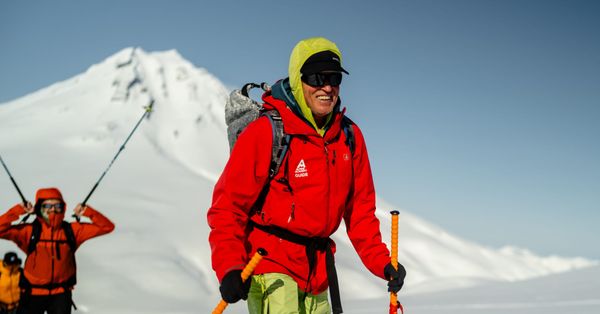
“Life is effort in time,” said the philosopher Merab Mamardashvili. This phrase could have become the epigraph to the life of Andrey Volkov. A nuclear physicist by education, the first rector of the Moscow School of Management SKOLKOVO, a Master of Sports of international class in mountaineering, vice president of the Russian Mountaineering Federation, adviser to the Minister of Education. A professor creating a nomadic university in the mountains, under water, or under sail. His project Alpine Academy combines physical ascent and intellectual ascent: entrepreneurs and top managers climb six-thousanders Mera Peak and Kilimanjaro, climb rocks in Geyikbayiri, dive to sunken ships, the Blue Hole, canyons, caves and reserves of Northern Sinai, go ski touring in the Kuril Islands or sail yachts in the Mediterranean Sea. And in the evening they analyse the strategy of their own life.
In this interview, we touched on important topics: about human limits, the price of real goals, and what actually stands behind the word “strategy”.
iPremium: Andrey, you are a person with an extraordinarily diverse experience, people are drawn to you. What have you understood as the most important thing over all these years in the mountains?
A.V.: These forty-five years in mountaineering have become for me a real life university. And above all — in two things. The first is the relationships between people: their ability to work together, to understand and not understand each other. I learned most about this precisely in the mountains, not from books and not in academic classrooms. The second — I understood a lot about myself. We usually know ourselves poorly. We live in an illusion of confidence — until we encounter a critical situation in which we do not cope or behave inadequately. Mountaineering became such a discovery for me — and it continues to this day. What I can do, and what I cannot. What I think I am capable of — and what I am actually capable of. Moreover, the discoveries were both positive and negative: in some things I underestimated myself, and in some I overestimated. These two aspects — in addition to ascents, beauty and everything that mountaineering gives — have become for me the most valuable in an intellectual sense.
iPremium: Why is it so important to understand your limits?
A.V.: I have a concept: authentic life is possible only at the limit. Not routine functioning, where everything is clear and predictable — that is also life, but incomplete. If we want to truly live, we must go to the limits of ourselves — intellectual, creative, physical. There is a beautiful phrase: “Man is the only animal that goes beyond his own boundary.” An ordinary animal will never do this. But a human constantly tests this boundary and sometimes steps over it. And then we get an idea of what is possible. Mountaineering was for me one of the most important proving grounds where I studied myself. And now, from the height of years lived, I even consider this a truly human occupation — to live on the edge.
iPremium: You had a case when you were caught in an avalanche. What did you feel then and how did you make decisions?
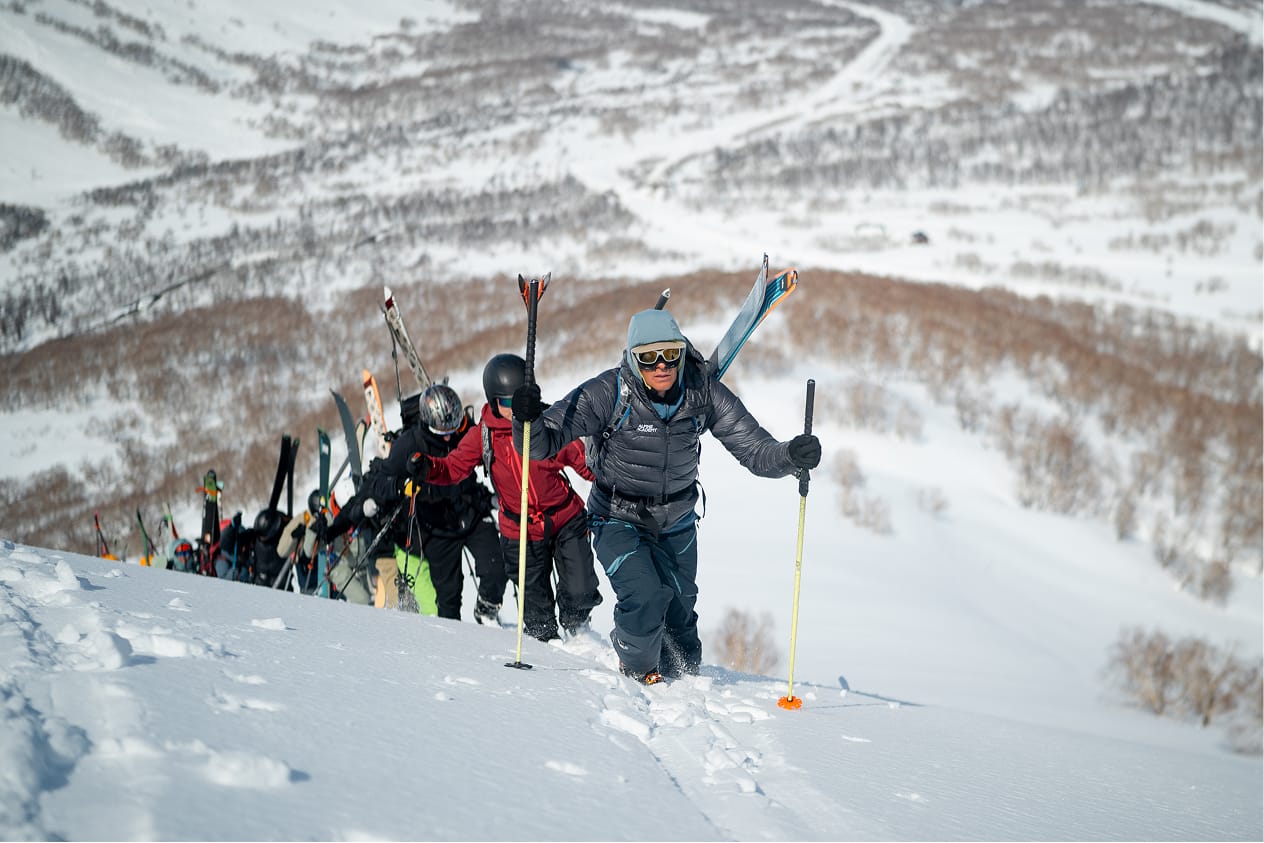
A.V.: Everything happens almost instantly, in seconds. It was not a classical avalanche: we were caught in an icefall. Avalanches can be wet, can be dry, and an icefall is essentially an explosion. My companion, my namesake Andrey, and I found ourselves in exactly such a situation. It is extremely rare, and survival in it is also rare. We underestimated the risks. And then everything happened so instantly that we were just splinters flying through the air. It is impossible to make any decision when a shock wave is coming at you. We were buried. What saved us was that everything happened in Chamonix, the collapse was extremely strong, rescue services immediately launched helicopters without any signal. We were quickly found. Essentially, we were victims of circumstances. Afterwards we said: it would have been good to take this and that into account. But afterwards we are all strong.
iPremium: What can you advise based on this experience?
A.V.: I will say a banality: follow safety procedures. If you have an avalanche beacon, always turn it on. Even if it seems that there is no probability of avalanches, that there has been no snowfall for two weeks, that people passed here ten minutes ago. Still turn it on. We did not turn it on then, the rule was violated. First, use all the safety means that are at your disposal. And second, study the situation. Now, especially in Europe, there are excellent resources that give an up-to-date picture of avalanche danger. It is extremely important to spend time studying it. Fifteen years ago, when this happened to us, such infrastructure did not exist.
iPremium: You created a unique concept in Alpine Academy, where physical load and learning go in parallel. How did you understand that this is effective?
A.V.: First of all, I myself am such a person. For many years I went to the mountains and for many years I was engaged in academic activity. By my first education I am a nuclear physicist, then a professor, dean, rector. Management, I am convinced, is прежде всего work of mind and communication.
Working in a business school, I began to notice that people poorly understand themselves. And I began to take them to the mountains so that they would feel what they are capable of. And then, and this is key, they reflected on this experience and transferred the conclusions to their business and management.
Thus was born the concept of “Two Summits”. The first ascent is psychophysical: an action connected with the body and psyche, overcoming oneself. And the possibility to comprehend it, to articulate it in a circle of people with whom such an intimate experience can be discussed. The second ascent is intellectual: analysis of one’s practice from a new angle: what is my intention? What do I truly want? Why can I not achieve it? In a formal educational process it is impossible to take people to the mountains or go out on a yacht. Therefore, the nomadic university Alpine Academy appeared, free from formalities. Our project with Roman was born from the combination of academic and extreme experience, and we offer it to those who have the corresponding request.
iPremium: What is the fundamental difference of Alpine Academy from other closed clubs and meaningful travel?
A.V.: As a rule, such communities work in a mono-mode. People want to interact with a selected circle that corresponds to them and moves them somewhere. This is natural. But usually everything is formed either around sport or around networking. It was important for me to implement an educational project, but without the formalism of education. And so that for people there would always be a challenge, an opportunity to grow beyond themselves.
I travelled a lot around the world, visited dozens of universities. I know that both Harvard and Stanford use elements of a similar approach with trekking in the Himalayas. But on such a scale and with such intensity as in Alpine Academy, I have not encountered a direct analogue. Our uniqueness is that we do not fall into pure sport and do not go into pure discussions. We combine both. This is not easy: tension for 12–14 hours a day, switching from physical load to serious intellectual work. This is not rest, not a retreat, not enjoyment. Here it is appropriate to recall Merab Mamardashvili, who said that life is effort in time. This is exactly what we do: intellectual and psychophysical effort. And I see that for a certain group of people this resonates deeply.
iPremium: How does the selection for Alpine Academy take place? Is serious physical preparation required?
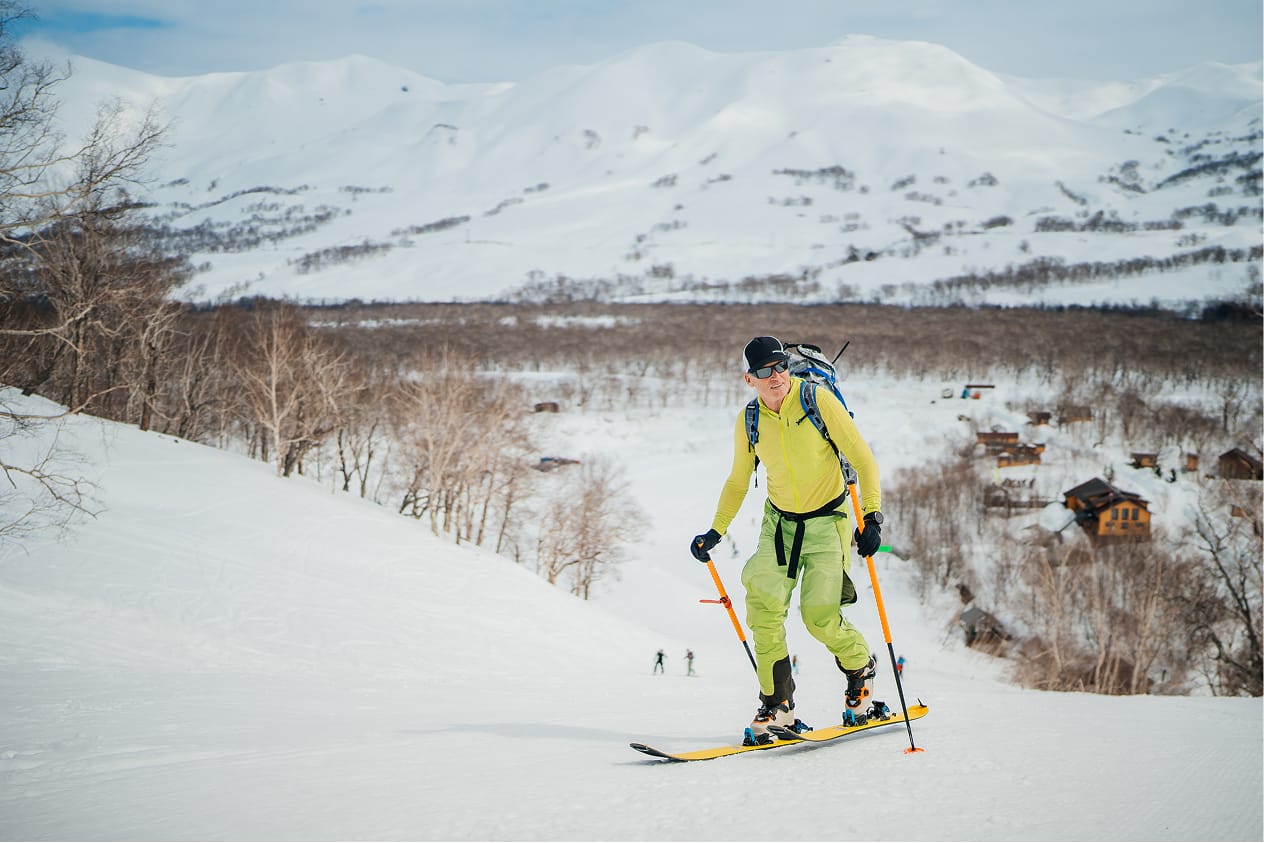
A.V.: It depends on the module. We have just returned from Chamonix, where we did ski-touring ascents of Gran Paradiso, Monte Rosa, Adler Spitze, and skied down from there. This is 10–12 hours of work, two kilometres of elevation gain. Serious endurance is needed here, and the group is very small. And there are soft events, for example Kilimanjaro: 2–3 hours of walking a day, evening discussions, smooth acclimatisation, and 95% of participants reach the summit.
But if answering fundamentally, there are three components. First: health and regular training. Three hours of aerobic load per week, running, cycling, dancing, and the heart already works correctly. Second: technique. In yachting it is one, in diving another, in skiing a third. Third: culture of thinking and expression, the ability to discuss one’s practice not as a story, but as logic and a model. Health, technique and mind.
At the same time, there is no prohibitive barrier. If a person has a desire, they quickly build up the necessary qualities within themselves. I have seen many examples of this.
iPremium: People come to the academy because they want to rebuild something in themselves, to reach another level. What results do you see?
A.V.: Exactly so. Usually these are people whom I jokingly call “the dissatisfied”. They are not satisfied with the current state of affairs in themselves. Not in the sense “the business is not at that level” or “I do not live in the right place”, but in the sense: what abilities am I made of? Can I change them? And how? For an adult it is extremely difficult to do this alone.
From the results I see three speeds. In sport and endurance, the dynamics are the fastest: in 2–3 years people reach a very high level. In technical skills, whether it is alpine skiing, yacht handling or deep diving, more time is required. Remember Gladwell’s rule about 10 thousand hours? Not literally ten thousand, but it is necessary to invest time. And intellectual work, mastering the techniques of thinking, is the slowest process.
In general, in 2–3 years I see striking changes. This is about two weeks a year, plus the recommended library of Alpine Academy. We have a group of five or six professors, each leads their own modules, and participants choose their track: some go deeper into philosophy, some rebuild business practice.
iPremium: Are new routes planned?
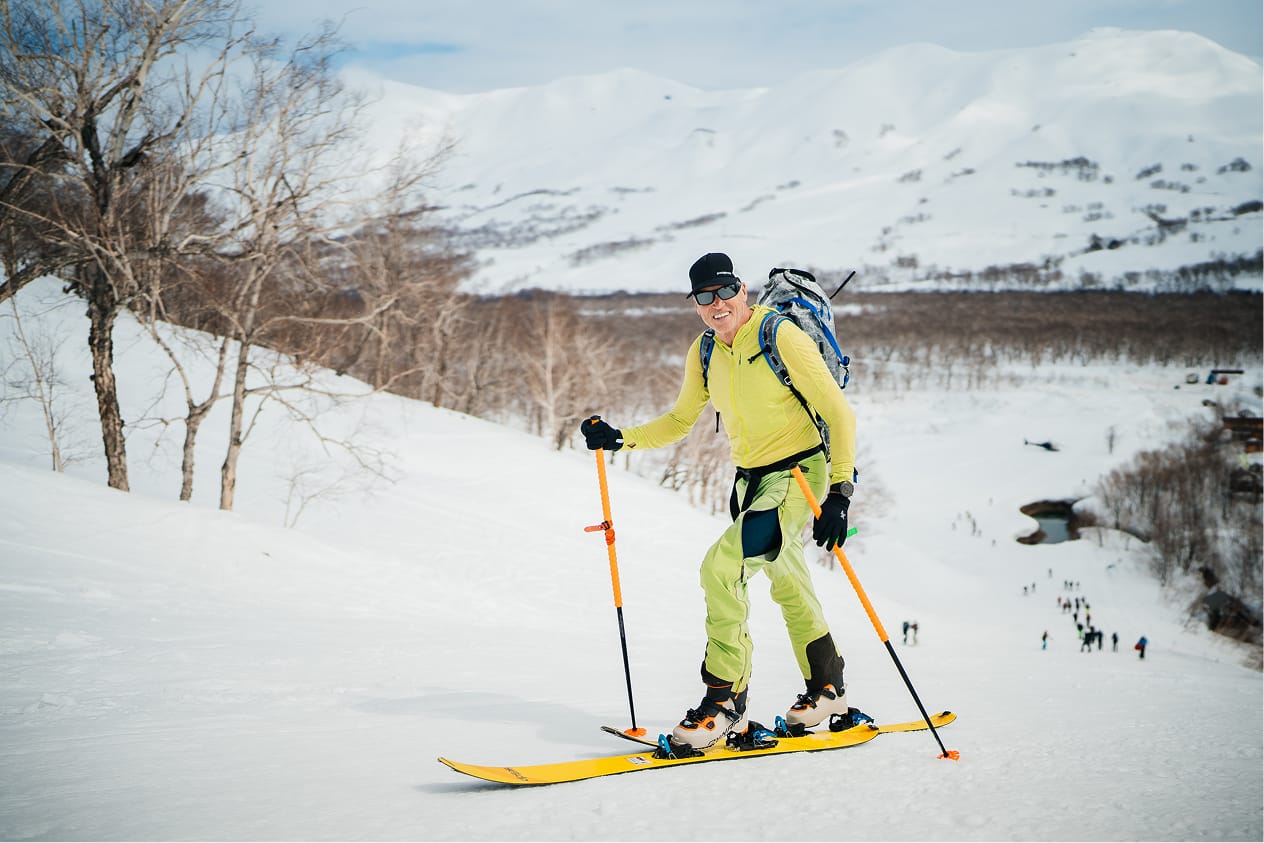
A.V.: We are constantly experimenting. This year we discovered Japan: ascents and freeride. Previously we did the classic Haute Route from Chamonix to Zermatt on skis, and now we have focused on the four-thousanders of the Alps. In Latin America we were in Ecuador, Chile, Argentina, next year we try Peru. Every year we update 30–40% of our locations around the world. In plans are the Lofoten Islands, New Zealand, the Himalayas. Although the Himalayas are endless, there are so many opportunities there. The world is much larger than we can manage.
iPremium: Do you plan to scale the project? Is a franchise or entry into the international market possible?
A.V.: There is no prohibition for an English-speaking audience. But to maintain the highest level of complex discussion in a non-native language, at the limit of vocabulary and terminological clarity, is very difficult.
As for scaling, here is our Achilles’ heel. Roman and I are the authors of the project, and people orient themselves to us as personalities, not as functions. To say “go with someone else” is difficult. We do 10–12 modules a year, each on average a week, and this is our limit.
Perhaps I will answer directly: we do not plan to scale. Now there are about 200 participants in the club. For us it is not a business project in the usual sense, it must be self-sustaining. But it is a boutique, authorial project, elite in its requirements for people. And it seems to me it is valuable precisely because of this.
iPremium: Our readers are concerned about the topic of discipline. What would you advise to those for whom it is difficult?
A.V.: First you need to understand what we are talking about. We are used to perceiving discipline as external coercion: brushing teeth, learning the multiplication table, entering a university that your mother likes. I interpret it differently. Discipline is the ability to place yourself in time.
A simple example: my lectures begin exactly at 15:00. Not at 15:01, not at 15:02. And I see how people, for whom this is really important, cannot calculate the last half hour of their life. This inability to plan oneself in small things then reflects on everything: on long-term projects, on health, on qualifications. And there one cannot do without long, patient, careful work. This is what I call discipline, not driving yourself with a whip.
In essence, discipline is an intellectual thing. And it is formed not by coercion, but by music, sport, art. Music sets temporality: if you do not hit the rhythm, you will not play the scale. Sport sets its own tempo-rhythm. The space itself suggests that you must fall into the beat. Including the beat of your life.
iPremium: And what would you advise to those who have discipline, but nothing arouses interest?
A.V.: Honestly, I do not understand this, I cannot imagine it. I have the opposite problem: there are so many interesting things, and there is not enough resource to master them. When people say “this is not interesting to me”, as a rule, this is not true. To understand whether it is interesting to you or not, you first need to try. When it starts to work out, we say: “Oh, I love this activity.”
A fresh example: in Thailand I decided to master foil, a board with an underwater wing that flies above the water. For five days I fell into the water, nothing worked. And after ten days I was freely gliding and surprising myself. One needs to step over that zone where nothing works. Accept it. Tell yourself: yes, for some time it will not work, and I must go through this. Nothing non-trivial works immediately.
iPremium: With experience, the attitude to the goal changes. What does “reach the summit” mean to you today, in the literal and figurative sense?
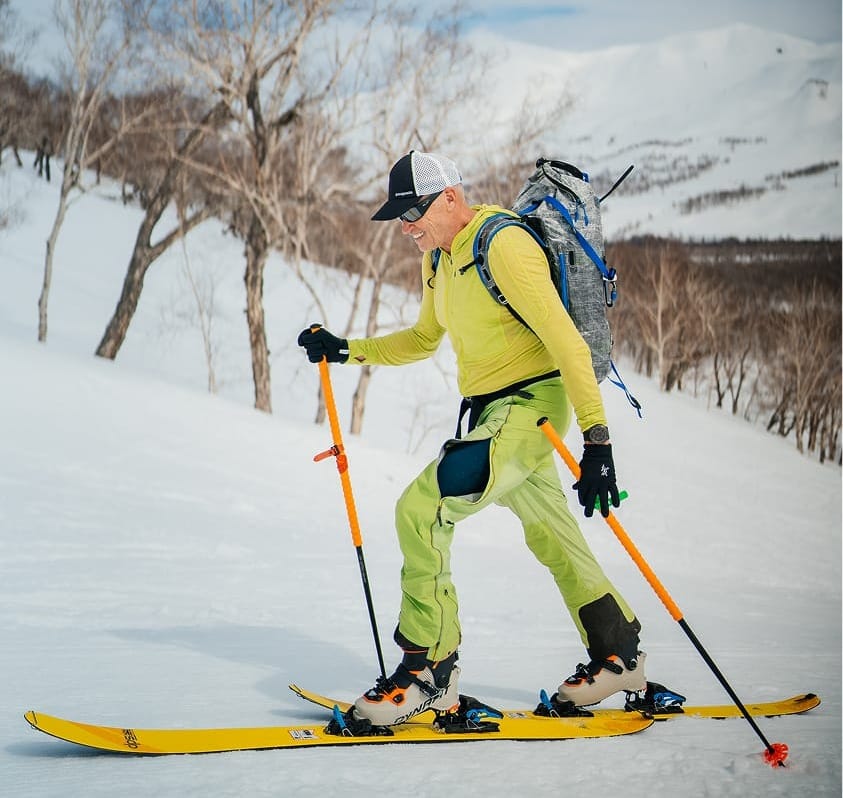
A.V.: If we speak about a mountain, then now every ascent for me is a research project over myself. I change, abilities change. And each summit poses the question: what else can I do? And if I have to lead others, will I be able to cope with myself and at the same time adequately help them? A mountain is an alloy of ice and rock, it has stood for millions of years and will stand more. The mountain is indifferent to us. Everything is about us. As someone from the first ascenders of Annapurna beautifully said: mountaineering is ascent over oneself.
But with goals in life everything is not so obvious. In my practice, most people do not have goals. To go to the shop, to get to a friend — these are not goals, but routine operations. A real goal has an important characteristic: it is always bigger than you. It requires that you change something in yourself. But “to change” is a tricky phrase, we are complex beings, we have many dimensions. But if you can identify what you lack, this is already a huge step. Then you can build a small programme to eliminate this deficit. This is how we approach the goal.
And one more aspect that many miss. A person who has a goal is not always pleasant to others. He moves regardless of anything. He does not come to birthdays, does not meet when it is inconvenient. He is not “nice”, he irritates. Therefore, two properties of a goal: it is always bigger than you, and you must build a programme so that it becomes reality, not fantasy. And be ready that not everyone will be delighted. Although my teacher beautifully said: only that goal is moral which you can declare publicly. If you can say “I am going there”, it means the goal is moral. If you cannot, there are questions.
iPremium: You say that a goal is always bigger than us. How often did you yourself have to rebuild your life for the sake of a goal?
A.V.: In a big way, five or six times. Because a real goal entails a strong change in life, it turns into a project, into a programme of actions. When I was invited to create the SKOLKOVO School of Management, at first I perceived it as another occupation. And then difficulties began, it required investing enormous intellectual and human resources. I had to refuse other offers. Sometimes it is very conflictual, to leave other matters, to set completely different tasks for oneself.
Or Everest. For a mountaineer it seems like a natural continuation: you climbed seven-thousanders, so the next step. But behind it was the decision to leave work for a year. In those years it meant to remain without salary, without sources of existence, and I already had children. From the outside it looks simple, but in reality it is a change of the whole life. This is what actually stands behind the word “goal”.
iPremium: Is it good to be a person who always says “yes” to opportunities?
A.V.: No, from my point of view. As my colleague says: we are all mediocrity, that is, we act by means of the means that we have. Not money in the account, but our abilities. According to these means we set tasks for ourselves, and sometimes, as we spoke about goals, the means need to be changed to achieve something new.
A huge number of opportunities opens. But our life, in essence, is the closing of opportunities. In childhood all paths are open, and when you are 40, 50, 60 years old, windows rapidly close. To run after opportunities when there is not enough resource to use them is meaningless.
iPremium: Now many talk about energy as a resource. That the time is coming when people will exchange not goods, but energy. What do you think about this?
A.V.: I am a person with a physical education, and for me energy is a concept from quantum physics. But if to reinterpret the question, then yes: another person for us is less and less a carrier of goods and more and more someone who can influence our world. A mentor, a guide, a teacher, a partner. And not necessarily older: people younger by 15–20 years often influence me, and I still learn from them.
This is close to the concept of a teacher, which is important not to confuse with a lecturer. A teacher is someone who thinks about you, who wants you to change. To seek such people is the most important life task.
And here is the connection with Alpine Academy: it is important to find your group, those with whom you can articulate and comprehend. Many things cannot be discussed either in the family or at work, but a person needs to articulate thoughts. As Brodsky said in a speech to students in Ann Arbor: “look for words, work on your vocabulary, because what is not expressed does not exist”.
iPremium: You are invited as a speaker to various events, for example to an expedition on an icebreaker to the North Pole. How can cooperation with you be built?
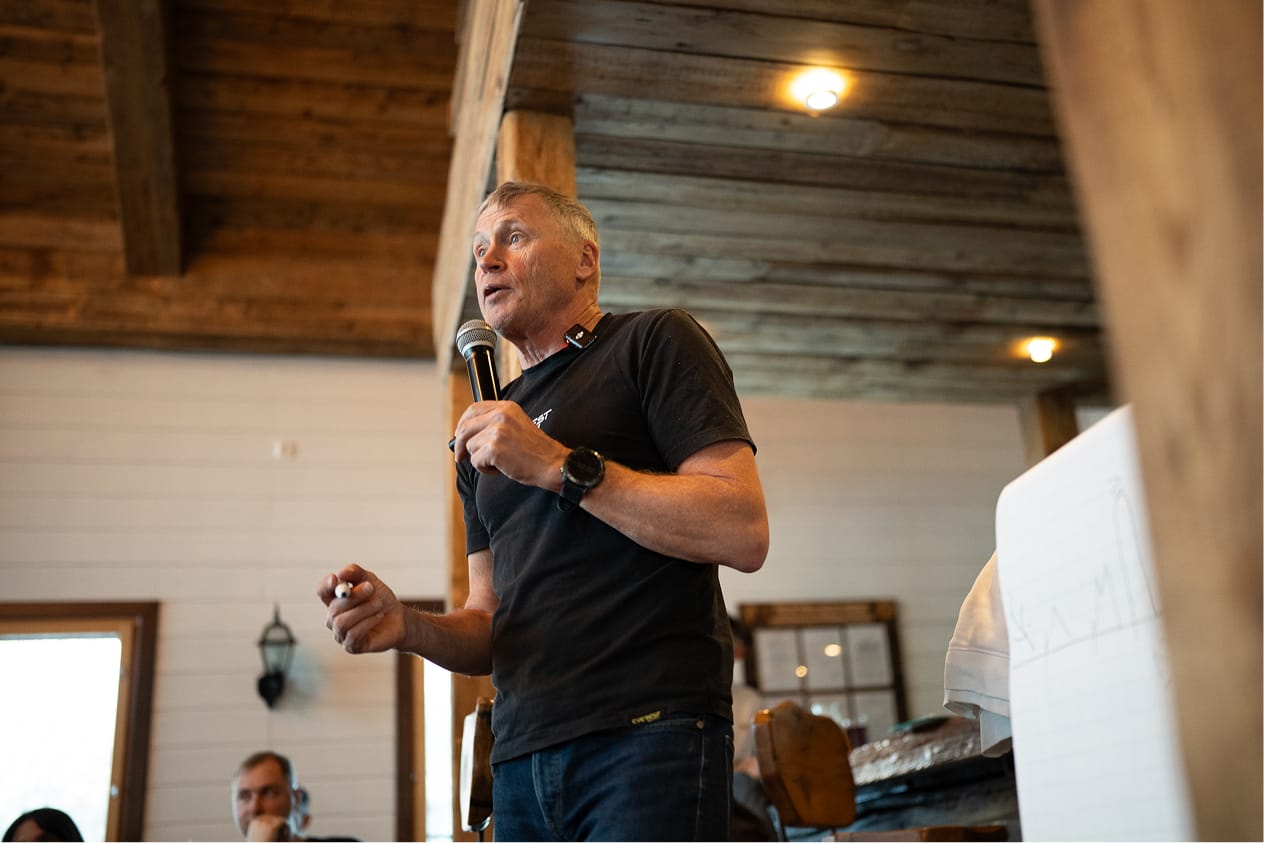
A.V.: If an event is interesting to me, I respond. I have two or three topics on which I speak. Not so much lectures as a speech after which a dialogue with the audience arises. On the icebreaker that went to the North Pole, I gave three lectures and enriched my practice with new conclusions. I pass each such proposal through my strategy: it cuts off something and says to something “go your own way”. This is not my main work, but I am not a closed person and I respond to such opportunities.
iPremium: What are your favourite topics for speeches?
A.V.: The first and most favourite: how a team is formed. How it differs from a collective, from a group, from a gang, from a family. The second: technologies of thinking and whether they can be learned. And the third, more specific: transformation of education. I have been a rector twice, was and am an adviser to the minister. I discuss large university systems and the logics that change in them. In essence, this is a conversation about the distant future of the country, because education determines it in the long horizon. I once even said jokingly: a country is a consequence of the educational system that works in it. Though, it is not entirely a joke.