Dhigufaru Maldives: A Thin Line of Sand in the Baa Atoll
– 7 min read

"Perfection is achieved, not when there is nothing more to add, but when there is nothing left to take away." — Antoine de Saint-Exupéry
The grammar of modern luxury has become additive. Every property I visit now feels louder than the one before it, every hour of the day already accounted for before I arrive, every experience engineered to outbid the last. And yet I keep returning home with the strange, persistent sense of having been everywhere and touched nothing.
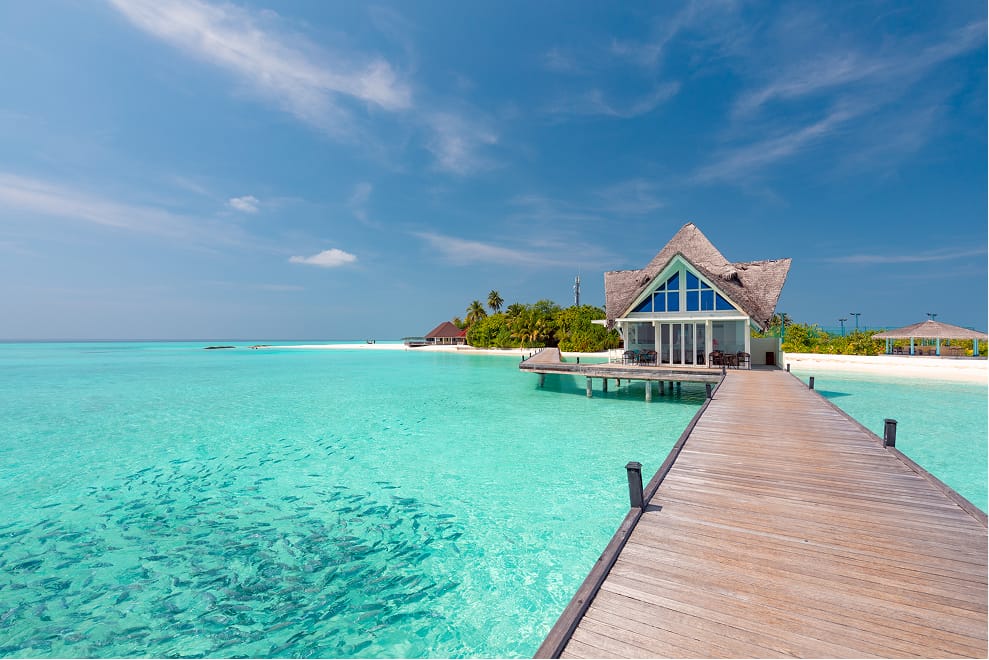
Dhigufaru Island Resort, in the Maldives' Baa Atoll, answers that feeling by refusing to add anything at all. I mean that as the highest possible compliment.
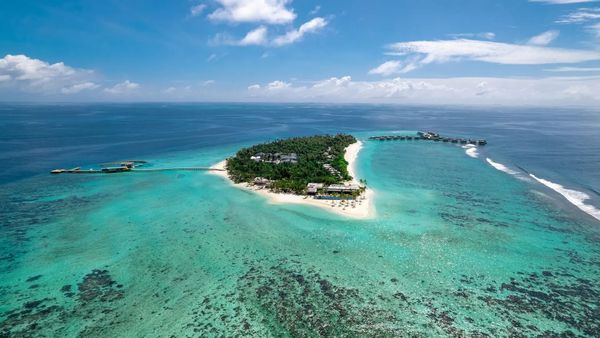
The journey begins at Velana International Airport, where the Sapphire Lounge does the first, quiet work of recalibration. The forty-minute seaplane then traces the atolls at low altitude. The Indian Ocean fractures into rings of cyan below, the islands arranged like coins scattered across something deeper than blue.
Stepping onto the wooden arrival jetty, I notice what is absent before I notice what is there. No grand lobby. No formed welcome line. What there is, instead, is sound: the low, rhythmic pulse of a boduberu drum struck by hand as the boat pulls in. A cold coconut arrives before check-in has formally begun. In the local Dhivehi language, dhigu faru means "a long reef." The island knows precisely what it is.
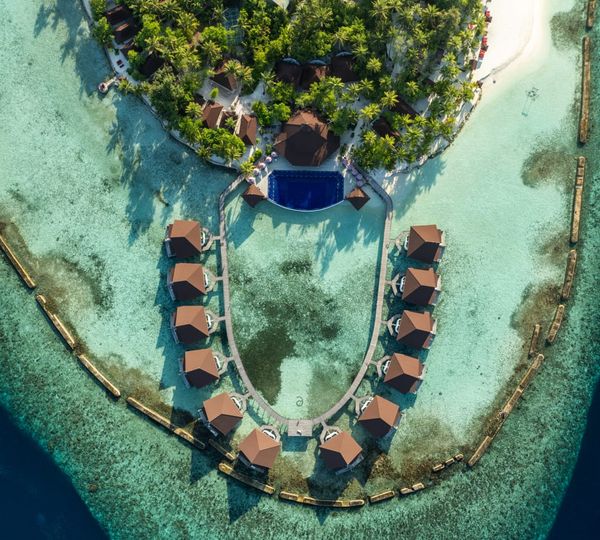
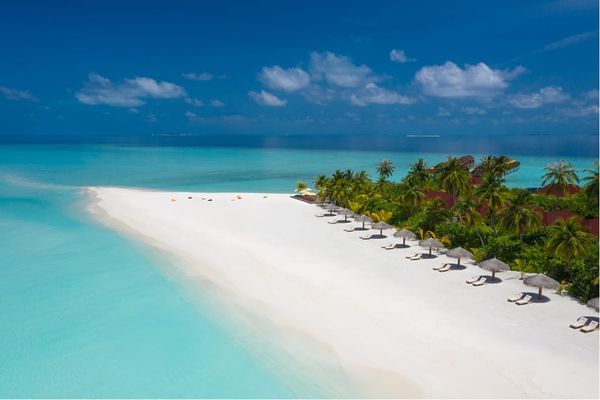
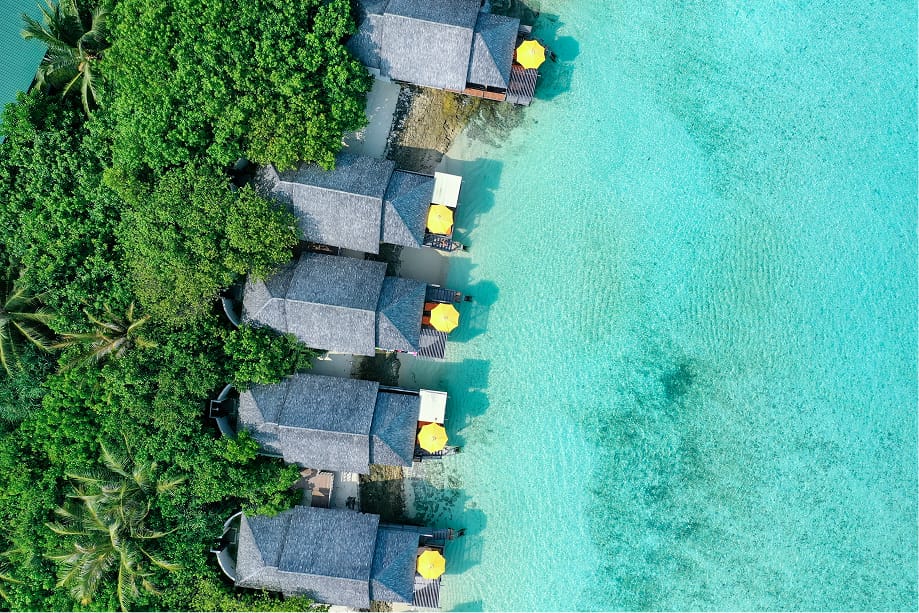
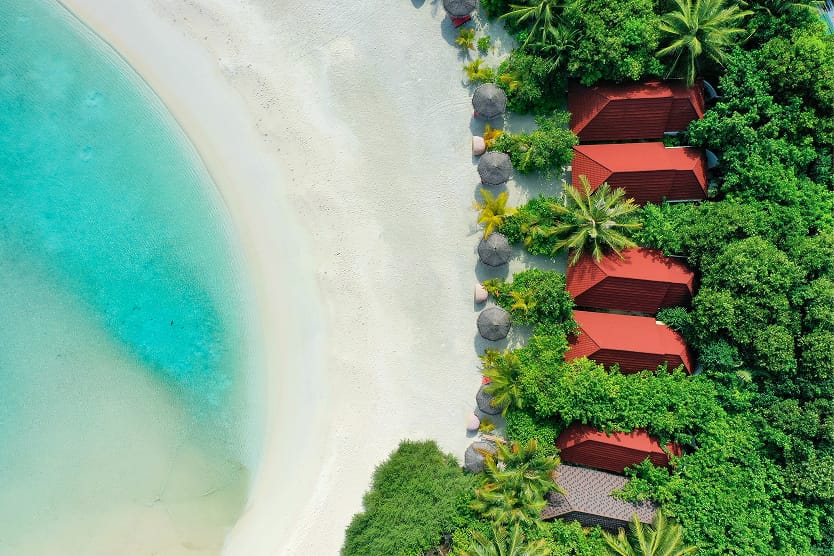
Thirty-five thousand square metres of coral sand, shaped across centuries of tidal movement. To the east lies Boaku, a naturally sheltered cove where the water holds glass-still through most of the day. To the west, Veli, a wide, flat expanse open to the full breadth of the horizon. The architects have submitted to this geography rather than argue with it. The island's natural duality dictates everything that follows.
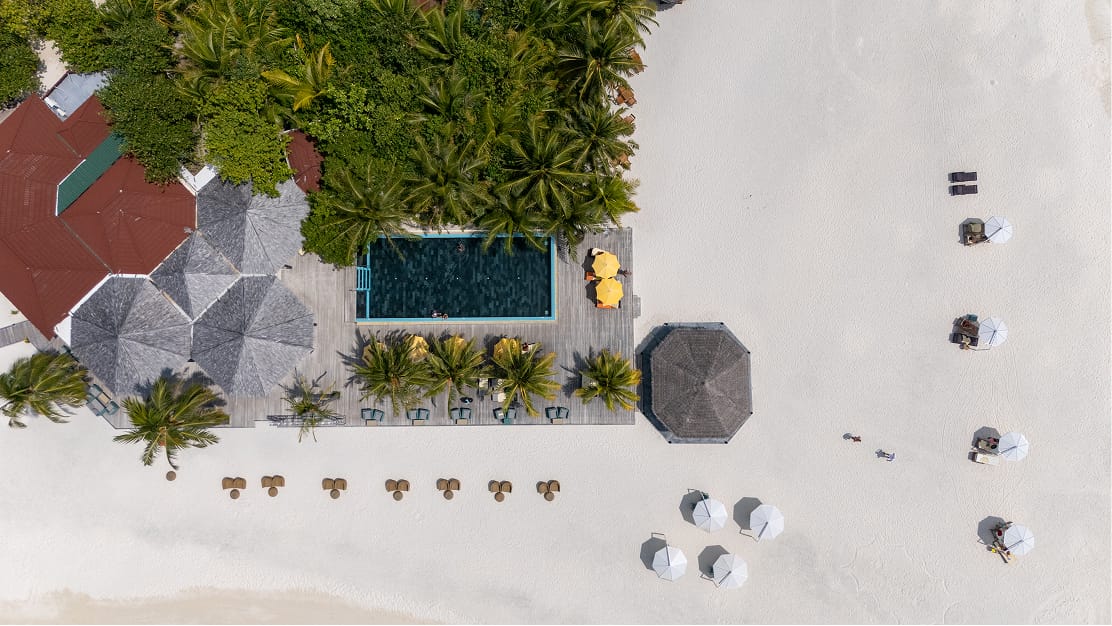
My Sunrise Beach Pool Villa sits directly on the eastern shore, set back just far enough that the sand remains cool in the shade of the palms. Three or four steps from the deck and you are in the ocean. The bedroom does not really end anywhere. The eye travels from the bed through the shaded timber deck, down to the private plunge pool, and into the water itself. Nothing in the design insists on where the villa ends. You notice this less as an architectural statement than as a practical fact. At night, the reef takes over. The tide works it offshore in a low, continuous rhythm that carries through the shutters, steady enough that after the second night you stop registering it as sound and start registering it as silence.
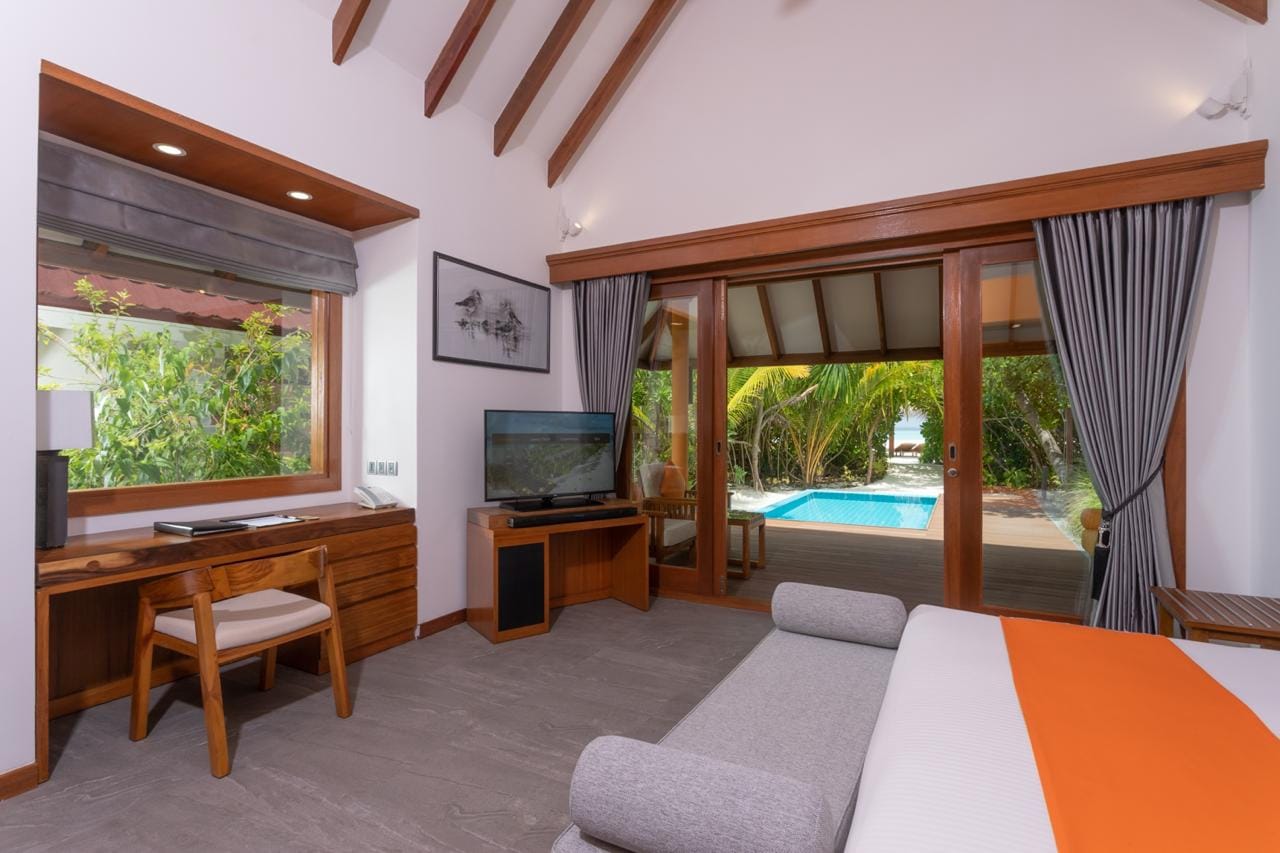
I fell into a rhythm of swimming twice a day. Once at sunrise, when the water still holds the coolness of the night; again in the final hour before dusk, when the light turns the lagoon a colour somewhere between brass and rose. From the villa, a short walk delivers you directly into the sea. There is no ceremony, no equipment, no planning. You step in, and the day either begins or ends.
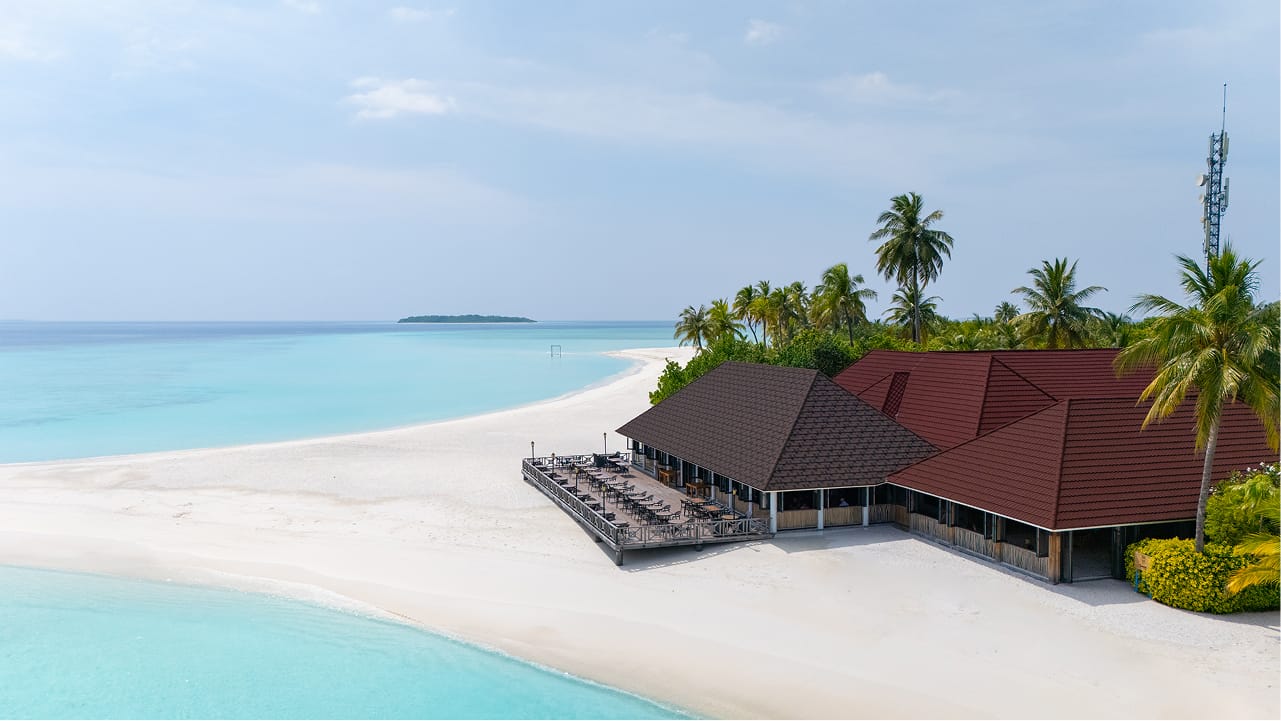
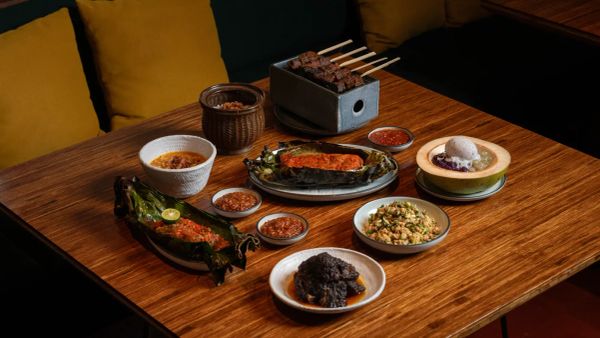
The kitchen at Athiri Grill, set close to the water's edge where the salinity of the air announces itself before the menu does, makes a decision I respect. It relies on what the atoll provides, only that. One evening I watched the preparation of a yellowfin tuna that had been in the adjacent waters of Dharavandhoo a few hours earlier. The chef approached it with restraint born of confidence. Cured lightly with native sea salt and a sharp note of local citrus, then left entirely alone. No molecular architecture, no elaborate construction. It tasted cold and clean and deep, like the water it came from. The reef fish that followed, grilled over coconut husks, carried a smokiness I have been thinking about since. The kitchen works to the ancient Maldivian Nakaiy calendar, which tracks subtle shifts in weather and marine behaviour across the year. It is not a concept developed for the menu card. It is simply how people here have always understood the sea.
Muraka, the resort's fine-dining room, works to a different register. Where Athiri is about proximity and restraint, the atoll translated almost without intermediary, Muraka is more formal, more composed. A tasting menu built from Maldivian ingredients rethought through a wider culinary vocabulary. The pacing is deliberate. Courses arrive with enough space between them to let the previous one settle. The wine pairings are chosen with the same attention given to the food. By the time coffee appears, three hours have passed and felt like one.
On a third evening, the team arranged a private dinner on the sand at Athiri. The table was set directly on the beach, lanterns marking a small perimeter in the dark, the lagoon a few metres away and entirely invisible beyond the first ring of light. There was no soundtrack, no production. What filled the space was the tide working the reef and, occasionally, the low crackle of the grill. The courses came matched to what had come out of the water that day, and nothing more. Overhead, the Baa Atoll sky had already begun its slow sequence, the Milky Way clearly visible, satellites tracking in straight lines between stars. This is the kind of romantic setting that resorts try hard to manufacture and rarely achieve, because it cannot be staged. It can only be given the right conditions and left alone. Somewhere in the second hour I understood why the old Dhivehi sailors navigated these waters for a thousand years by the stars alone. They were enough.
Something shifts. I can't tell you exactly when it happens, only that by the fourth morning it already has.
The compulsion to schedule, to account for every hour, to optimise, quietly dissolves. I found myself sitting on the eastern shore of Boaku at dawn, watching the light move through the shallows. Slate to aquamarine. Aquamarine to a colour that has no name. I noticed the angle of a heron hunting at the water's edge. The temperature difference between two currents meeting just below the surface. The geometry of the coral visible through two metres of clear water, ancient and intricate and entirely indifferent to my presence.
This is the pivot that separates a holiday from a geographical encounter. In daily life, solitude is framed as deficit, a lack of connection, a symptom of something wrong. Here, on a sliver of coral sand in the Baa Atoll, it reveals itself as the one thing that cannot be scheduled, bought, or delivered to your door. The island does not entertain you. It requires you to learn to be still.
The service at Dhigufaru has a quality I have encountered perhaps twice in a career spent evaluating hospitality: the ability to be present without being visible. Staff appeared when a glass needed refilling or a transfer was required, and were simply gone when the moment called for solitude. No hovering, no check-ins, no performance of attention. I asked Aya, the resort's Marketing Manager, about this during a late afternoon conversation near the Thundi Pool Bar, the sun casting long shadows across the timber decking. "We are custodians of a specific geography," she said. "Our architecture, our food, our service exist to frame the reef, not to compete with it. If a guest leaves remembering the thread count of the sheets and forgets the colour of the lagoon, we have failed."
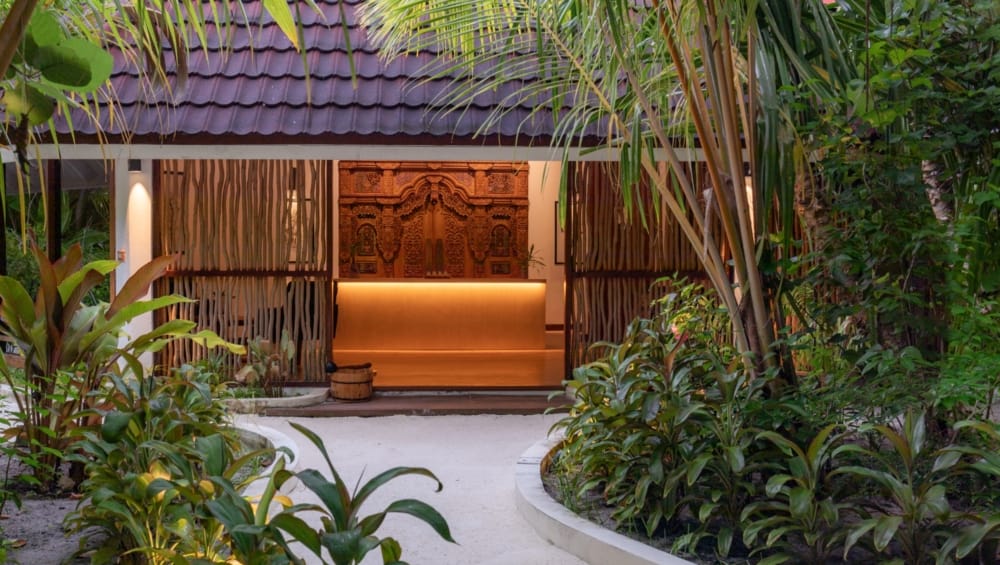
The Funa Spa carries the same philosophy into the body. The treatment rooms are built without sealed air conditioning, open instead to the island's natural airflow. They smell of damp earth and crushed green things, the scent of the place walking in through the screens rather than being piped in through a vent. Therapies draw on indigenous practice: cold-pressed Maldivian coconut oil warmed in small clay vessels, finely milled coral sand used for exfoliation, slow hand techniques that follow the length of a muscle rather than moving in the brisk, timed sequences of a European spa protocol. The rhythm of the massage is calibrated, they told me, to the cadence of the waves breaking on the western shore. I was not sure I believed that until I was lying there, the tide audible just outside, and the pressure of a thumb settling exactly as a wave pulled back from the sand. Then I understood it entirely. The signature ritual closes with a tea brewed from kurumba, young coconut water, and hibiscus, served on a low deck facing the lagoon. You do not get up quickly afterwards. The space does not ask you to.
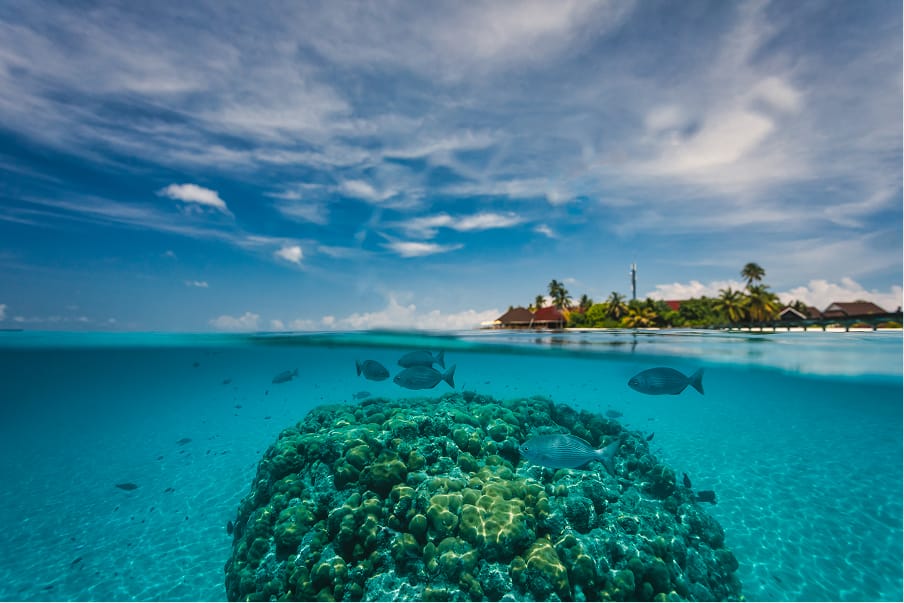
The Baa Atoll became a UNESCO Biosphere Reserve in 2011. Hanifaru Bay, a short distance from Dhigufaru, is one of the world's most significant feeding aggregation points for manta rays and whale sharks. The resort's proximity to this ecosystem is less a selling point than a responsibility, one that shapes how the marine centre operates and how every dive is guided.
The speedboat fractures the lagoon on departure morning, and Dhigufaru becomes a thin green line against the horizon. Then a dot. Then nothing.
The Maldives receives millions of visitors each year seeking distraction, a sufficiently perfect environment to temporarily replace the one they left behind. Dhigufaru offers something else entirely, a place from which the life you left begins to come into focus.
The island has no particular interest in entertaining you. It has a reef, two shores with entirely different personalities, and thirty-five thousand square metres of coral sand shaped by centuries of tide. It offers you the chance to slow down enough to notice all of it.
Whether you take that chance is, as it turns out, entirely up to you.
I found that I could not not.