Bali Restaurant Guide: A Curated Selection Across Ubud and the Bukit Peninsula
– 9 min read

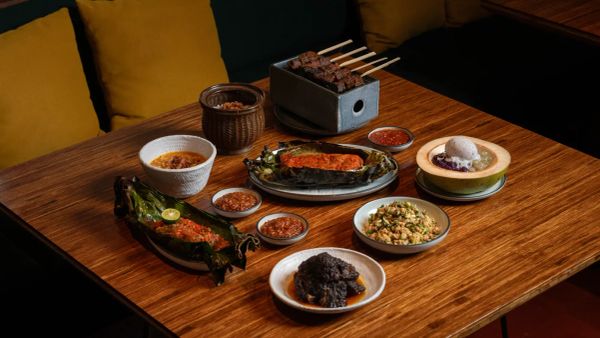
An editorial selection of sixteen restaurants that define Bali’s contemporary dining landscape, grouped by location and structured by culinary direction — from rainforest fine dining in Ubud to coastal grills on the Bukit Peninsula.
Bali is not a place where you rely on a single dining district. Where you choose to eat depends entirely on where you are on the island — and how you want the evening to unfold.
In Ubud, restaurants tend to sit within the landscape rather than above it. Dining rooms open onto river valleys, kitchens work closely with local producers, and the pace is slower, more inward. Move south toward the Bukit Peninsula, and the mood shifts. Here, the coastline defines everything — menus lean toward seafood, fire and sharing formats, and the rhythm follows the light from late afternoon into night. Seminyak, by contrast, remains the island’s most urban stretch, where grills, bars and late dinners shape the scene.
This guide brings together sixteen restaurants across these areas, organised by location and then by culinary direction. The focus is on places with a clear point of view — whether rooted in Indonesian cooking, shaped by European technique or built around Japanese precision — rather than general hotel dining. Each entry looks at how the restaurant is structured, where it sits, and why it matters within its immediate context.
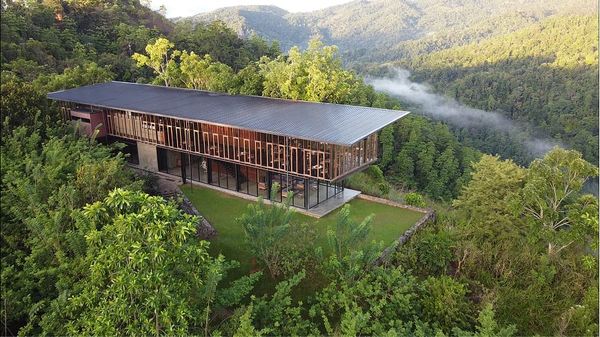
The cluster of high-end resorts along the Ayung River has produced some of Bali’s most disciplined fine-dining kitchens. These restaurants share a common context — bamboo pavilions, jungle terraces, river soundscapes — but differ sharply in culinary direction.
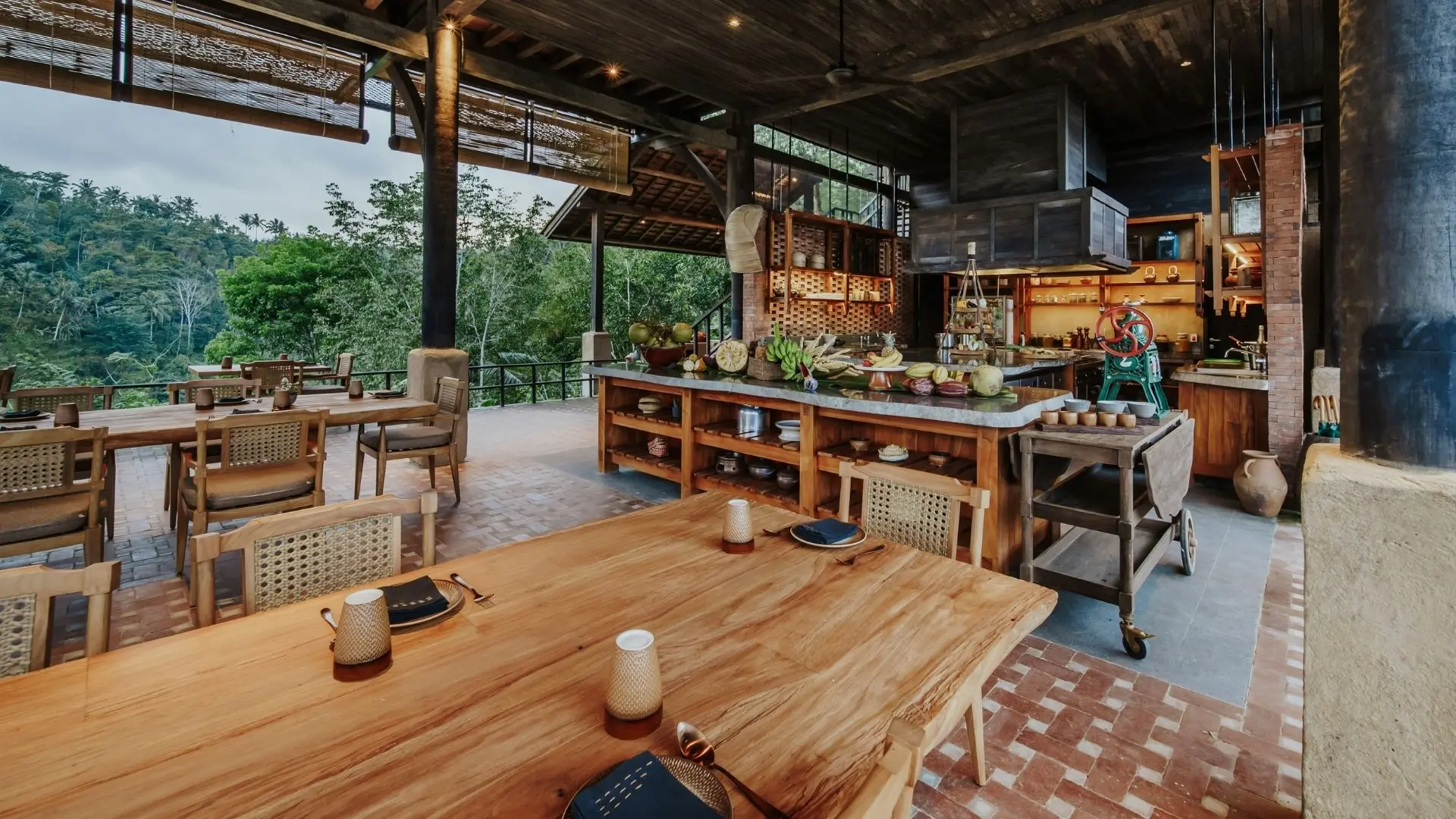
Open Kitchen is central to the identity of Buahan, a Banyan Tree Escape. Built around a zero-waste, farm-to-table concept and local sourcing, it presents a five-course dinner format that draws on Balinese flavours and heritage techniques rather than imported luxury cues. The open cooking format and adults-only setting make it one of the more thoughtful resort dining experiences in the Ubud area.
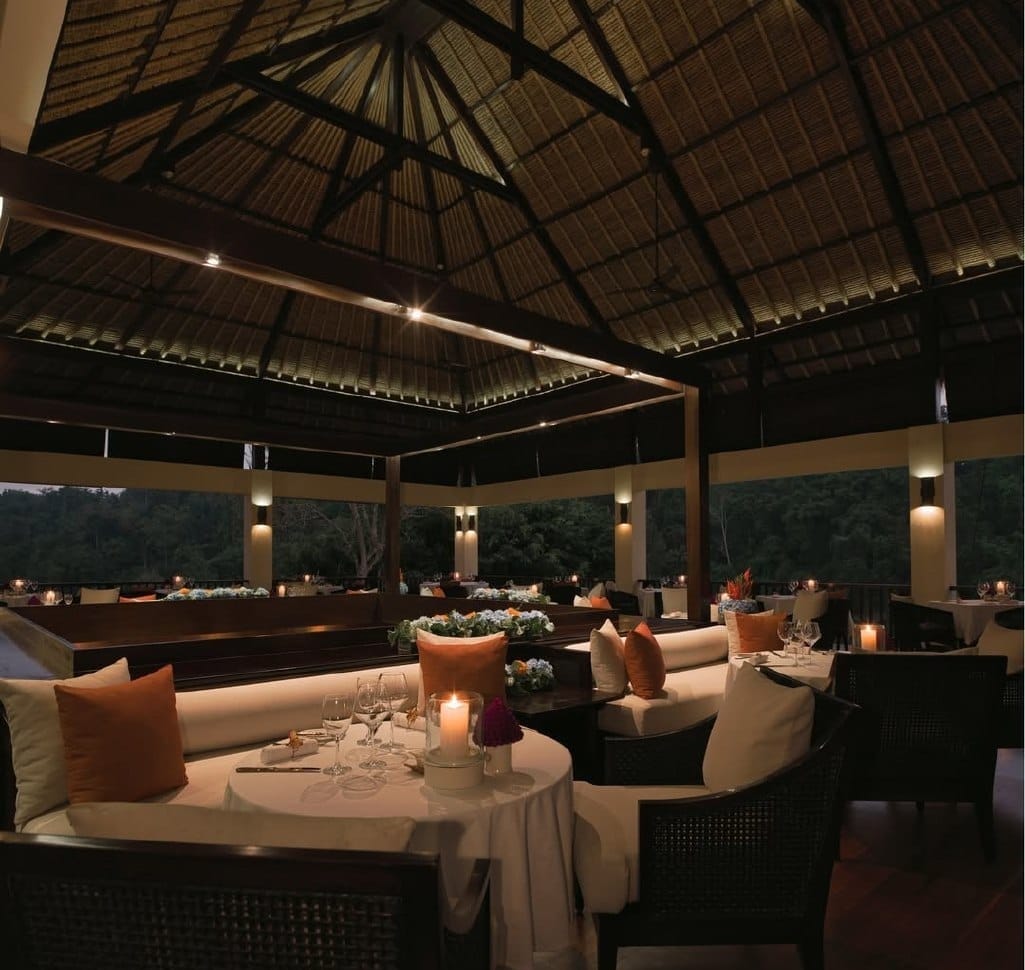
Three Elements operates as the signature restaurant of Hanging Gardens of Bali, structured around à la carte service and two tasting menus with optional wine pairing. The kitchen works in a modern Western register applied to Indonesian ingredients, with a clear emphasis on local sourcing and seasonality. The format is formal but the setting — open to the surrounding forest — keeps the rhythm closer to a destination restaurant than a hotel dining room. Recognised by the World Luxury Restaurant Award, it remains one of Ubud’s reference points for tasting-menu dining.
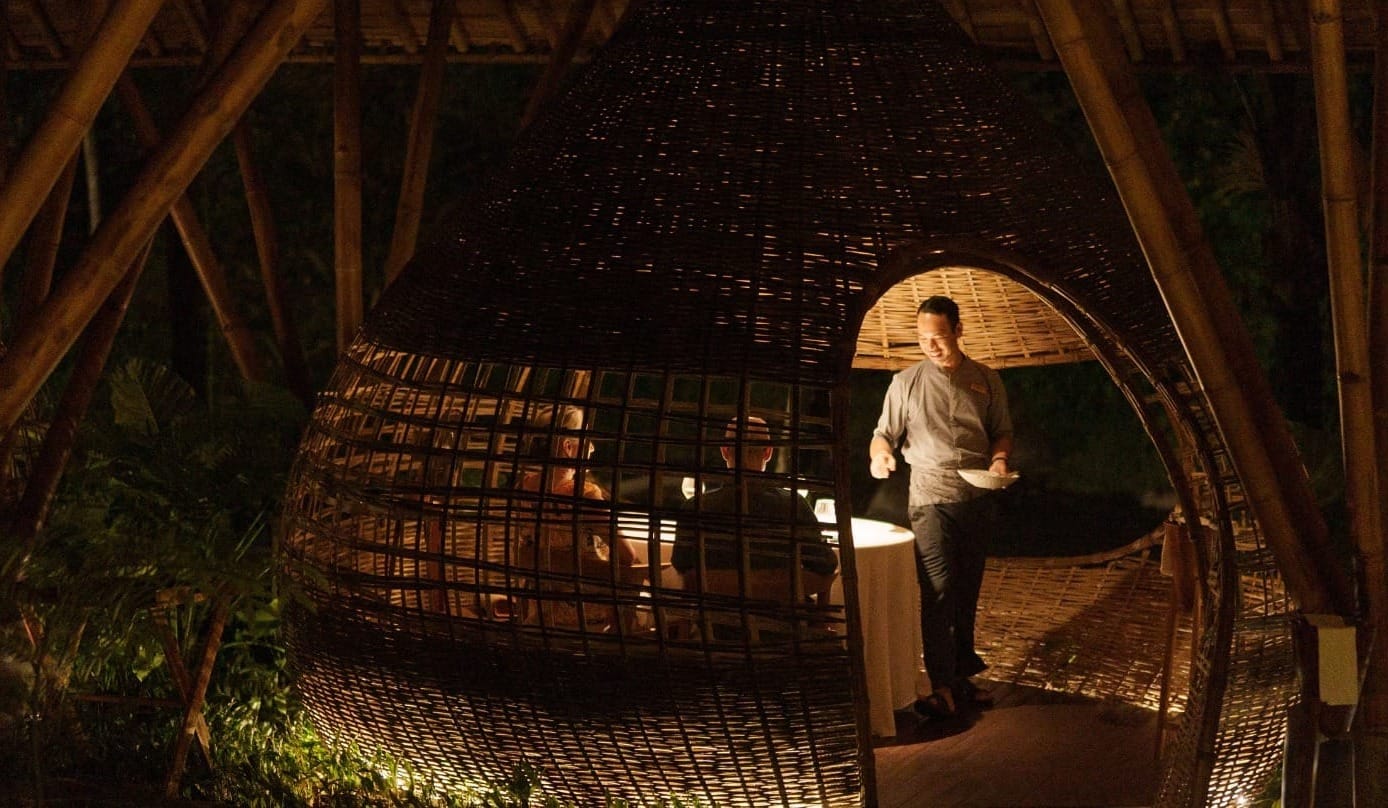
Kubu occupies nine bamboo cocoons set along the Ayung River, each offering enclosed seating for small parties. The kitchen works in a Mediterranean-European direction, drawing on Indonesian produce without crossing into fusion. The centrepiece is a ten-course degustation menu supported by an extensive European wine list. Service is paced for long evenings, and the architecture — traditional Balinese huts reinterpreted at restaurant scale — gives Kubu one of the most distinctive dining-room formats on the island.
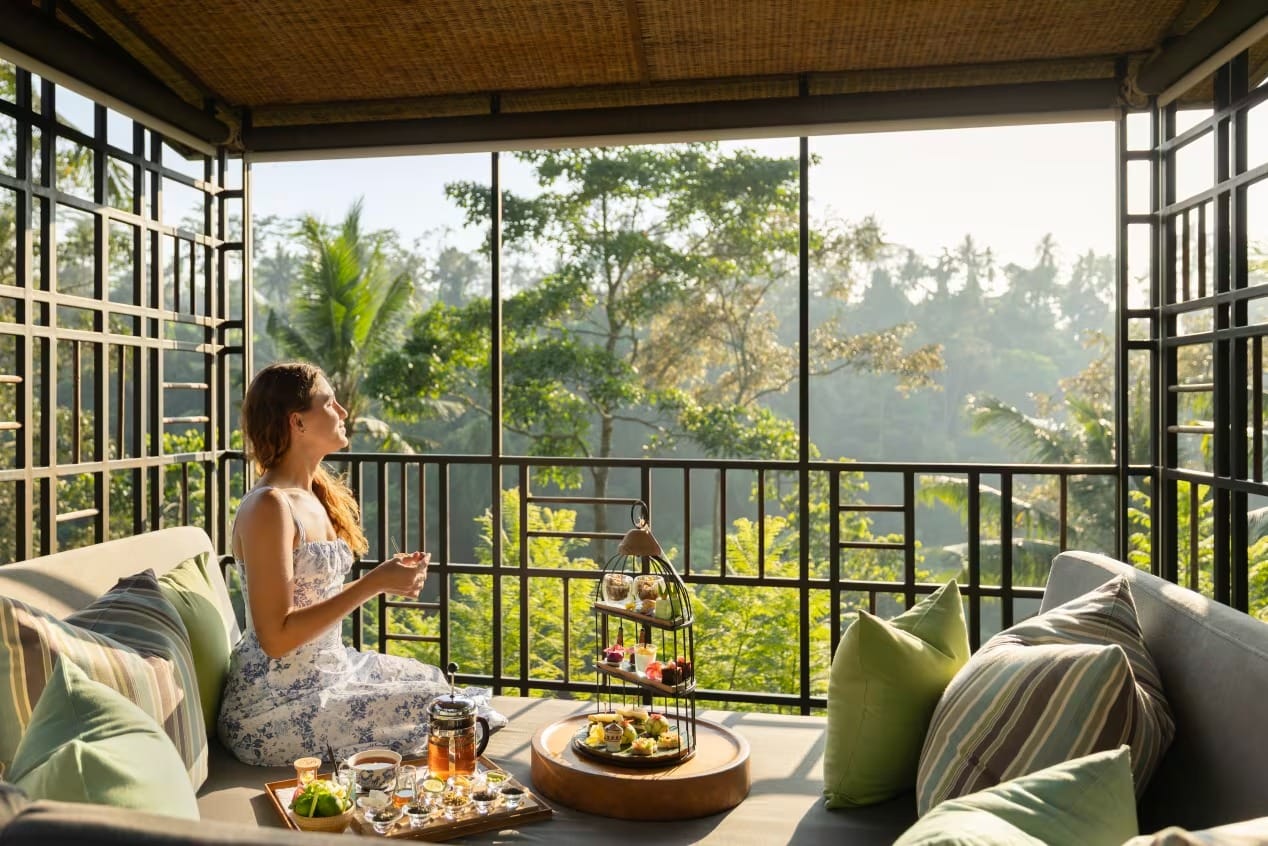
Cafe Gazebo is structured around floating pavilions positioned above the jungle canopy at Hoshinoya Bali. The kitchen blends French technique with Balinese and Japanese references, reflecting the resort’s broader Japanese-Indonesian identity. The format centres on a multi-course evening tasting and a separate Nusantara set, the latter built around traditional Indonesian dishes including Ayam Betutu, the spiced steam-baked chicken associated with Balinese ceremony. The setting is intimate by design, with each gazebo seating a single party.
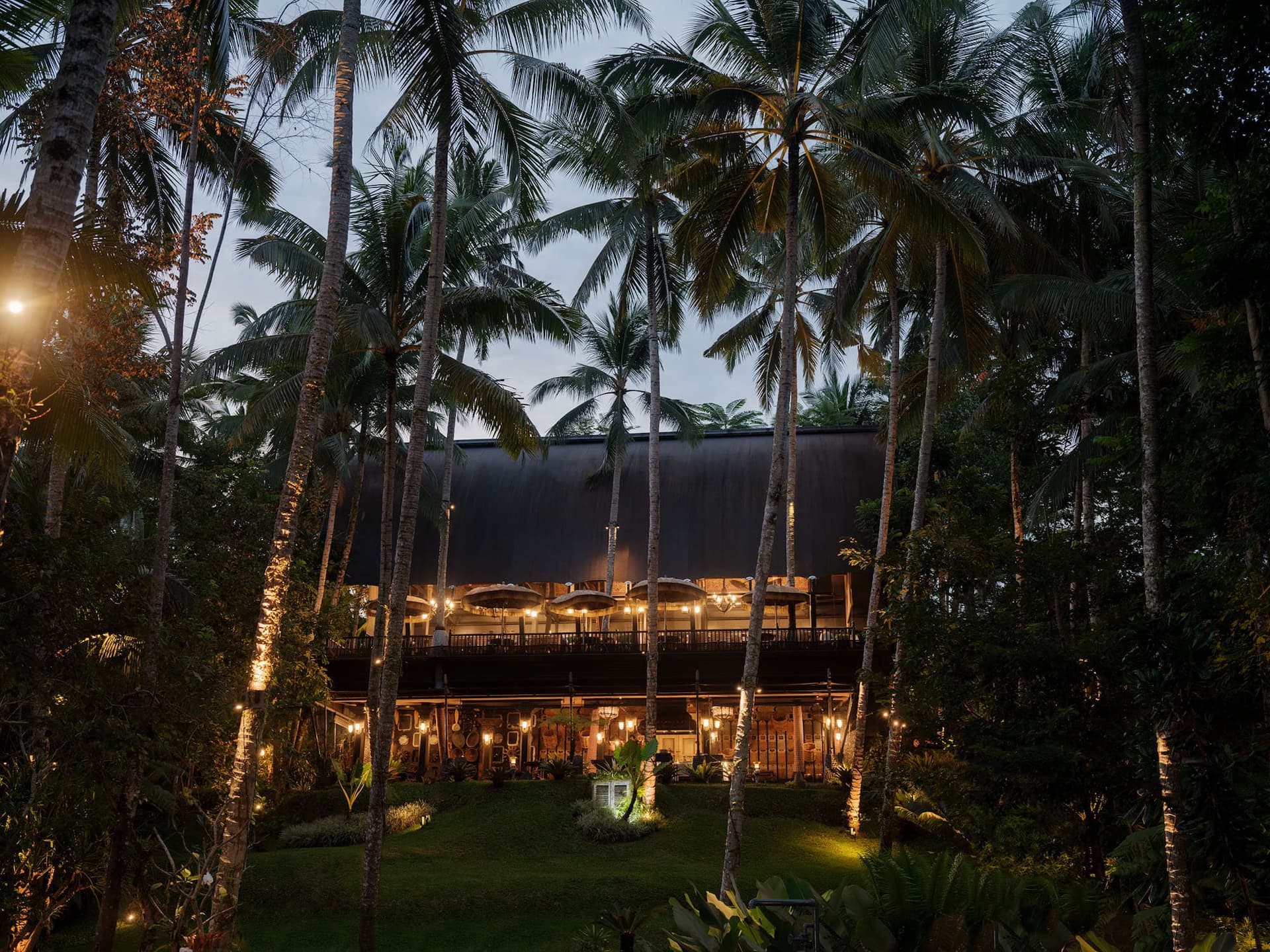
Set within Capella Ubud’s tented camp, MADS LANGE takes its name from the nineteenth-century Danish trader known locally as the White King of Bali. The kitchen is structured around regenerative sourcing: hand-harvested produce from neighbouring farms, free-range eggs from North Bali, day-boat seafood, and Balinese heritage rice from Payangan village. The dining room itself — a split-level tented structure — keeps the atmosphere closer to a private camp than a conventional hotel restaurant, reinforcing the resort’s heritage and sustainability positioning.
Beyond the resort circuit, Ubud sustains a parallel layer of independent restaurants that work directly with Indonesian culinary heritage or with open-air, valley-facing formats.
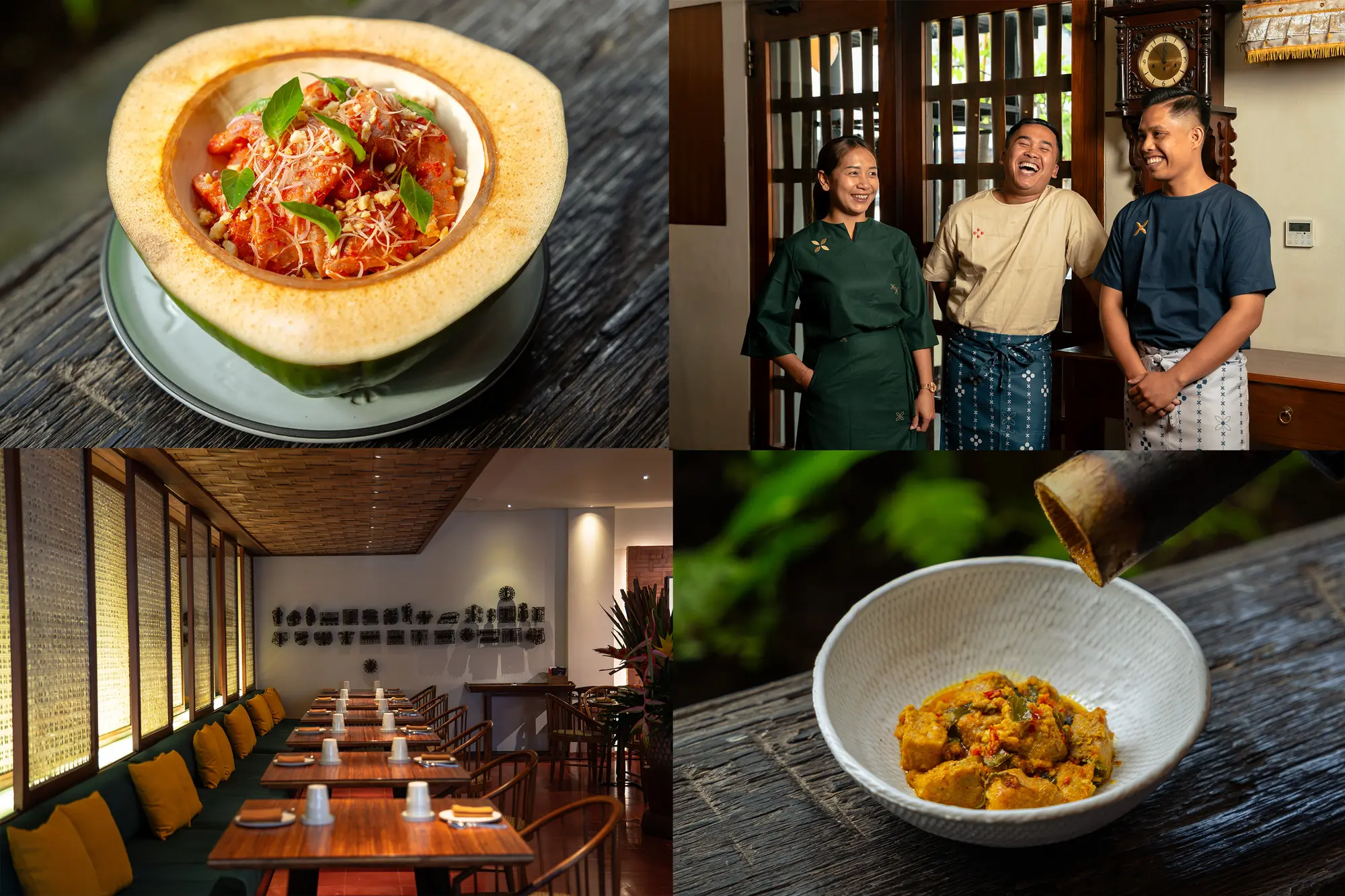
Nusantara by Locavore is the heritage-focused project of the Locavore group, structured around the cuisine of the Indonesian archipelago. The kitchen, led by chefs Ray Adriansyah, Putu and Wayan, works through regional recipes from across the country’s 17,000 islands, including Bebek Goreng, Rendang, Ayam Betutu and Sate Lilit. More than ninety-five percent of ingredients are sourced locally. The format is intimate and research-driven, positioning the restaurant as a reference point for Indonesian cuisine rather than a generic regional showcase.
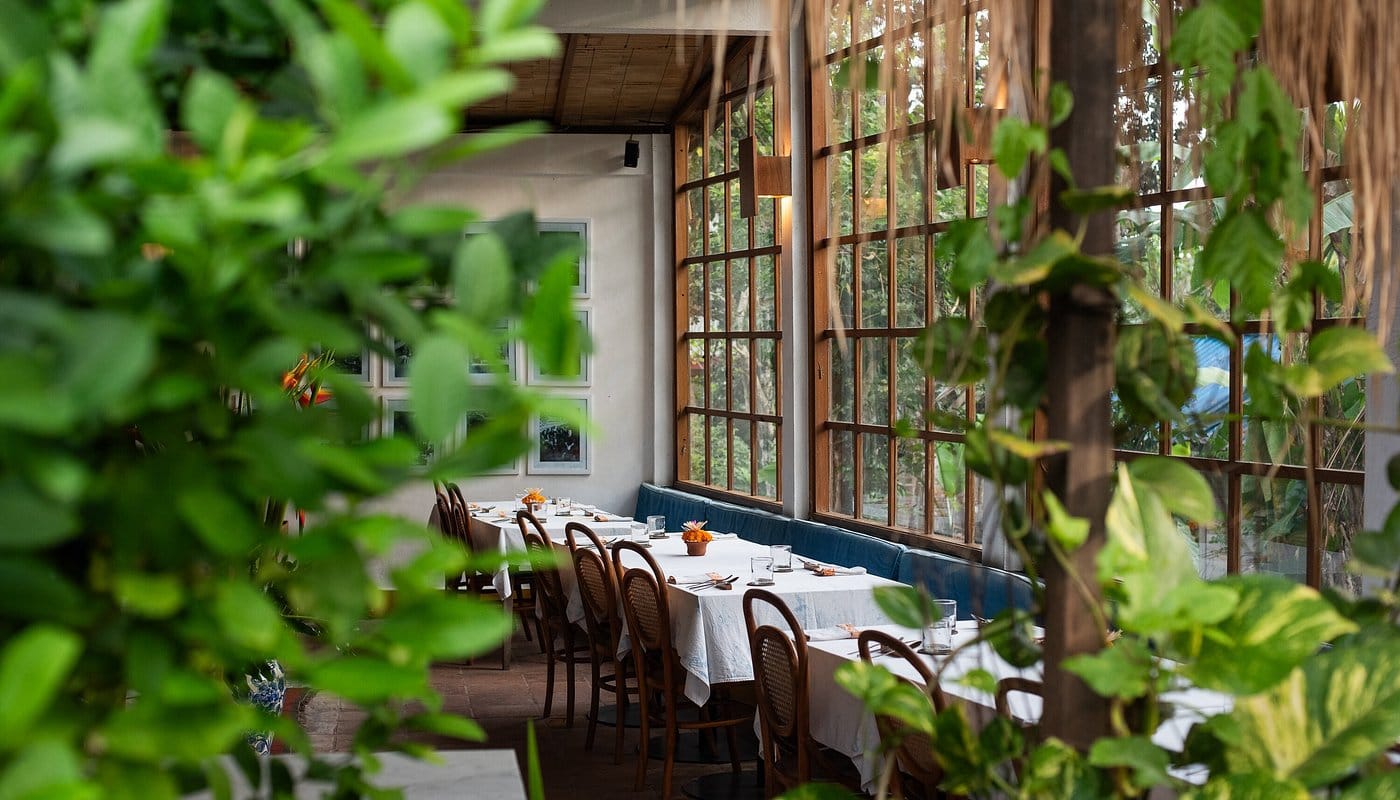
Room4Dessert approaches tasting menus through pastry, herbs and low-intervention ingredients rather than conventional savoury sequencing. Located on the outskirts of Ubud, it has developed a strong identity around dessert-led dining, natural wines and a broader ecosystem that extends beyond the main dining room. It is one of the island’s more singular formats — less classic fine dining, more chef-driven alternative.
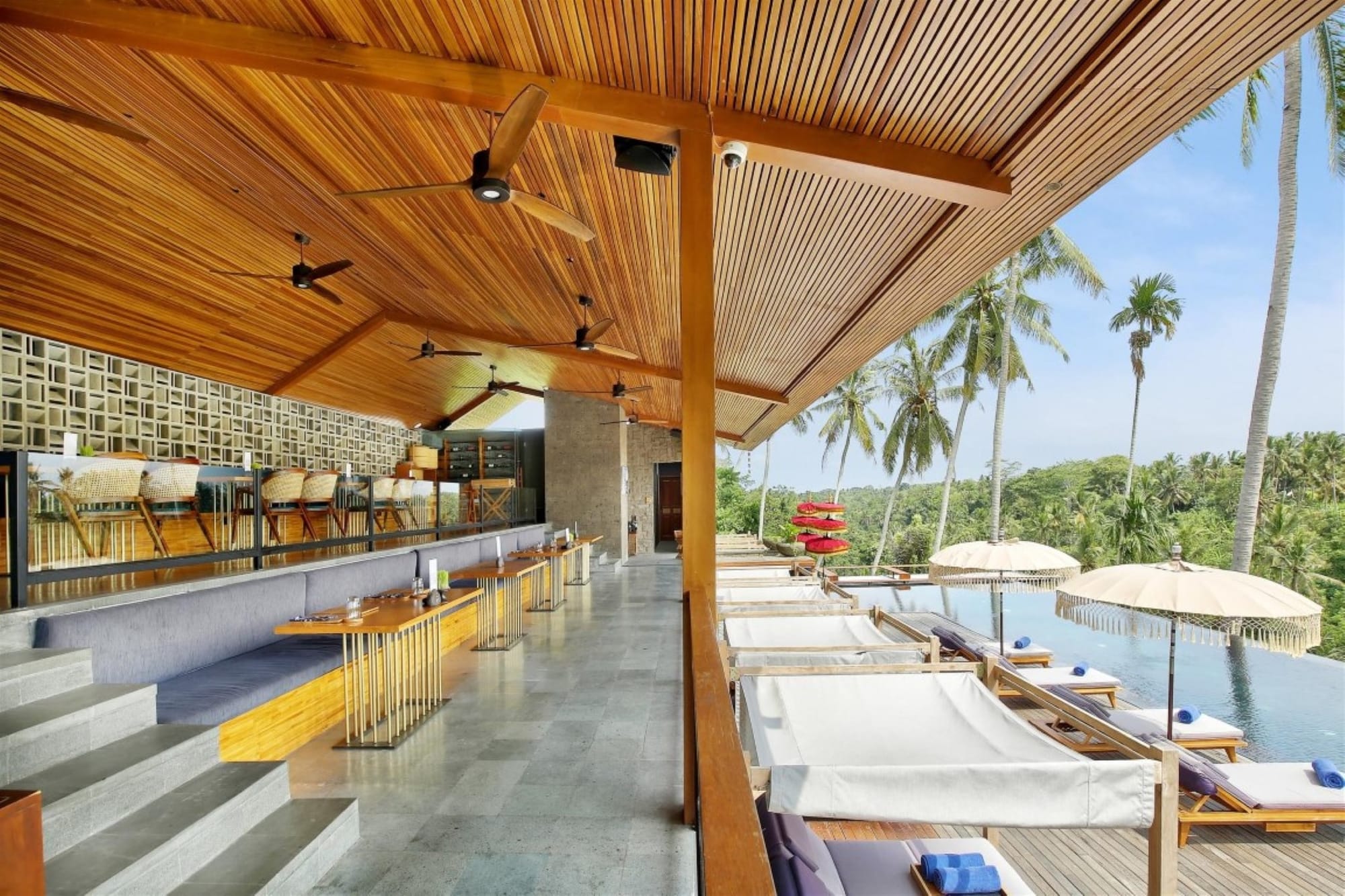
Wild Air is built around an open-air pavilion overlooking one of Ubud’s forest pathways and surrounding valleys. The menu moves between Asian and Western preparations, with the dining room itself — open on multiple sides — functioning as the central element of the experience. The format is suited to long lunches and unhurried dinners, and the restaurant operates closer to an independent destination than a hotel outlet.
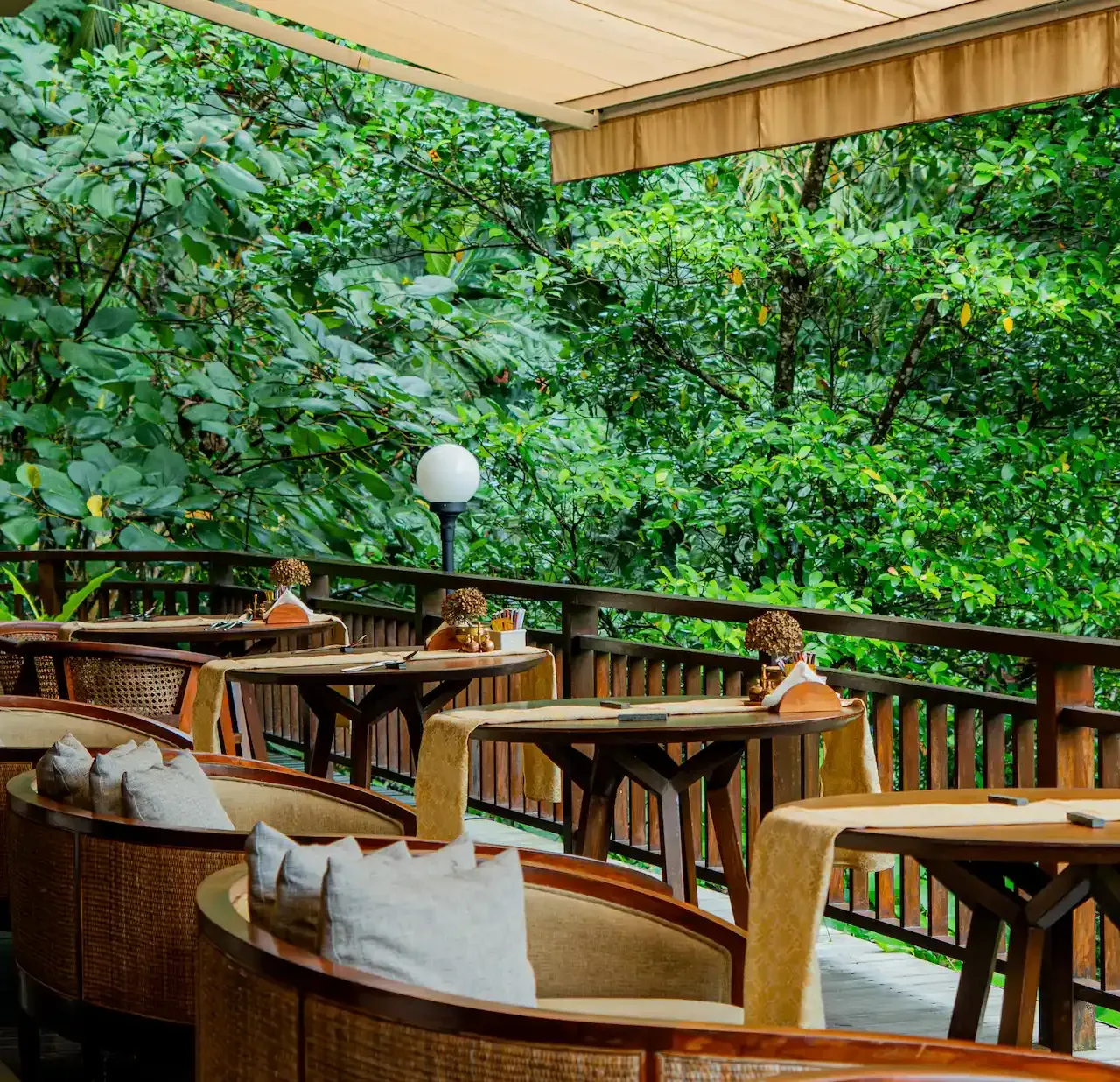
Ankhusa sits within a valley-facing setting on the outskirts of Ubud, with a menu structured around international plates and Indonesian classics. House dishes include Sop Buntut, the slow-cooked oxtail soup, and seared barramundi, alongside a dessert and mocktail programme that gives the kitchen a more contemporary register. The format is relaxed, positioned for both residents and visitors looking for an alternative to resort dining.
Ubud has developed an unusually deep concentration of Japanese restaurants, ranging from teppanyaki omakase counters to robatayaki and Nikkei-influenced kitchens. This subgroup deserves its own grouping.
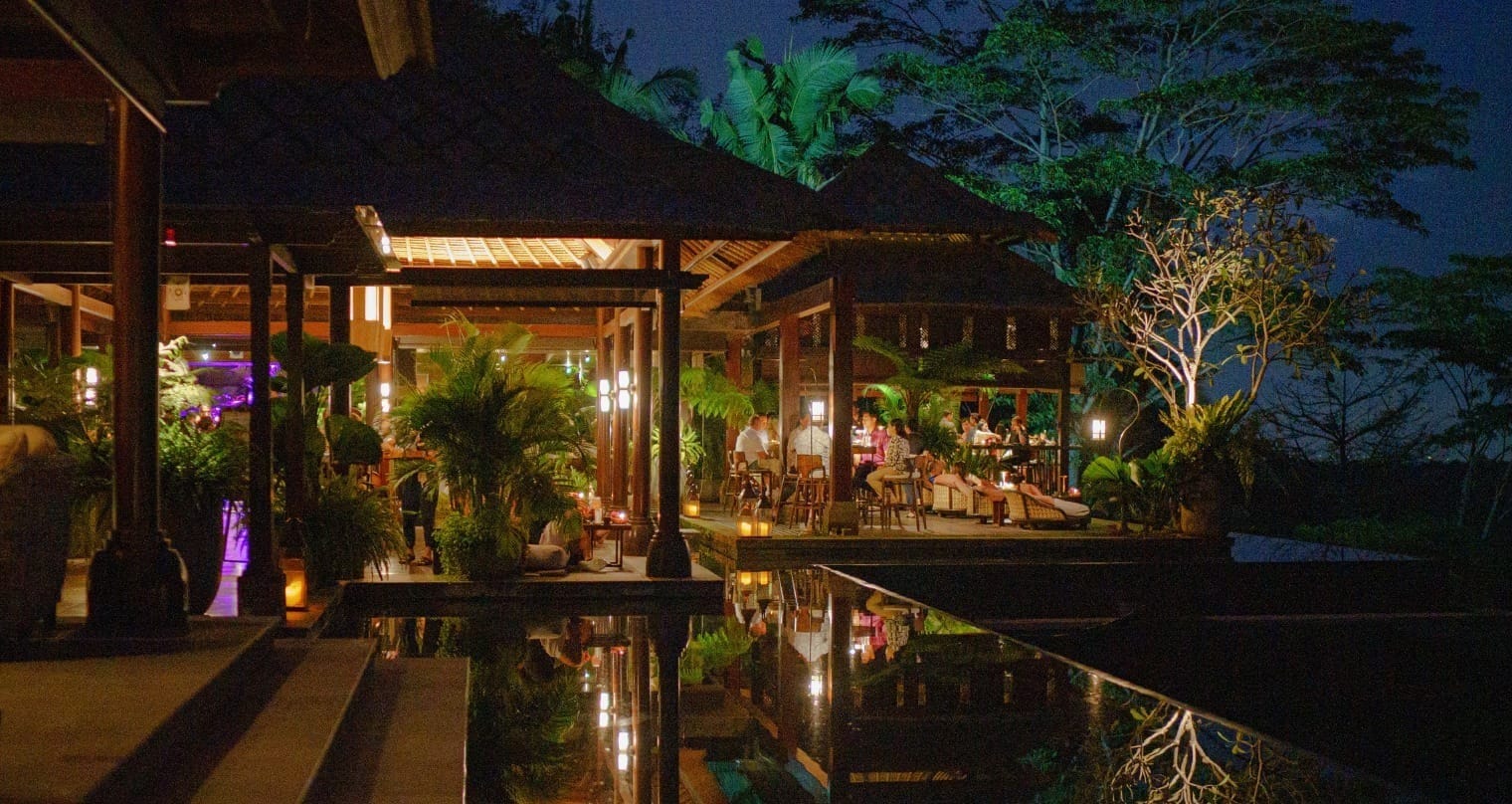
Ambar — Sanskrit for ‘sky’ — operates as the cliff-top Japanese bar at Mandapa. The kitchen focuses on ramen and sushi, supported by a cocktail programme and live jazz scheduled daily. The format works as both an apéritif destination and a full evening service, offering one of Ubud’s few Japanese-leaning bar formats inside a luxury resort.
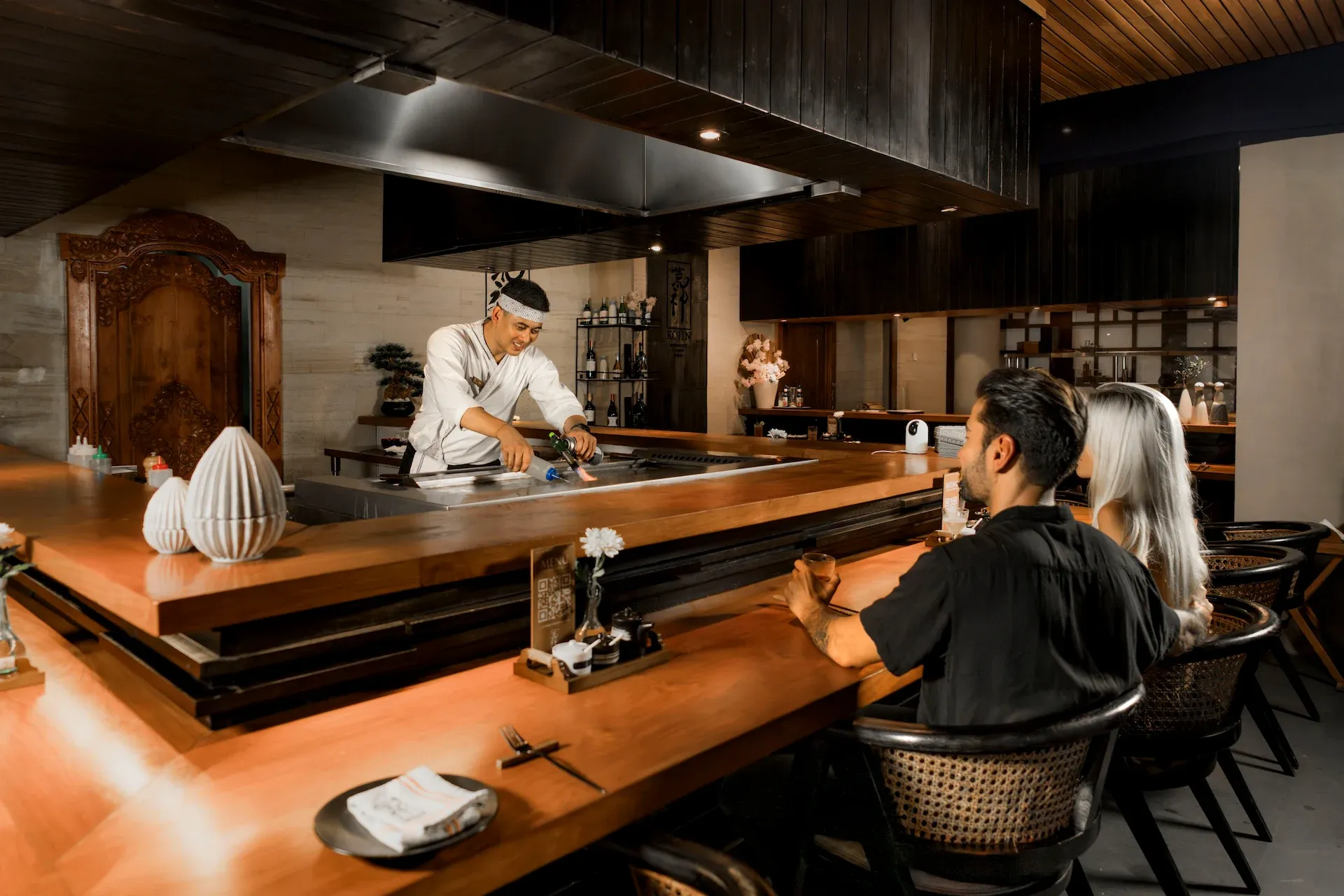
Open since 2019, Kojin is structured around a teppanyaki counter and an omakase format built on sushi, sashimi and grilled preparations. The Chef’s Table seating gives diners direct interaction with the kitchen, and the menu prioritises premium ingredients and Japanese technique over local reinterpretation. Within Ubud’s Japanese segment, Kojin functions as the closest equivalent to a counter-led omakase restaurant.
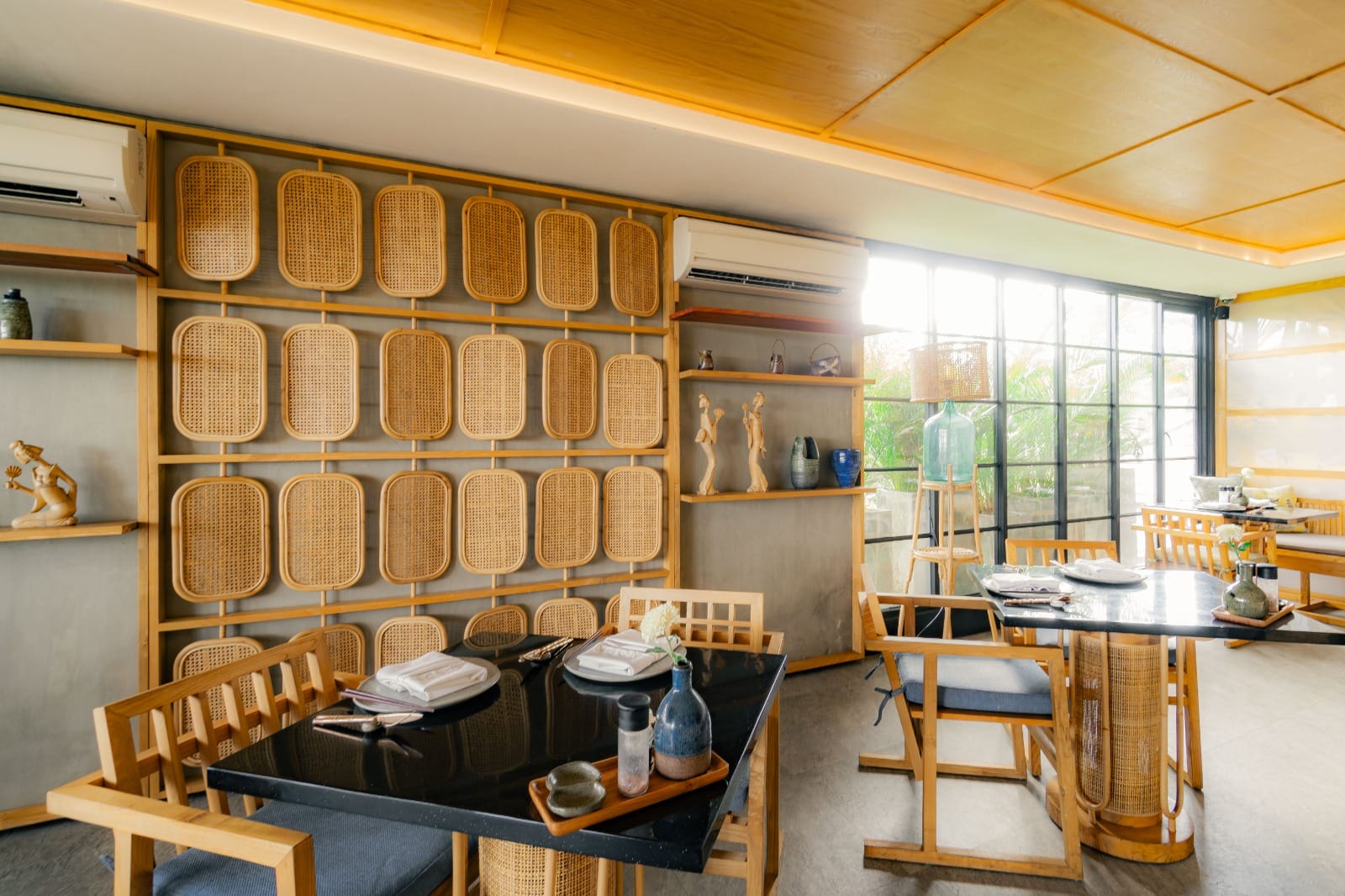
Norii works in a contemporary Japanese register built around robatayaki — the open-charcoal grill — combined with sushi, sashimi and ramen. Signature plates include Robatayaki beef, grilled chicken oyster skewers and a crispy mentai tuna salad. The kitchen pairs its menu with a structured cocktail list, and the dining room operates on extended afternoon-to-evening hours, positioning Norii as a more flexible alternative to formal omakase counters.
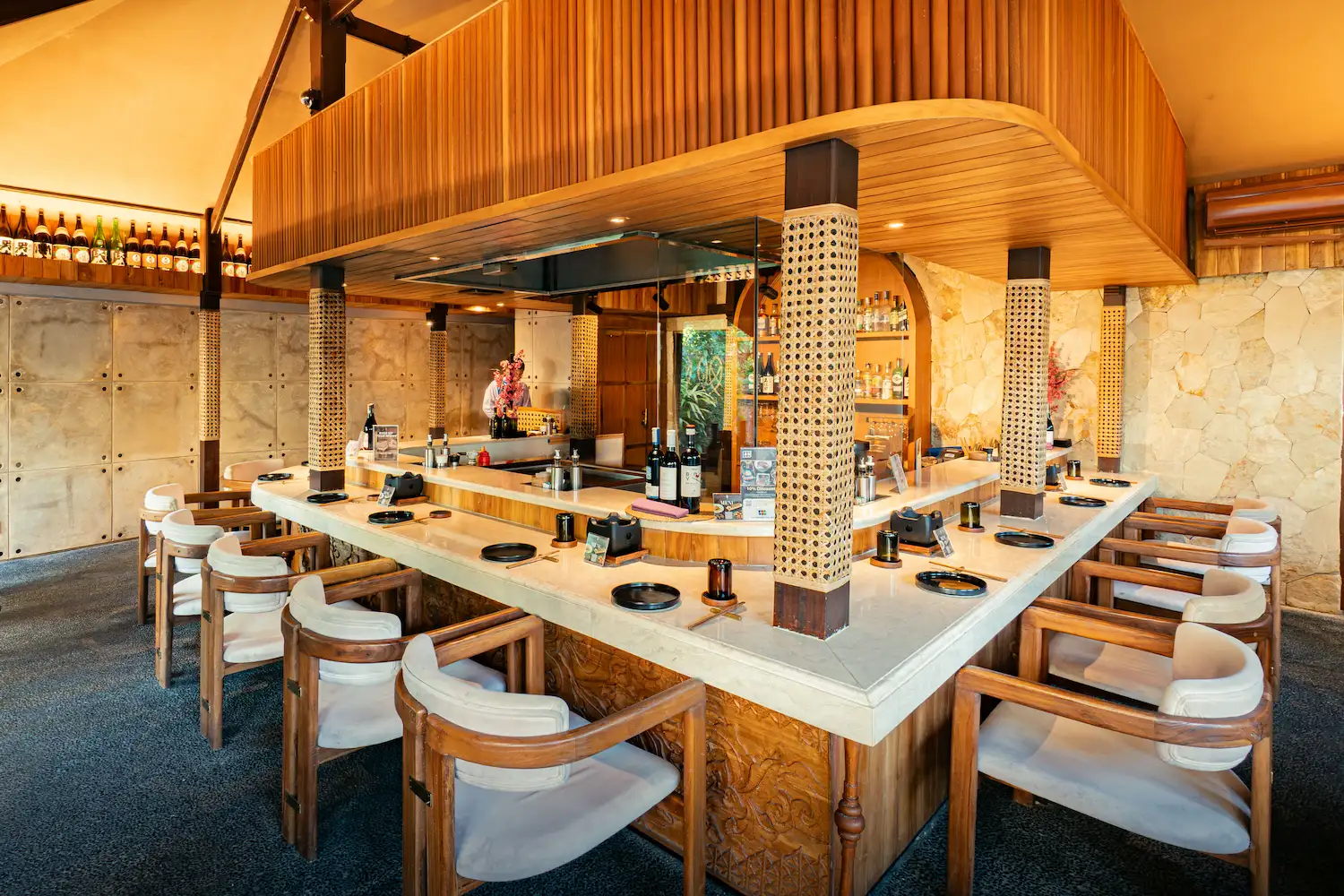
Shichirin operates locations in both Ubud and Canggu, structured around teppanyaki, konro charcoal grill and gyukatsu — the breaded, seared beef cutlet. Counter seating at the teppan provides direct access to the open-flame cooking, and the kitchen focuses on Japanese technique rather than fusion. Within the broader Bali grill segment, Shichirin is one of the few restaurants applying konro and teppan formats with consistency.
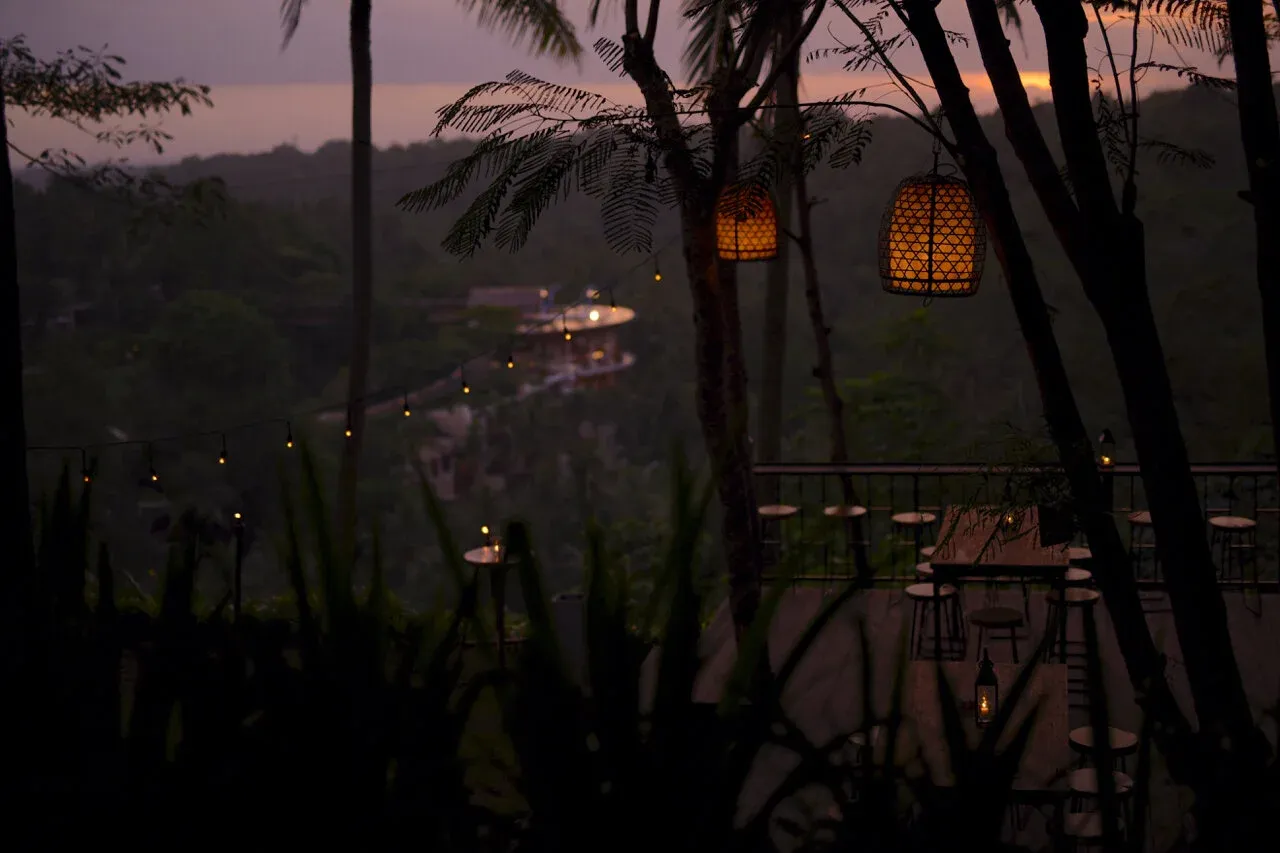
The Sayan House sits on the Sayan ridge near Ubud, with the dining room oriented toward the Ayung River valley. The location — close to the cultural and resort cluster of Sayan — gives the restaurant one of the more dramatic settings in the area. The format is suited to extended meals timed to dusk, with the valley view functioning as the central element of the experience.
The southern peninsula concentrates Bali’s coastal resort dining. Restaurants in this group share a beachfront or cliffside orientation and tend to work in seafood, grill or wood-fired registers.
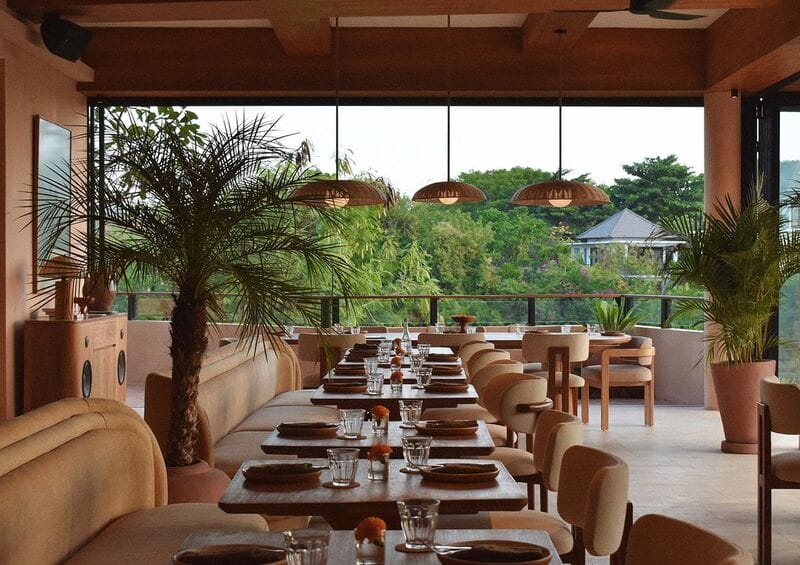
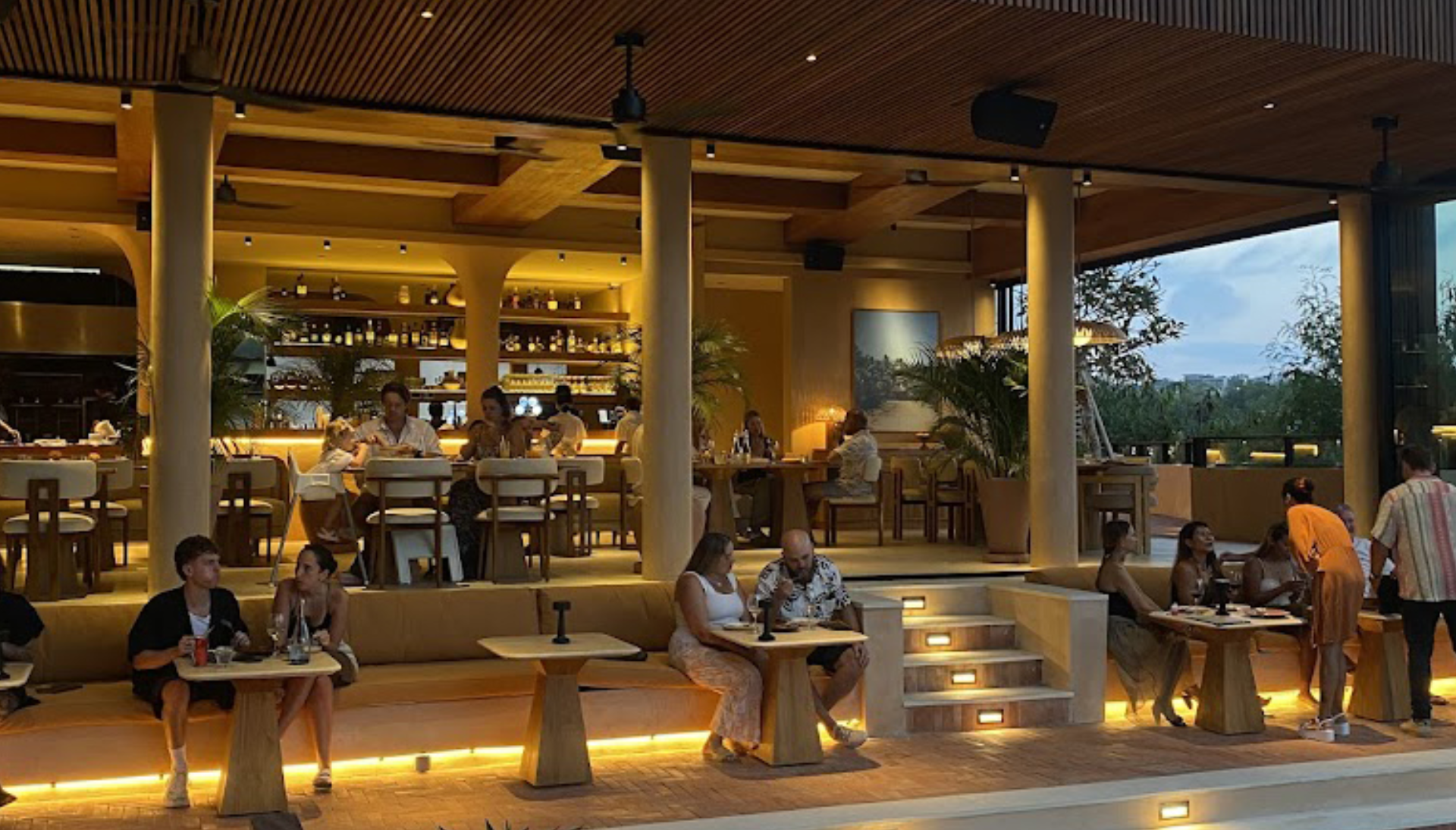
Teja operates as a dinner-led restaurant in Uluwatu, built around open-fire cooking and dry-ageing techniques. The menu leans toward modern European structure, with an emphasis on meat, seafood and controlled use of flame, supported by a concise cocktail programme. The setting shifts naturally from sunset into a more social evening format, with music and a bar-led rhythm shaping the later hours. It is positioned less as formal fine dining and more as a structured, evening-focused address within Uluwatu’s evolving restaurant scene.
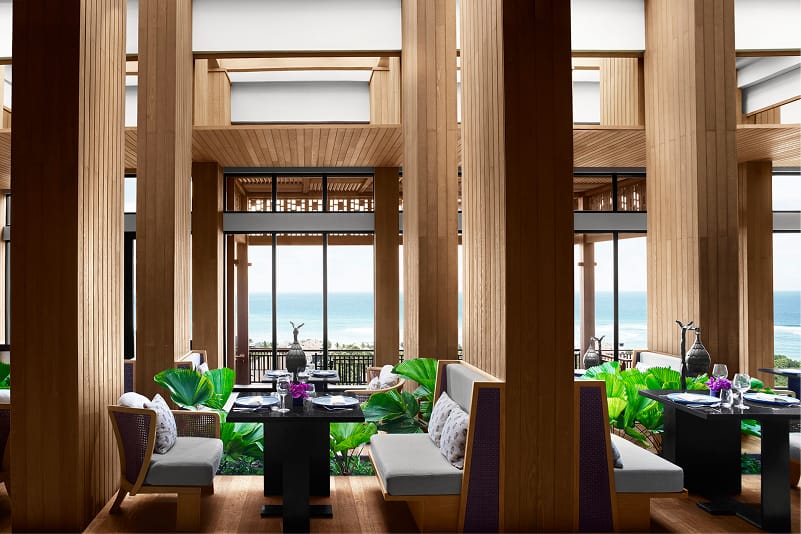
Bejana — named after a traditional Indonesian cooking vessel — is the Ritz-Carlton’s Indonesian restaurant in Nusa Dua. The kitchen is structured around regional specialities from across the archipelago, supported by a Culinary Cave dedicated to chef’s table service and culinary instruction. Within the Bukit Peninsula’s resort circuit, Bejana is one of the few high-end addresses focused specifically on Indonesian heritage cuisine rather than international hotel dining.
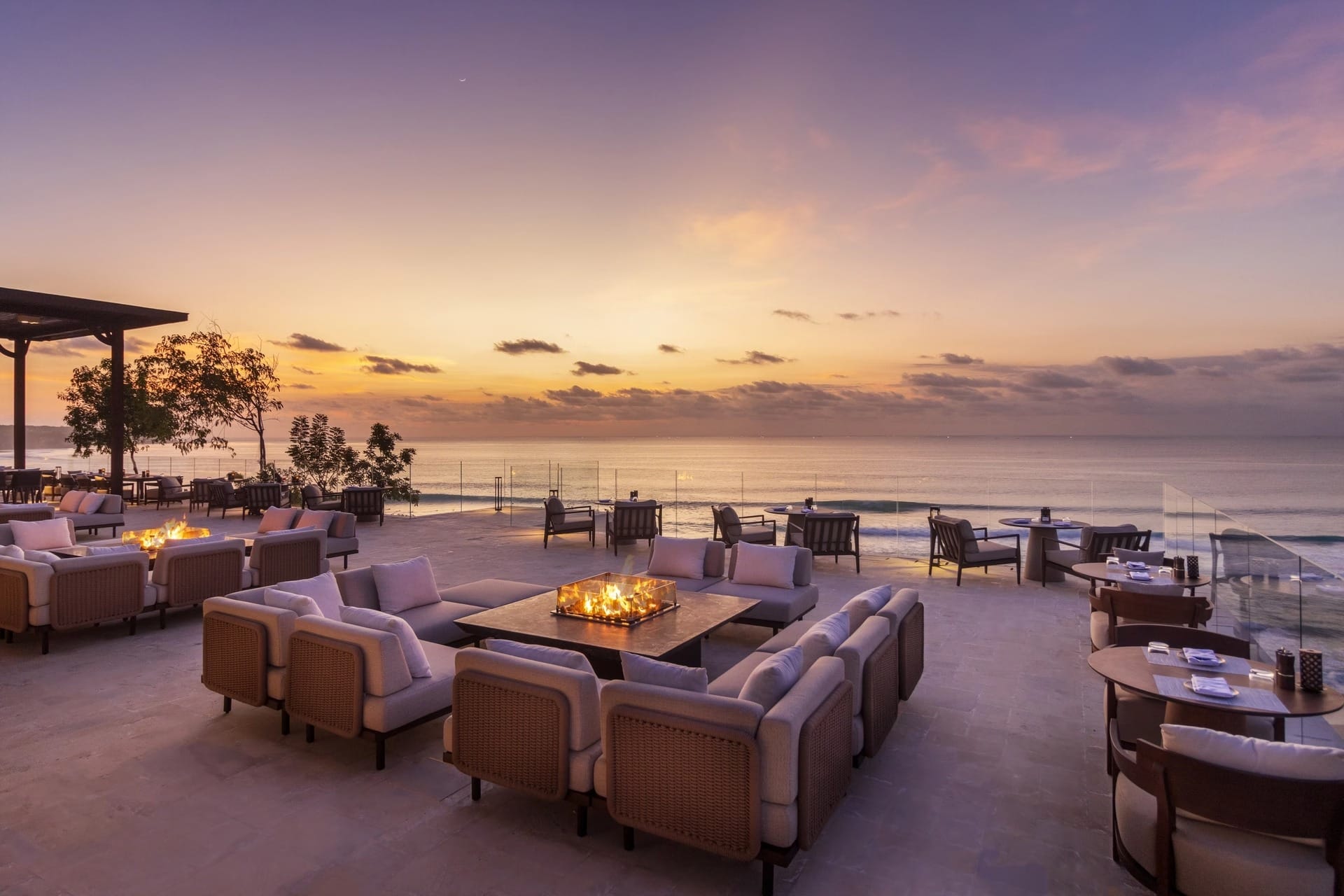
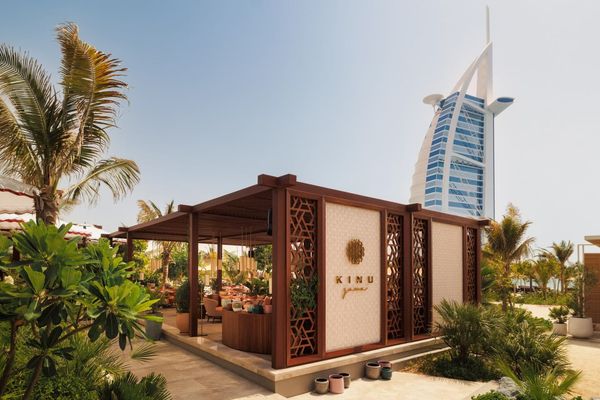
AKASA occupies a cliffside position at Jumeirah Bali on the Uluwatu coast. The kitchen, led by chef Joan Achour, is built around wood-fire technique applied to a pan-Asian menu drawing on Balinese, Thai, Japanese and Korean references. The format prioritises shared plates — crudo selections, wood-fired mains, French-technique desserts using local ingredients — and includes a Chef’s Table for extended tasting service. The cliff orientation makes it one of the more distinctive dinner destinations on the southern coast.
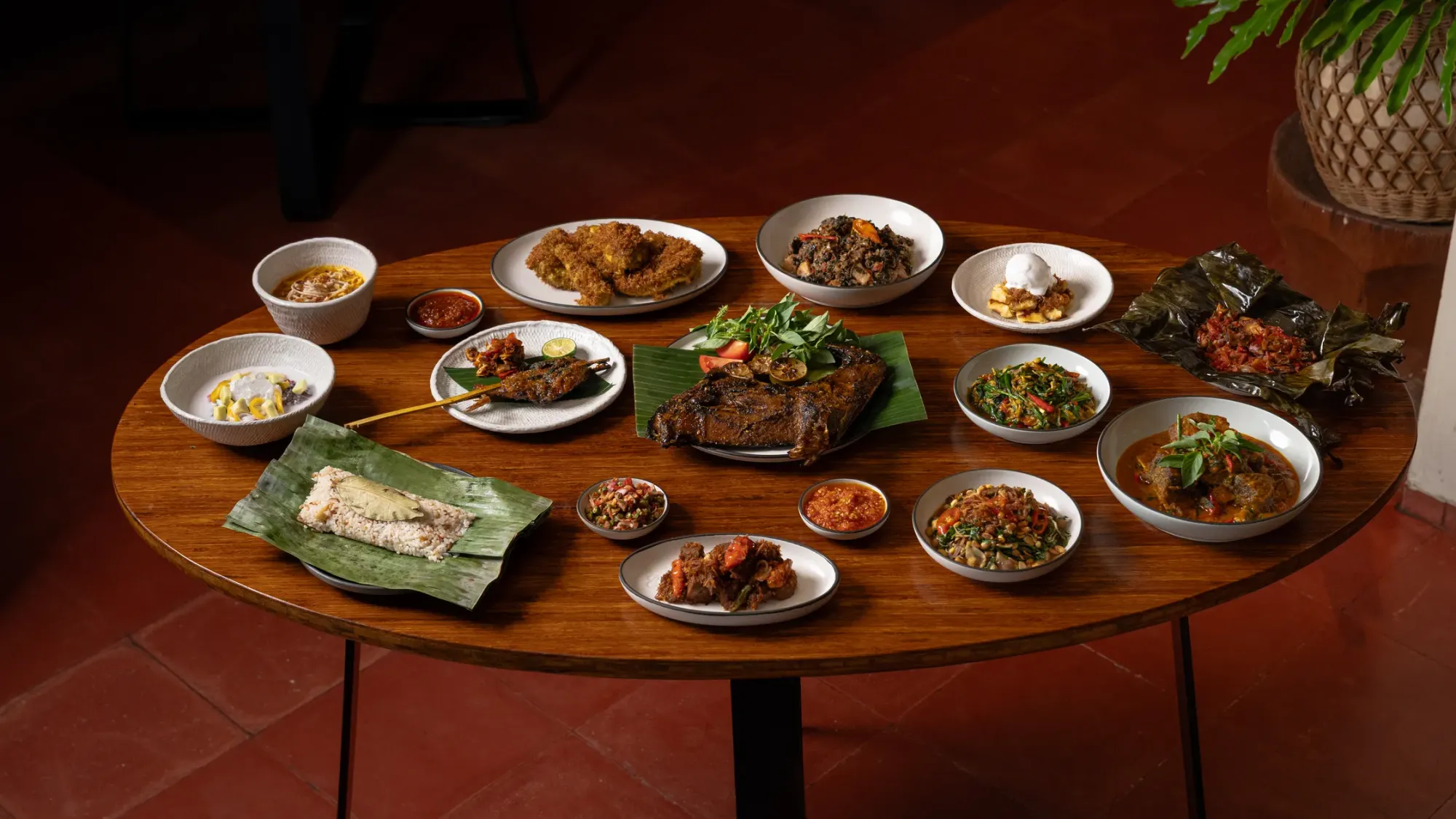
Across these restaurants, Bali's dining scene divides along clear geographic lines. Ubud has developed into a layered ecosystem where resort fine dining, independent Indonesian kitchens and Japanese counters operate in parallel, each holding its own register. The Bukit Peninsula remains coastal and resort-led, structured around seafood and wood fire. Seminyak retains its position as the island's grill and evening corridor.
What the strongest addresses share is not scale or setting, but a defined culinary direction executed with consistency — a clear distinction from the generalised hotel offer that still dominates much of the island. For visitors planning a multi-stop itinerary, the most coherent route follows the same logic as this guide: Ubud for tasting menus and Japanese precision, the Bukit Peninsula for coastal dining and open-fire cooking, Seminyak for grill-led evenings.
Read together, these restaurants mark a shift in how Bali is cooking for its international audience — away from atmosphere as the primary argument, and towards technique, sourcing and structure as the defining criteria.