Santani, Kandy: Where Wellness Is Built Into the Environment
– 7 min read

"The art of medicine consists of amusing the patient while nature cures the disease." — Voltaire
There is a particular kind of fatigue that no amount of sleep addresses. It accumulates not in the body but somewhere behind it, in the machinery that governs the body: the nervous system, the hormonal architecture, the mechanisms of attention and recovery that modern life systematically erodes. I have stayed in resorts that promise rest and deliver distraction. I have visited spas that offer ancient treatments as theatre. After enough years covering the world's most considered destinations, one develops an instinct for the difference between a property that performs wellness and one that actually understands it.
Santani Wellness, on its 116-acre former tea plantation above Kandy, does not perform anything. That, it turns out, is rather the point.
The journey itself begins the recalibration. From Bandaranaike International Airport, the options are deliberate in their distinction: helicopter transfers can take roughly thirty minutes, with pricing depending on operator and season, delivering you over the coastal lowlands, past the first ridgeline, and directly into a landscape that feels geologically separate from the island's urban coast. Alternatively, seaplane transfers may also be arranged, with flight times and pricing depending on operator and conditions, offering an aerial perspective that places Santani's position within its ecosystem with unusual clarity. From either approach, you understand something before you arrive: this is not a resort that happens to be surrounded by nature. Nature is the architecture's first material.
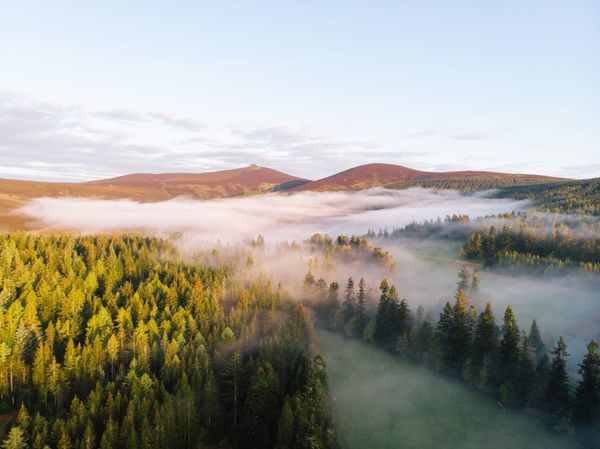
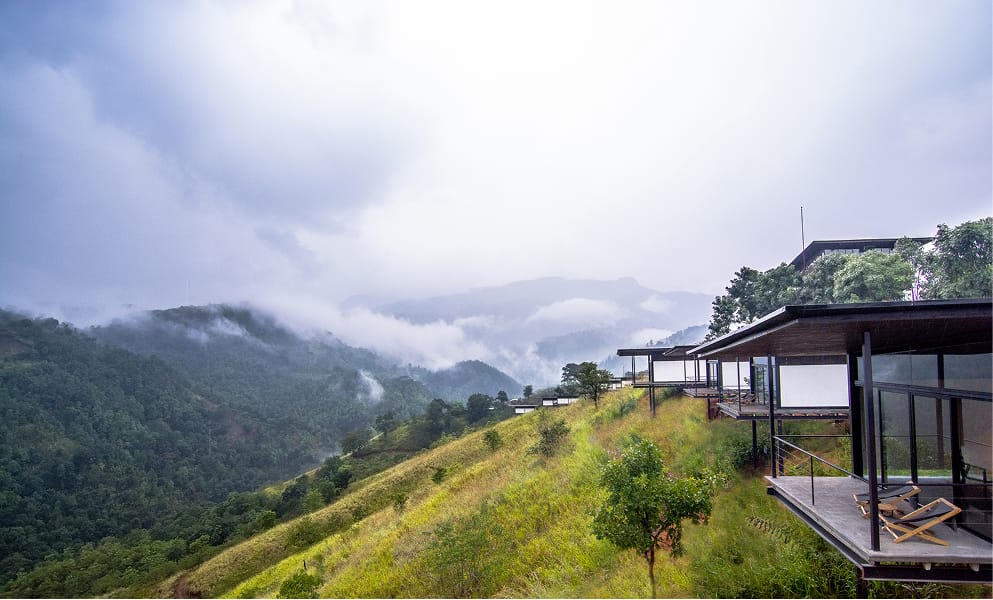
The Aratenna Estate sits above Werapitiya, in the administrative district of Kandy, which Sri Lankans have long regarded as the spiritual and cultural centre of the island. The last Kandyan king held court here before British colonial authority ended the Kingdom of Kandy in 1815. The mountains that frame the horizon, the Knuckles mountain range, part of Sri Lanka’s UNESCO-listed Central Highlands landscape, carry that weight without announcing it. They are simply there: broad views toward the Knuckles range and Dumbara region (meaning "misty mountains" in Sinhala) are offered from much of the property. Mist is not an atmospheric decoration at Santani. It is the microclimate. On most mornings, it moves through the valley below the resort in slow, unhurried columns, and there is something in watching it that begins, before any programme or treatment, to slow the neural traffic.
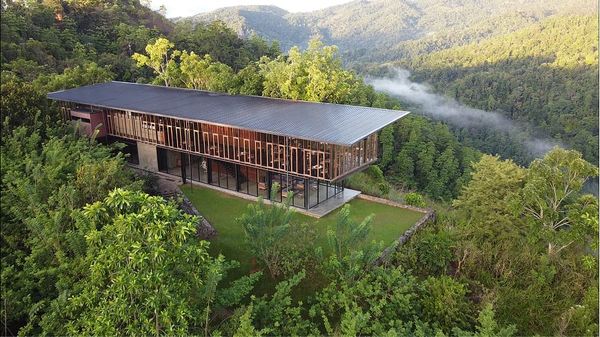
Founder and CEO Vickum Nawagamuwage conceived Santani on a philosophy he describes as adaptive wellness, the idea that genuine wellbeing is not a fixed programme but an evolving response to the individual's specific condition. Opening in 2016 as one of Sri Lanka’s first purpose-built wellness resorts, Santani was not positioned as a hotel that added a spa wing. It was designed, from the structural engineering outward, around a single principle: that the environment must itself become the treatment. Nawagamuwage, who has spoken publicly about designing what he calls the "architecture of silence," made decisions that luxury developers rarely make. He removed noise, first physical, then digital. The shared spaces are Wi-Fi-free by intention. Connectivity is available in-room or in a fifteen-seat private media lounge, but it requires a conscious choice to seek it. The absence, rather than feeling like deprivation, functions as a kind of perimeter.
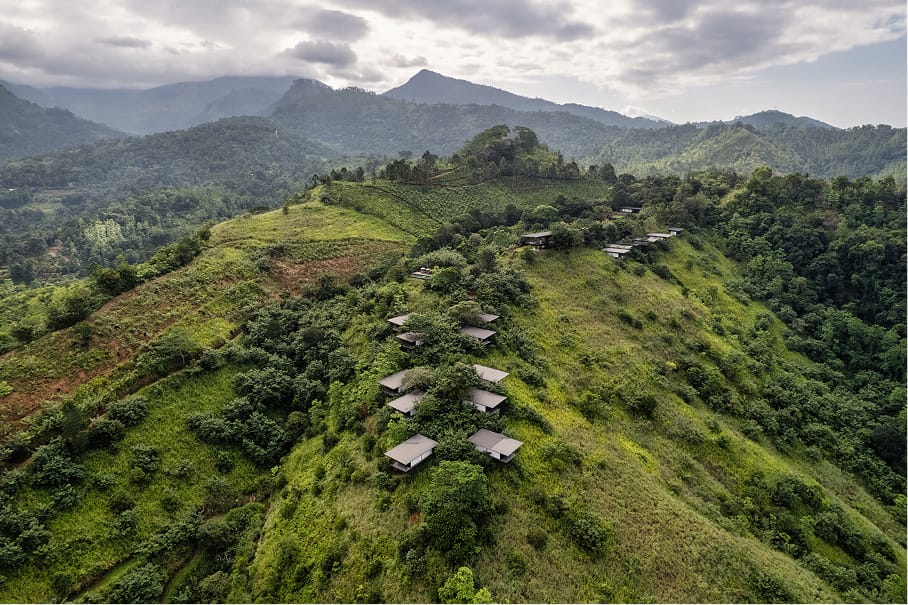
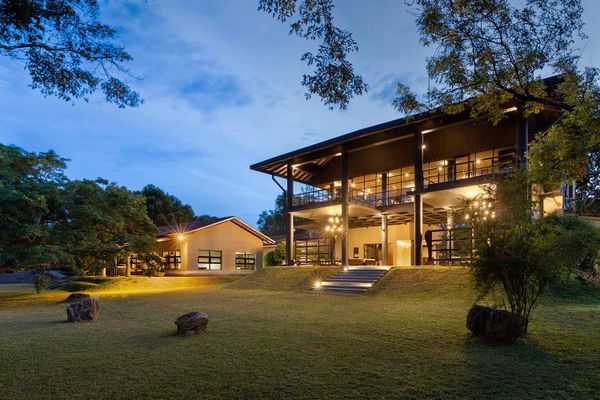
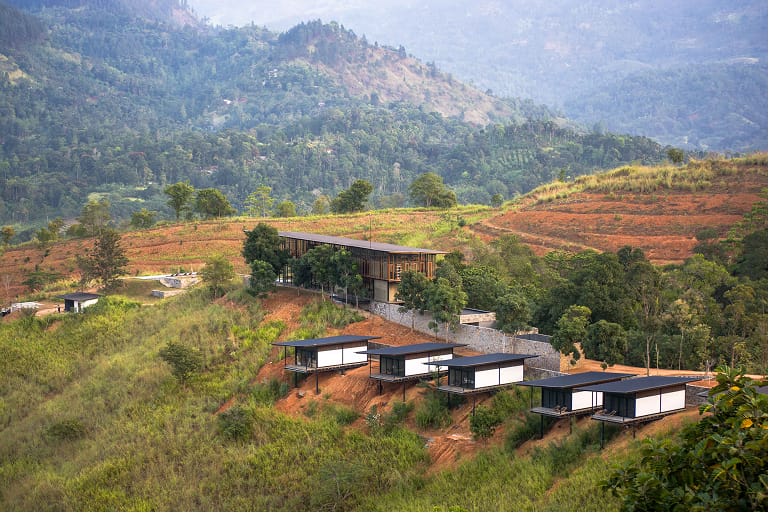
The accommodation comprises sixteen Mountain View Chalets and four Garden View Chalets, each positioned as a standalone pavilion within the landscape. The design philosophy is minimalist tropical modernism: concrete, timber, glass, and open air, with no unnecessary surfaces and no decorative ambition beyond the functional. A Mountain View Chalet faces the five peaks without obstruction. The structure is deliberately low-profile — it does not compete with the topography but orients itself toward it. The floor-to-ceiling glass panels on the valley side mean that the first thing visible upon waking is not a ceiling but a hillside, usually with clouds moving across it at different speeds than it would if viewed from sea level.
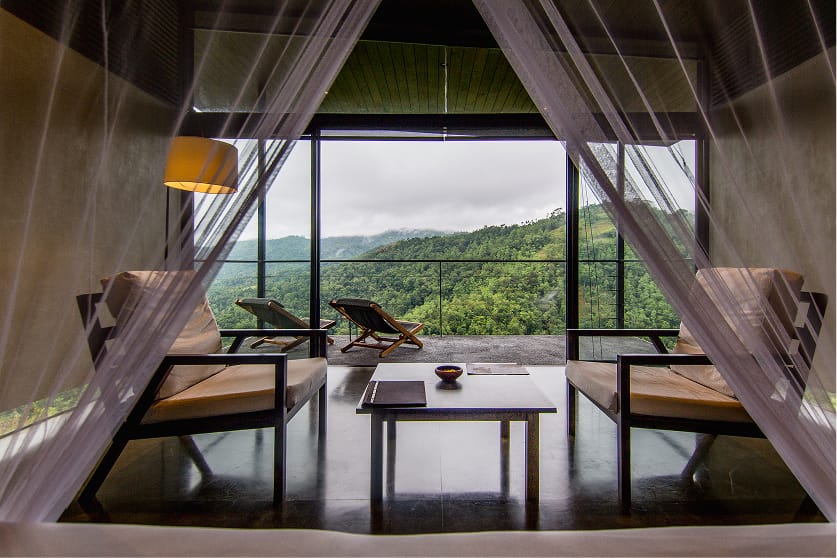
What defines the spatial experience is not any single dramatic gesture but rather what is absent. Rooms are intentionally screen-free and operate without alcohol, reflecting the property's wellness positioning. The effect is that you become aware of sound in a different register: the specific pitch of particular bird species (Santani's resident naturalist leads early morning birdwatching sessions, and Sri Lanka's extraordinary avian biodiversity repays attention), the difference in rain sound between the pavilion roof and the vegetation below, the quality of wind through bamboo stands versus broader-leafed forest. These are not poetic observations. They are sensory recalibrations that occur, quietly and without announcement, over the first forty-eight hours.
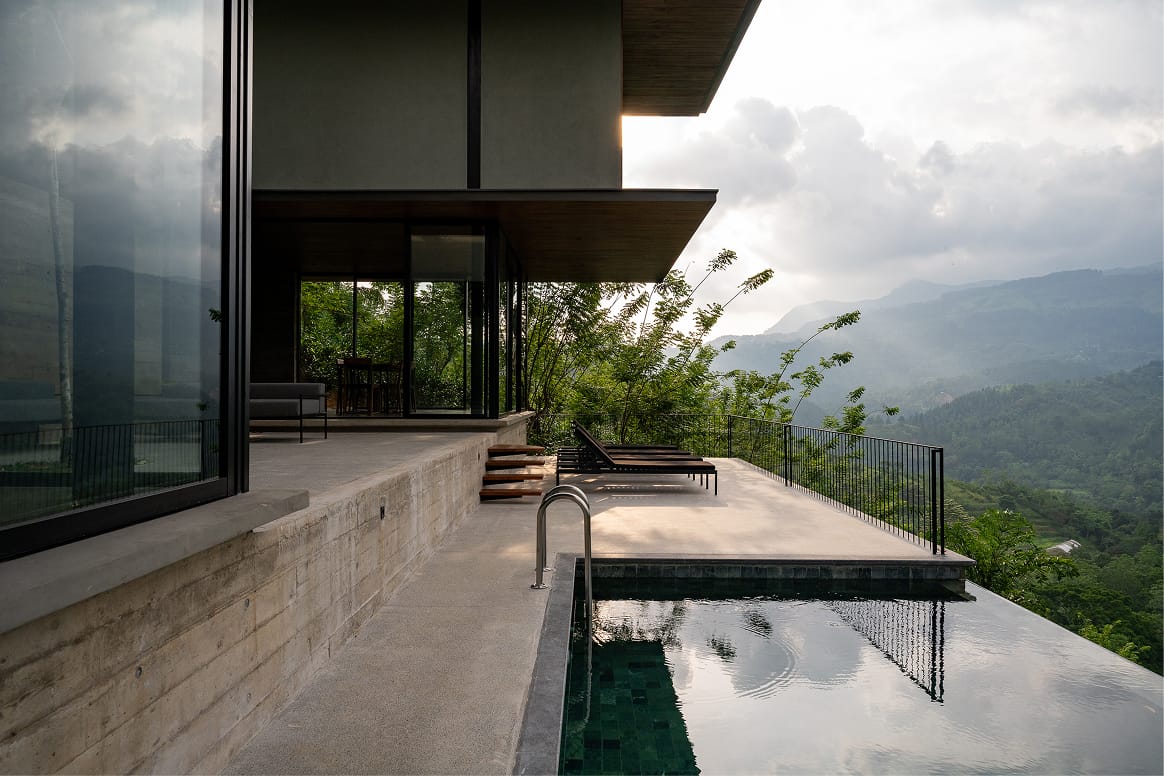
The infinity pool, positioned along the ridge, reflects the valley below rather than the sky above, which produces a particular visual effect: looking into it, you see depth rather than surface. This is either accidental or very deliberately designed. Given the attention applied to every other spatial decision at Santani, one assumes the latter.
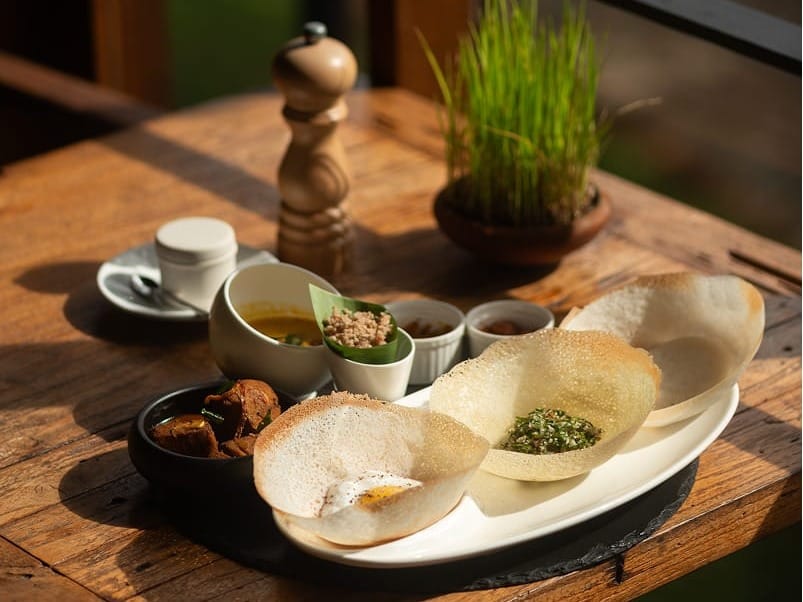
Santani's dining approach draws on Ayurveda's concept of Rasa Haya, the six tastes: sweet, sour, salty, pungent, bitter, and astringent. In classical Ayurvedic nutritional philosophy, a complete meal should address all six, not for gastronomic variety but because each taste corresponds to specific metabolic and digestive functions. The kitchen does not present this as theory. It presents it as food.
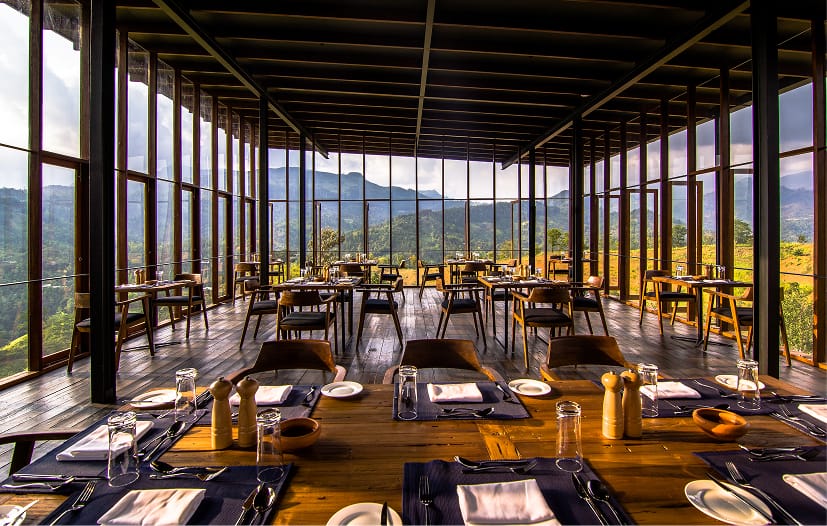
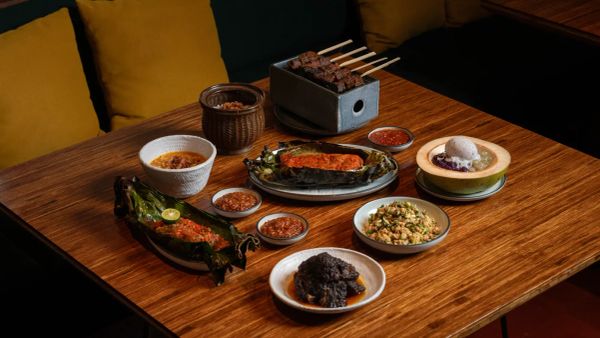
Rajika, the restaurant manager, oversees a glass-fronted floating dining space with panoramic valley views, where each guest's menu is personalised to their constitution and programme rather than drawn from a standard offering. Sri Lankan cuisine provides the kitchen's natural vocabulary: dishes built around lentils, jackfruit, bitter gourd, moringa, and an architecture of spice that is medicinal in origin and specific in effect. A meal here might include a kurakkan (finger millet) preparation alongside a coconut-based curry of green leaves gathered from the estate, a tamarind-dressed salad that addresses both the sour and astringent notes in the six-taste framework, and a turmeric-heavy broth calibrated to the digestive strength of the individual guest.
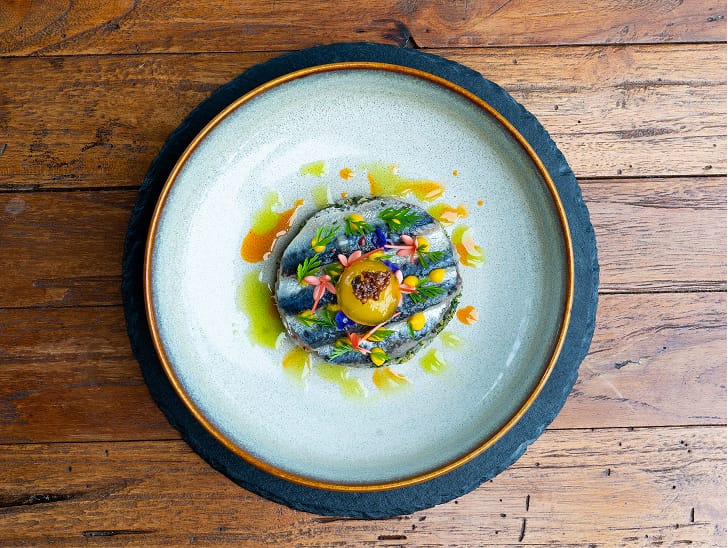
The cuisine follows Ayurvedic dietary principles and a plant-forward approach, aligned with the current global conversation around longevity and gut health, though framed not in the language of nutritional science but in the far older language of Ayurveda.

The moment that reorganises one's understanding of what Santani is doing begins, for most guests, at 5:30 in the morning on the day of the Panchakarma cleanse. The day starts in darkness. There is physical intensity: sweating, a level of discomfort that is real and is not softened by euphemism on the part of the Ayurvedic physicians who advise on the process. The preparation — a fully vegetarian day prior, building toward the systematic clearing of the digestive tract — is a demanding process whose effect depends on the individual's starting constitution.
Guests often describe a noticeable shift in energy and clarity after the programme, though outcomes depend on the individual. In Ayurvedic philosophy, this process relates to the concept of ama, the accumulation of unprocessed metabolic waste. Whether one accepts the classical framework or prefers the language of modern metabolic science, the experience is intended to support a broader rebalancing of the system.
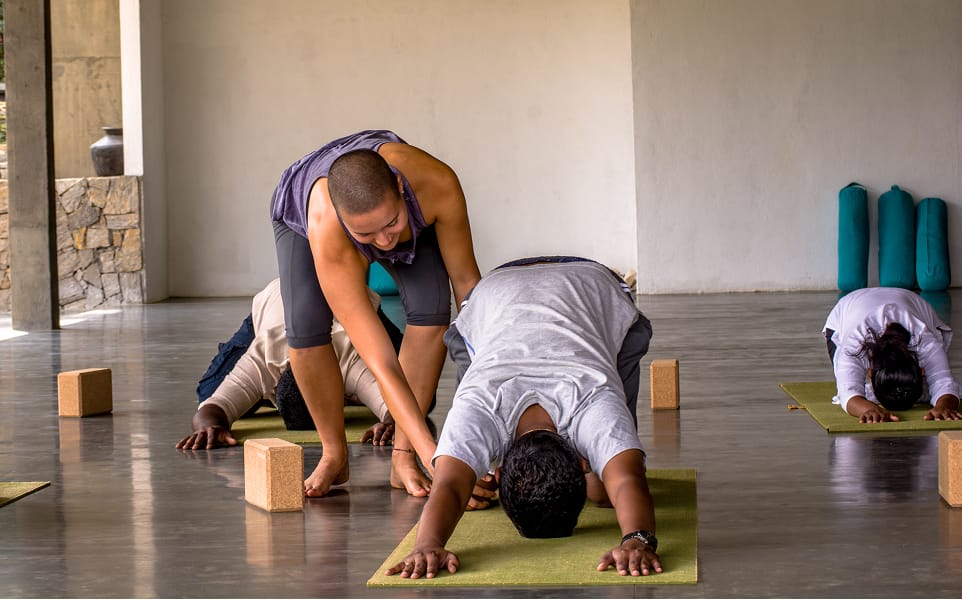
Wellness retreats are ultimately tested not by their architecture but by their practitioners. The Ayurvedic physicians at Santani conduct consultations through classical methods including pulse reading, tongue assessment, and detailed lifestyle analysis. The consultation is long enough to be actually useful.
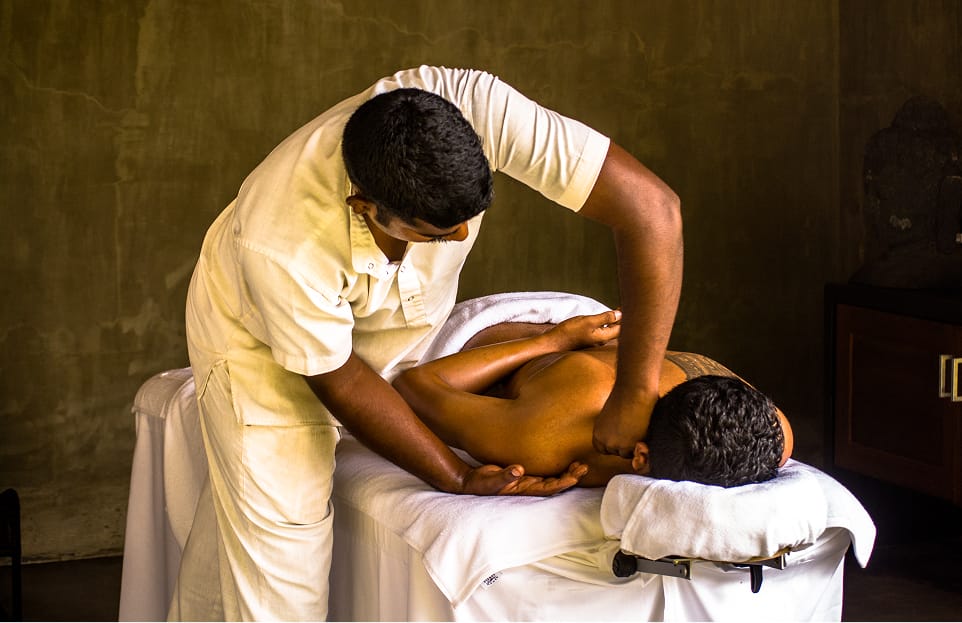
The therapists who conduct the daily treatment sessions — Abhyanga oil massage, Shirodhara, therapeutic steam, reflexology, facial lymphatic work — bring a level of technical skill and attentiveness that distinguishes the experience from more standardised wellness formats.
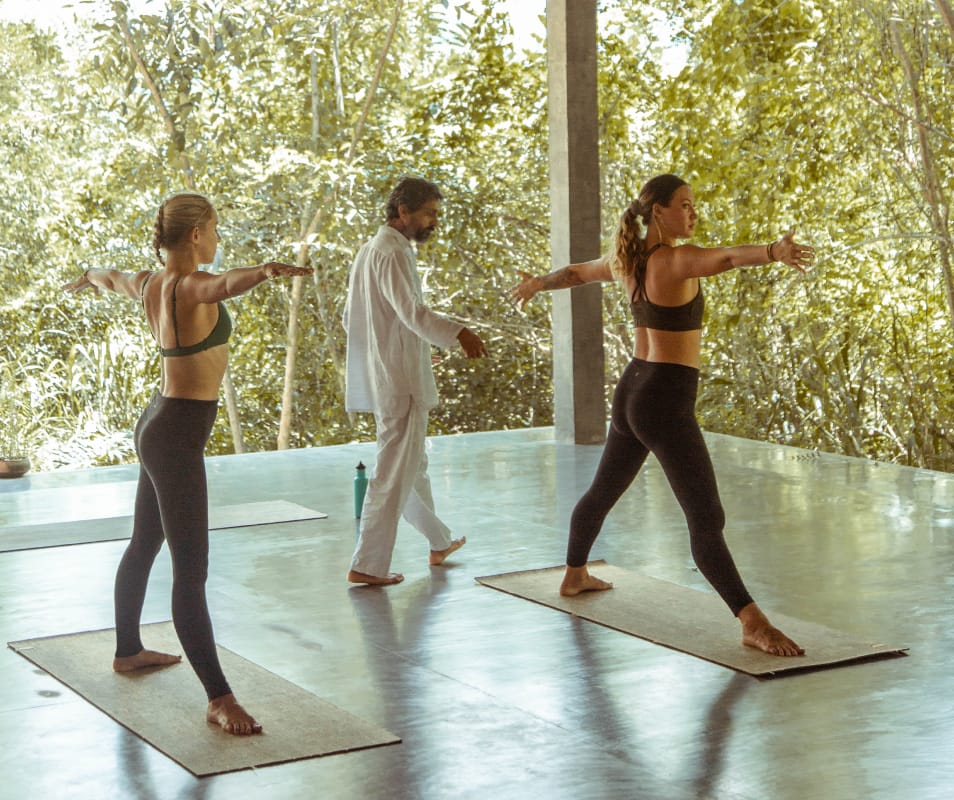
In 2026, Santani marks ten years since opening. Their Masters in Residence series brings visiting practitioners across disciplines for multi-week residencies, integrating their work with the resident Ayurvedic team.
The resort has attracted international recognition, including a Michelin Key and inclusion in major global travel lists. Santani was also featured in the Everyone Wins gift bag for Oscar Nominees for two consecutive years from 2025.
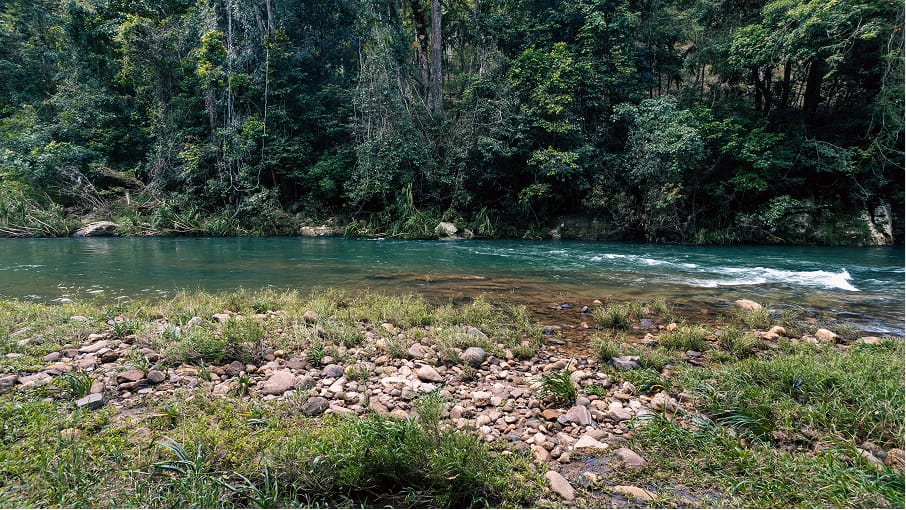
Each day includes a guided nature walk, and the route to the banks of the Hulu River is among the most defining parts of the stay. The path descends through the estate's former tea plantation before reaching a tea experience connected to the estate’s plantation setting.
The river itself is clear, fast-moving, and undisturbed. Time spent here functions less as an activity and more as a reset of attention.
Leaving Santani requires a deliberate act of reorientation. Whether returning by air or road, the contrast becomes immediately apparent.
For many visitors, the surrounding landscape carries a strong sense of stillness and grounding. Many guests leave with a noticeably different sense of calm and mental clarity than the one they arrived with.
In an era when wellness has become a large and varied industry, Santani stands apart for the consistency of its concept and execution.
That, at a certain point in one's career of covering this world, becomes a rare form of value.
Santani Wellness Kandy
Aratenna Estate, Werapitiya, Kandy, Sri Lanka
www.santani.com