Zuma Madrid: Sushi, Robata and Spain’s Exclusive Dassai Pairing
– 3 min read

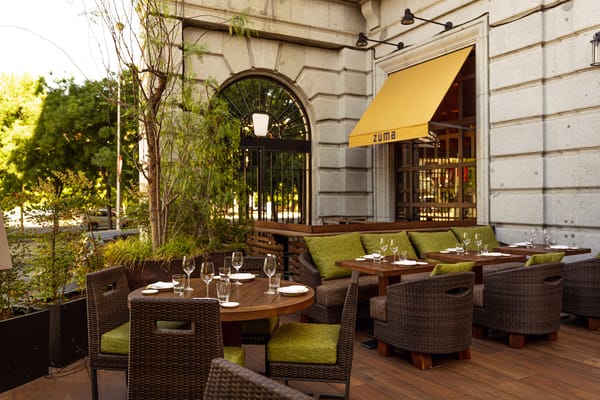
Zuma Madrid marks its first year in the city with a level of consistency that is rare for large international restaurant groups. Part of the global Zuma network founded by Rainer Becker, the Madrid outpost operates within a familiar framework — yet adapts it carefully to local expectations around dining rhythm, service and sociability.
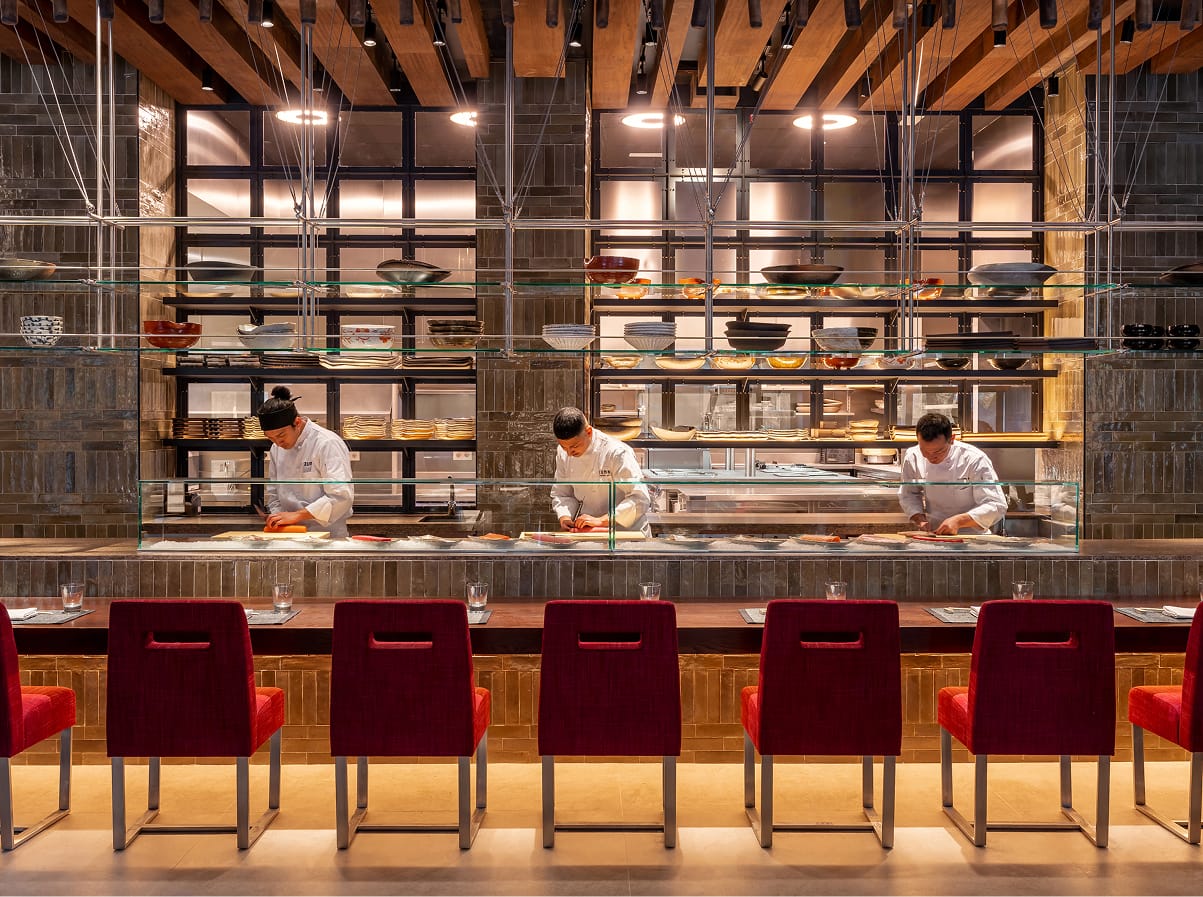
Located in the Salamanca district, the restaurant functions as a contemporary izakaya rather than a formal Japanese dining room. Plates arrive steadily throughout the meal, designed for sharing, with the kitchen organised around three parallel stations: the main kitchen, the sushi counter and the robata grill. This structure defines both the pacing of the meal and the diversity of the menu.
The main kitchen focuses on contemporary interpretations of Japanese cooking, with an emphasis on heat control, fermentation and umami layering. The robata grill, fuelled by charcoal, handles seafood, meat and vegetables with minimal intervention, allowing the quality of the raw product to remain central.
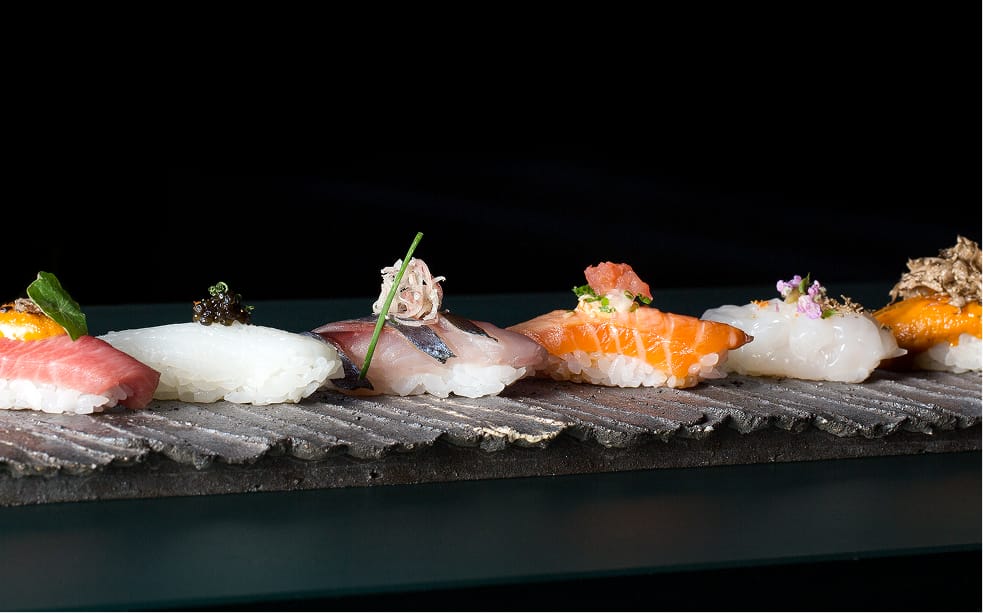
The sushi counter operates independently, with chefs dedicated exclusively to nigiri, sashimi and maki. Precision, portioning and temperature control are consistent with Zuma’s global standards, but Madrid places particular emphasis on rare cuts and premium fish.
Rather than navigating the full menu, it is worth concentrating on Zuma’s most distinctive and high-value offerings — both for product quality and technical execution.
Among the nigiri selection, o-toro and chu-toro stand out for their clean fat structure and restrained seasoning, while yellowtail and seabass nigiri highlight careful slicing and rice balance. The tokusen nigiri selection, curated by the chef, offers a concise overview of the sushi counter’s strengths and frequently includes rarer fish depending on availability.
For raw preparations beyond sushi, the chu-toro tartare with miso bun and black truffle and wagyu tartare sushi with black truffle demonstrate Zuma’s approach to richness: controlled portions, low acidity, and a focus on texture rather than aromatic excess.
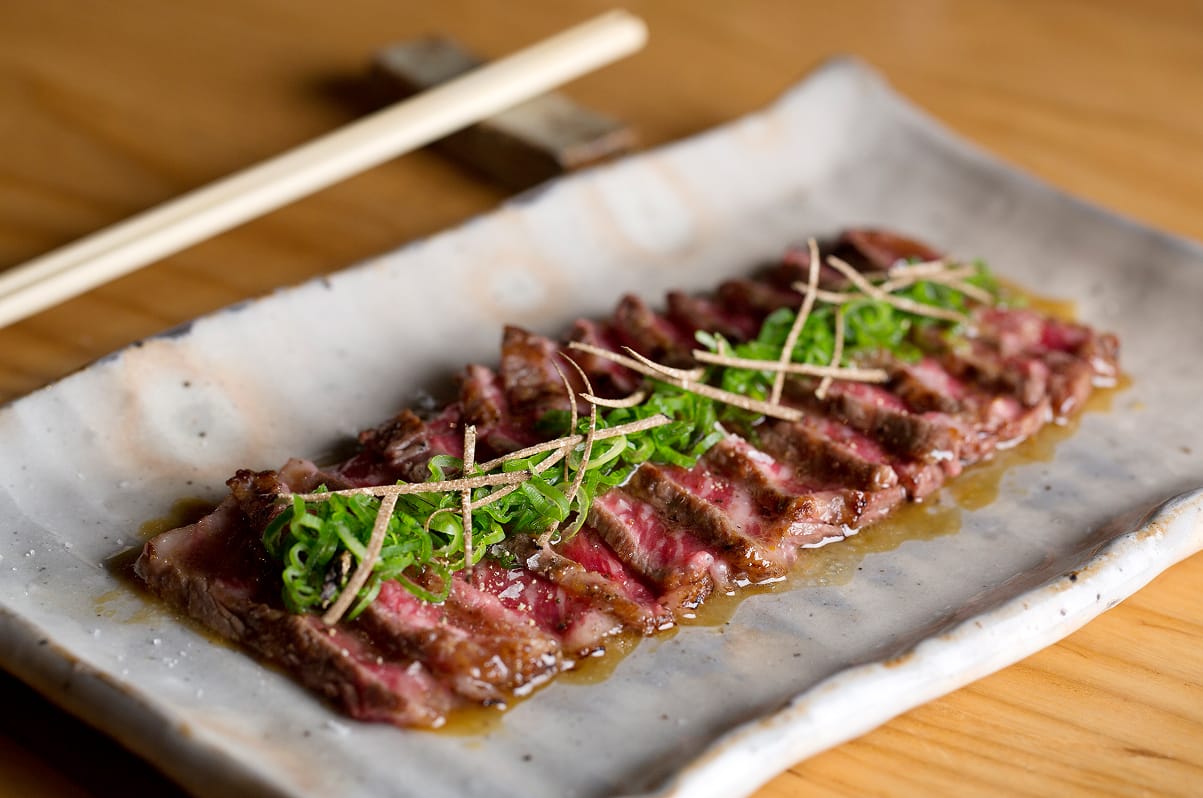
From the robata grill, the most notable dishes are also the most substantial. The Japanese A4 wagyu sirloin with yuzu tahoon and chilli daikon ponzu is served with restraint, allowing the fat profile of the meat to remain dominant. For seafood, the whole roasted lobster with green chilli and garlic shiso butter is one of the kitchen’s most technically assured plates, balancing sweetness, heat and smoke without masking the product.
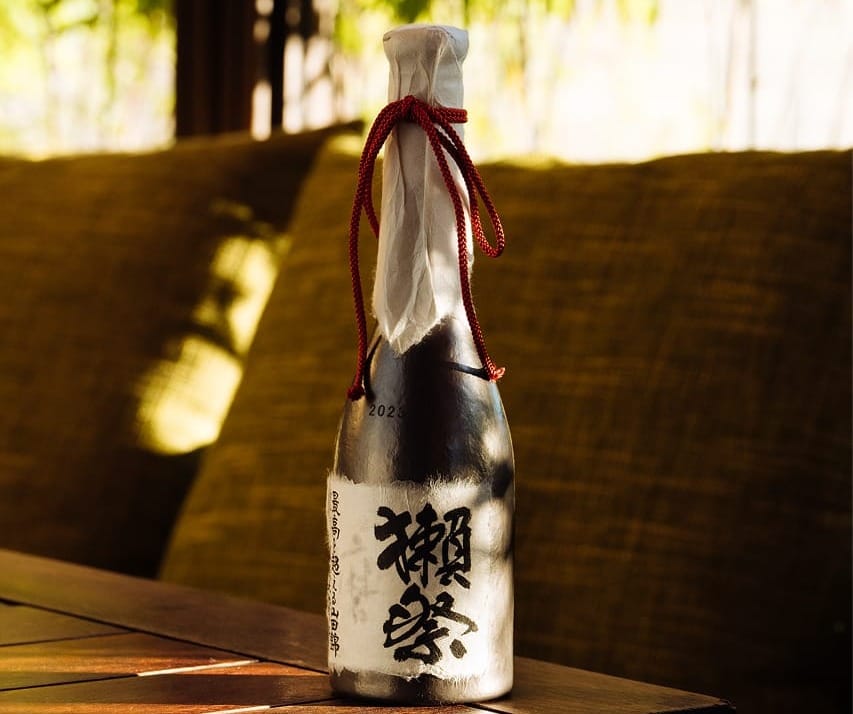
Zuma Madrid distinguishes itself further through its exclusive partnership with Dassai, the premium sake producer from Yamaguchi Prefecture. Currently available in only two restaurants in Europe — London and Madrid — the Dassai range is offered as a structured pairing alongside Zuma’s tasting menus.
The progression from Dassai 45 through Dassai 39 and Dassai 23 allows diners to observe the impact of rice polishing on texture and aromatic precision. At the peak of the range, Dassai Beyond is presented less as a beverage than as a reference point: layered, glyceric and notably persistent on the palate. The pairing is handled with discipline, aligned to the menu’s richer dishes rather than used as a standalone showcase.
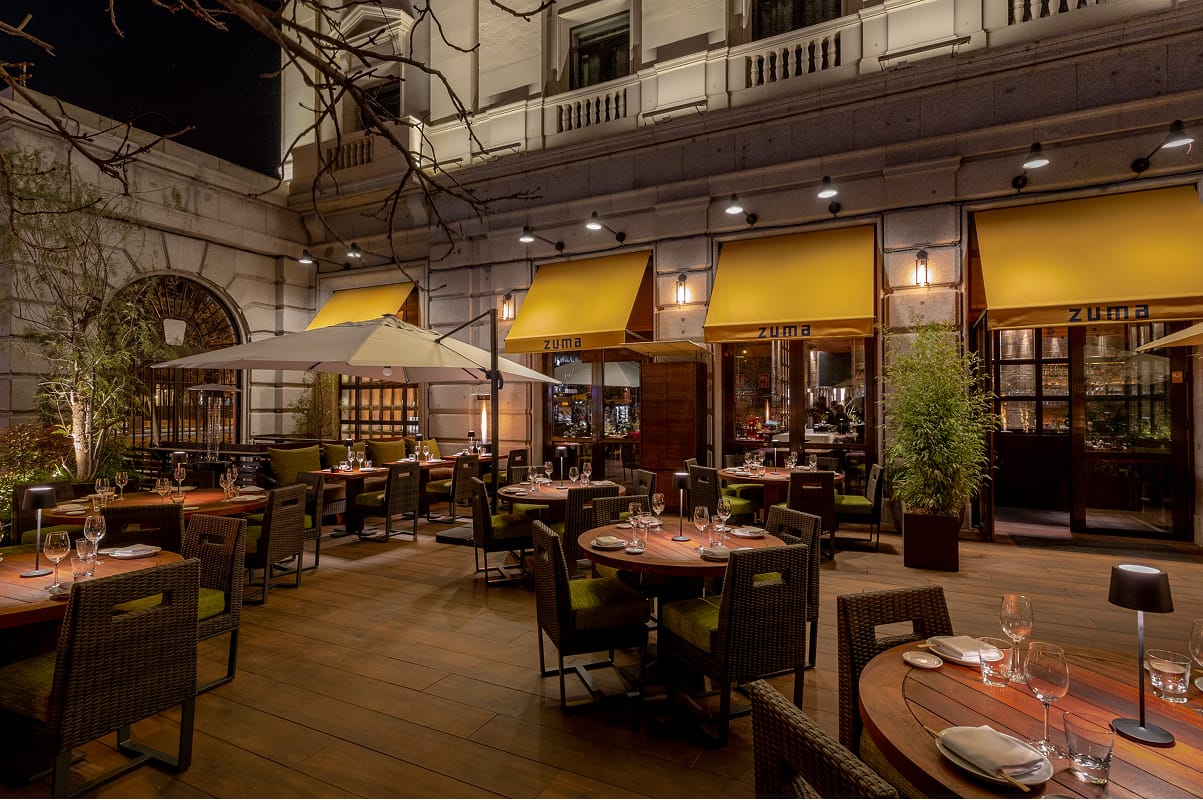
The interior, designed by Noriyoshi Muramatsu, follows the visual language developed across Zuma’s global portfolio while incorporating materials and spatial proportions adapted to Madrid. Pine, stone, tiles and granite dominate the space, organised around the elemental themes of earth, fire, water and air. The result is a dining room that supports the pace of service rather than competing with it.
The bar operates as an independent axis of the restaurant, with a strong sake list, Japanese spirits and a concise cocktail programme that complements — rather than distracts from — the food.
Zuma Madrid does not attempt reinvention. Its strength lies in control: of product sourcing, kitchen logistics, service timing and menu architecture. For diners seeking contemporary Japanese cuisine anchored in technique, premium ingredients and a clearly defined structure, it remains one of Madrid’s most reliable addresses — particularly for sushi, robata-grilled meats and rare sake pairings.