The Icon That Rewrote Luxury: Inside Burj Al Arab Jumeirah
– 5 min read

“An art which has an aim to achieve beauty is called philosophy — or, in the absolute sense, wisdom.” — Al-Farabi, 9th-century Arab philosopher
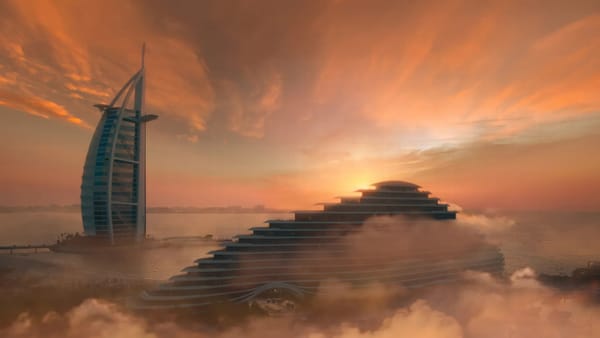
Some places exist between dream and blueprint. Burj Al Arab Jumeirah is one of them — a sail-shaped tower rising 321 metres above the Arabian Gulf, defying gravity and expectation in equal measure.
The approach already reveals intent. A private bridge stretches 280 metres across turquoise water toward an island created for a single purpose: to anchor architect Tom Wright’s 1999 vision in reality.
His brief was audacious: create an icon for Dubai — a structure that would stand to the city as the Eiffel Tower does to Paris, the Sydney Opera House to Sydney.
Sitting in the old Chicago Beach Hotel, Wright sketched the sail on a napkin. “If you can draw a building with a few sweeps of the pen and everyone recognises not only the structure but also the place,” he later reflected, “you’ve gone a long way towards creating something iconic.”
Twenty-five years later, the structure hasn’t aged; it has simply continued the conversation it began with the sea and sky.
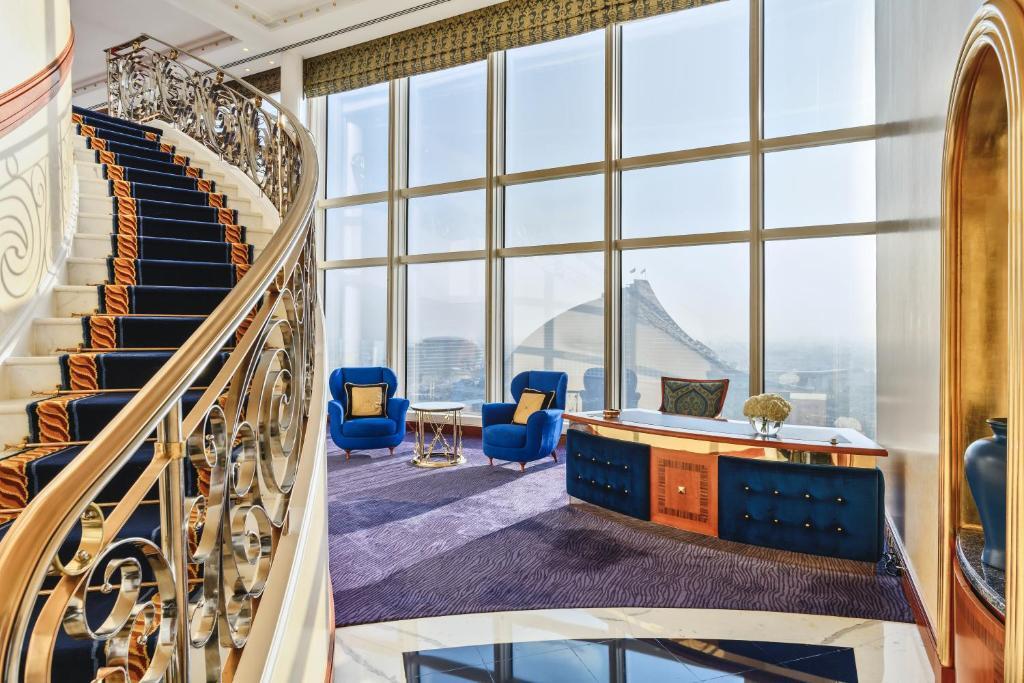
My duplex suite unfolds across 170 square metres, where 24-carat gold accents catch desert light at precise angles throughout the day. Floor-to-ceiling windows frame the Gulf in constant motion — sunrise, noon heat, the violet collapse of dusk.
Here, luxury isn’t excess but precision: the exact density of silence, the weight of Egyptian cotton, the butler who appears thirty seconds before you realise you need something.
Over 1,600 staff from 75 countries maintain an 8:1 ratio with 199 suites — an arithmetic that translates into something intangible: a sense that every surface, every interaction, has been considered from angles you haven’t imagined.
“The hotel of Dubai is the Burj Al Arab,” says Giovanni Beretta, Vice President and General Manager. “That will never change.”
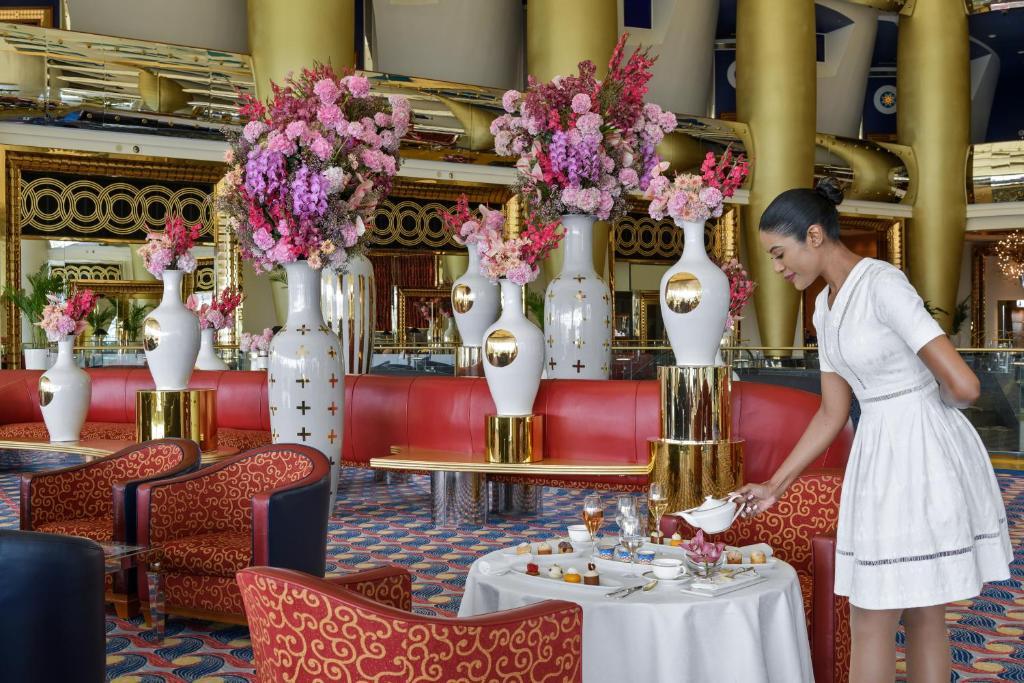
At Al Muntaha, 150 metres above the water, modern European cuisine earns its Michelin star through storytelling — each dish a narrative arc of flavour and precision.
Al Mahara rewrites the script: guests descend via a simulated submarine journey into a circular dining room wrapped in a living aquarium. Between gliding stingrays and silver schools of fish, plates arrive as if choreographed. Dining becomes immersion; gastronomy becomes theatre.
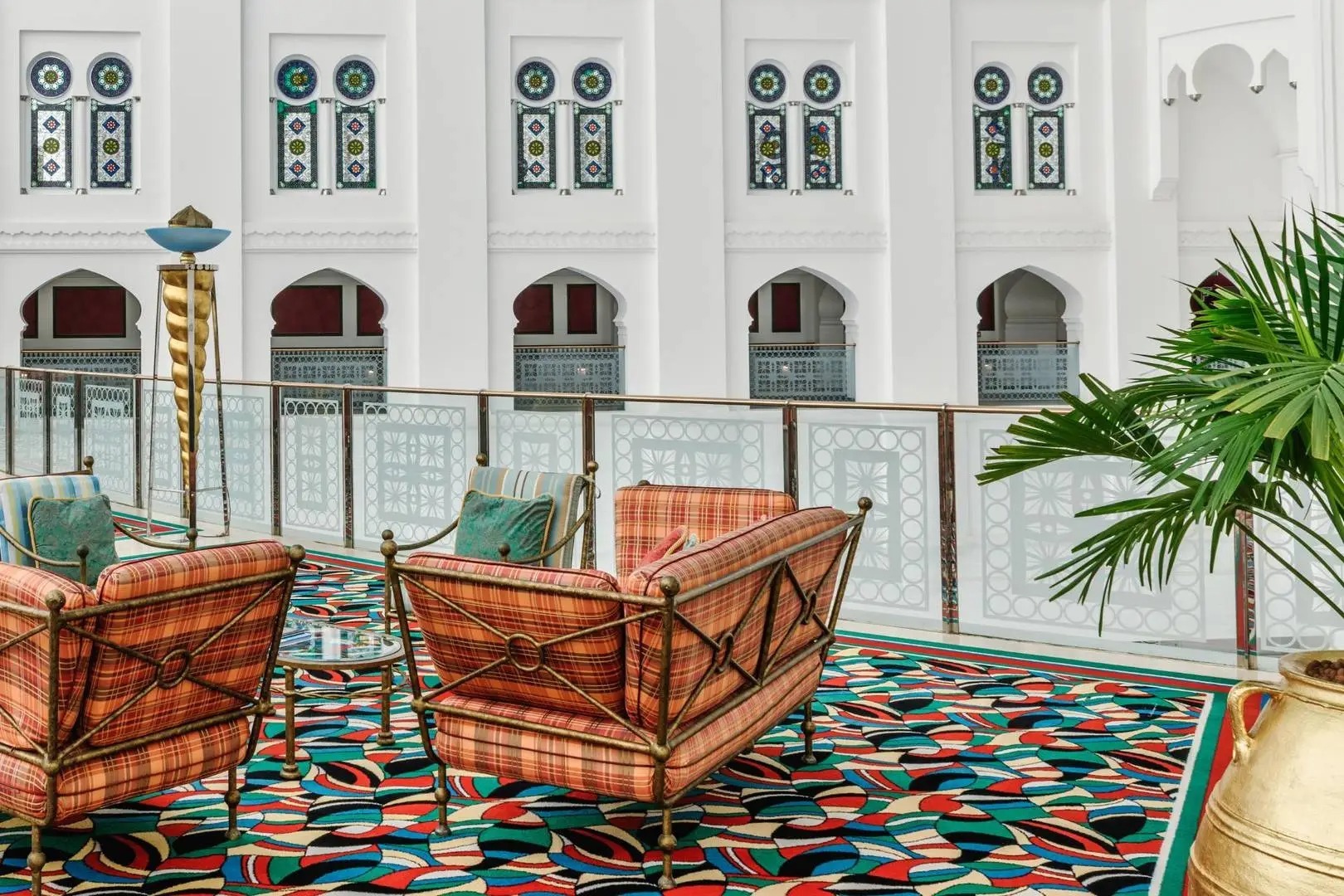
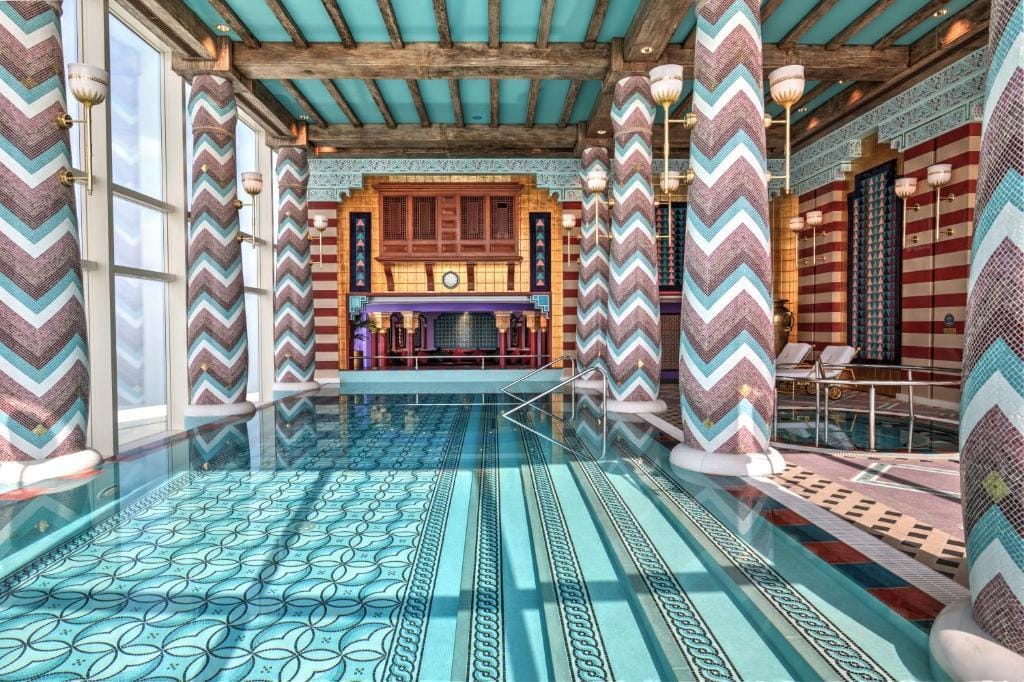
The Talise Spa spans two levels, 14 treatment rooms, and infinity pools that seem to float over the Gulf. Arabian-inspired rituals dissolve the boundaries between body and horizon. What’s offered isn’t mere relaxation — it’s temporary release from chronological time.
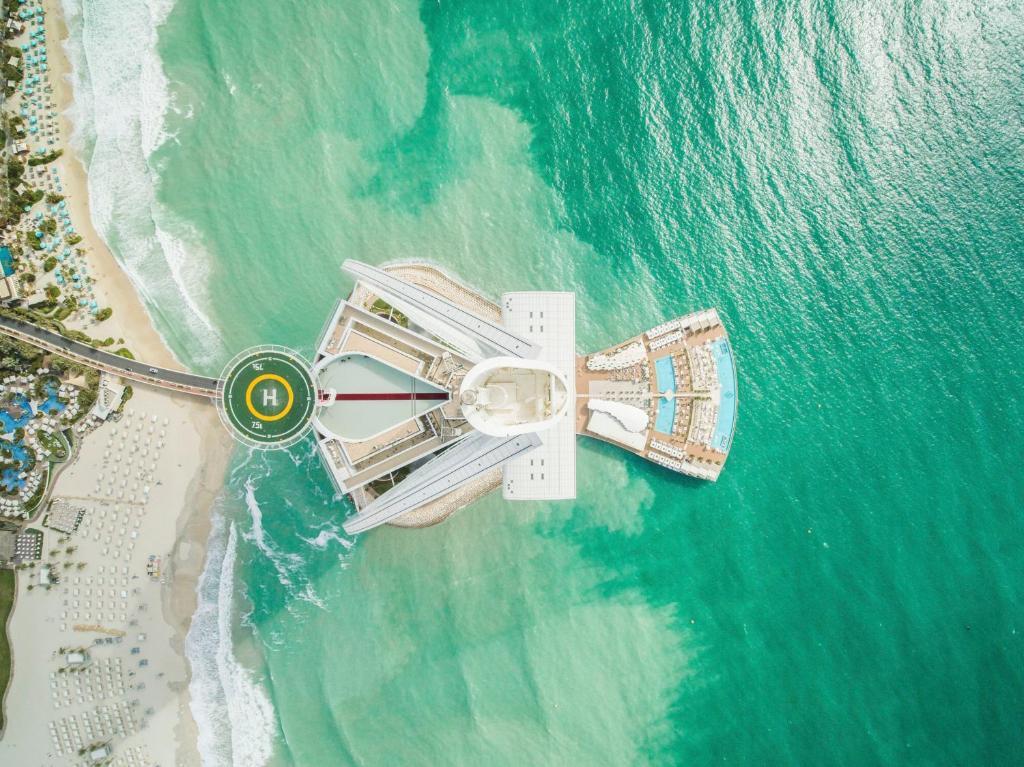
There’s the helipad, 212 metres above sea level, where Roger Federer and Andre Agassi once played tennis.
There are 24-carat gold iPads functioning as virtual concierges.
At night, the private beach becomes stage: the façade ignites in choreographed light, its reflection trembling across the waves.
“Our exclusivity is what makes us special,” says Beretta. “You still have to give your name at the bridge — that’s how we maintain our mystique.”
It’s a small ritual, but it transforms a stay into a pilgrimage.
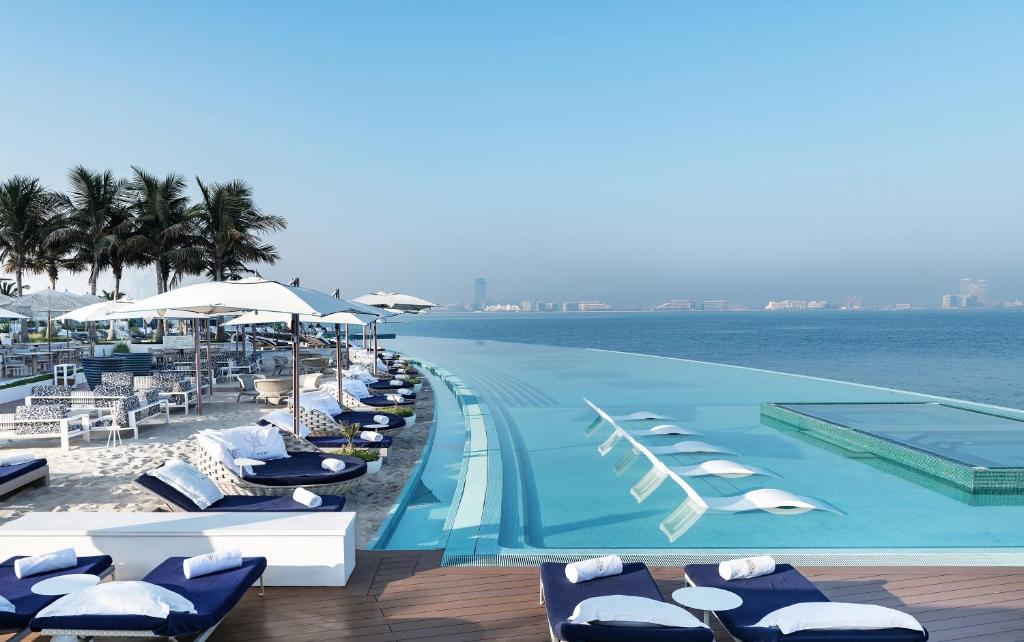
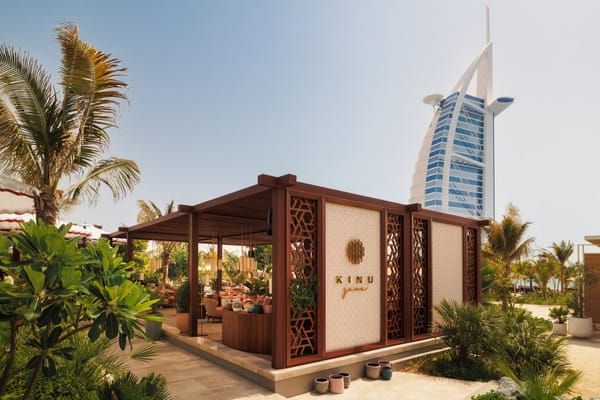
Recent additions layer new chapters onto the legend: the SAL Beach Club extends the hotel’s reach with cabanas, infinity views, and Mediterranean calm. Nearby, the planned Naïa Island development promises to further define Dubai’s luxury epicentre by 2029.
Yet what endures isn’t the gold leaf, Michelin stars, or engineering triumphs — though all matter. Former General Manager Ermanno Zanini captured it best:
“Luxury to the sophisticated traveller means living a transformational and intimate experience — to enrich and learn from it. That is exactly what Burj Al Arab Jumeirah offers.”
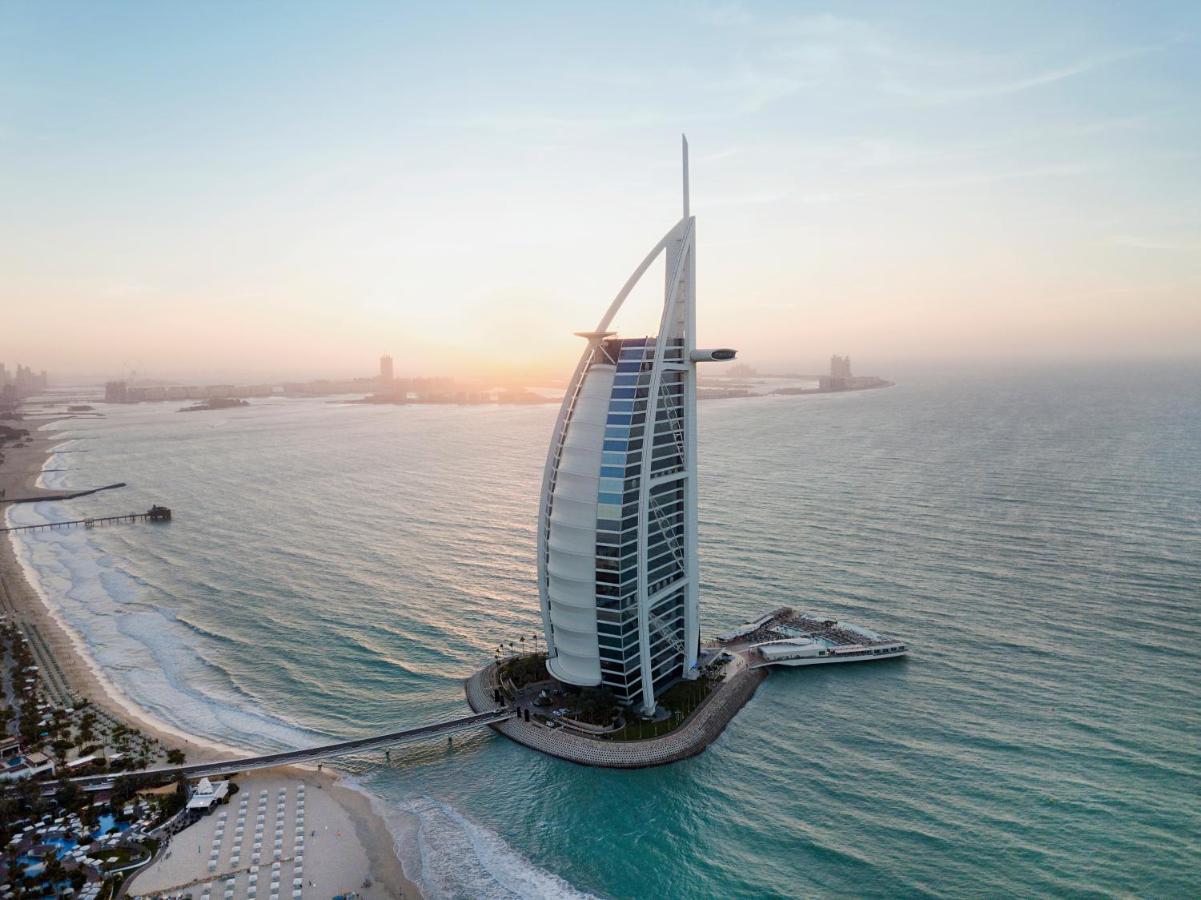
Walk that private beach at sunset. Watch the tower shift from white sail to illuminated sculpture. Understand that some structures transcend their function.
Tom Wright drew a sail on a napkin. Dubai built a monument.
What emerged is more than a hotel: it’s a place where service becomes art, where every suite tells a story, where the Gulf stretches endlessly beyond your window — and you realise this isn’t indulgence.
This is what happens when a city decides to rewrite the rules, to build something that stands not merely as a hotel but as a symbol of what imagination can achieve.
Some places simply house you.
Burj Al Arab Jumeirah transforms you.
Since its opening, Burj Al Arab Jumeirah has accumulated an extraordinary collection of international recognitions that cement its position as one of the world's most celebrated hotels. The property has been honored with the prestigious Forbes Travel Guide Five-Star Award in 2024, maintaining its position among the world's most elite establishments.
Most notably, at the 2024 Ultratravel Awards hosted by The Telegraph Magazine, Burj Al Arab achieved a double triumph, being crowned both "Best Hotel in the World" and "Best Hotel in the Middle East" - accolades the property has claimed repeatedly over the years, with the latter recognition spanning more than a decade of consecutive wins.
The World Travel Awards have consistently recognized the hotel across multiple categories: in 2024 alone, it received titles including "World's Leading Hotel Suite," "World's Leading Luxury Hotel," "World's Leading Luxury Landmark Hotel," and "World's Leading Luxury Suites Hotel."
From 2017 through 2024, the hotel has maintained an unbroken streak of World Travel Awards victories, including "World's Leading Luxury All-Suite Hotel" from 2017 to 2023.
On the culinary front, 2024 brought exceptional honors: Al Muntaha retained its Michelin star in the Michelin Guide Dubai 2024, while Gault & Millau awarded it 17.5 points and 4 Toques, naming it "Homegrown Restaurant of the Year." The guide also recognized Chef Saverio Sbaragli as "Chef of the Year" and Samuel Lacroix as "Sommelier of the Year."
Beyond luxury, the hotel demonstrated its commitment to sustainability by achieving Green Globe Certification in 2014, proving that world-class luxury and environmental responsibility can coexist.
In 2024, parent company Jumeirah Group was honored as "Hospitality Company of the Year" at the Arabian Business Achievement Awards, reflecting the excellence that Burj Al Arab embodies.
These awards represent not merely industry recognition but a sustained commitment to redefining luxury hospitality across every dimension - from architectural innovation and gastronomic excellence to service standards and environmental stewardship.