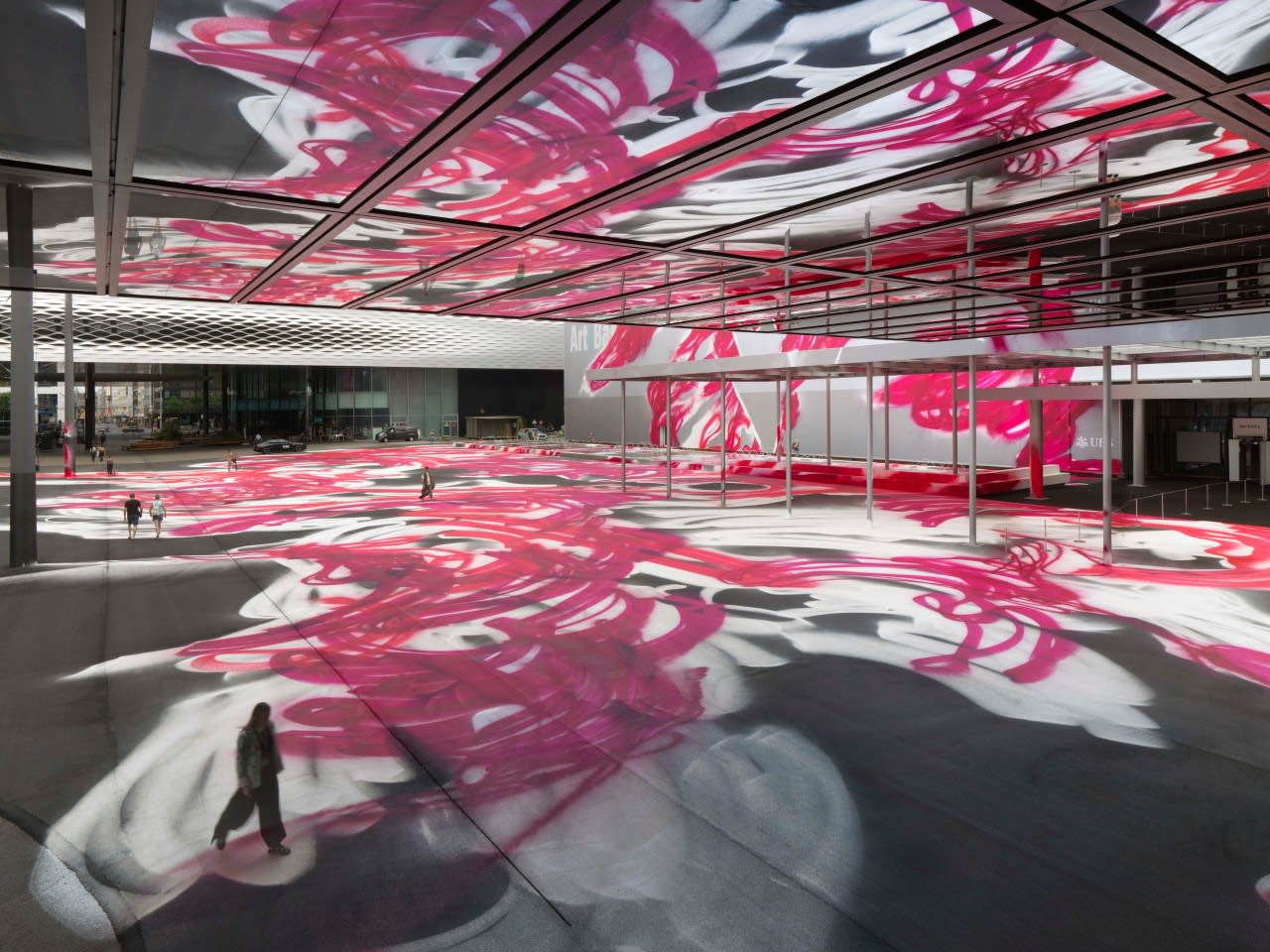
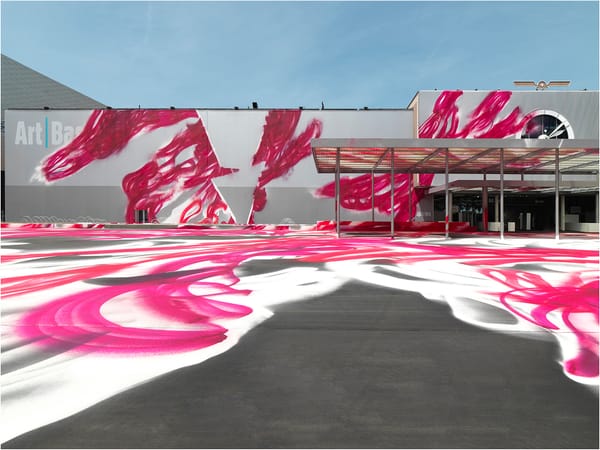
In Hall 2.1, beneath the fluorescent cathedral of commerce, Katharina Grosse's magenta sprawled across five thousand square meters like a fever dream made manifest. The color—chosen for its unique position in the visible spectrum, where human eyes achieve maximum sensitivity in outdoor light—commanded attention not through volume but through its peculiar quality of urgency. Visitors moved through the chromatic landscape with the careful reverence reserved for sacred spaces, their voices automatically lowering to whispers. Here, in the heart of capitalism's most refined theater, something ineffable was happening: art was remembering how to breathe.
Art Basel's 55th edition arrived at a moment when the world seemed suspended between exhale and intake. The fair's milestone year coincided with a global recalibration—political upheavals, climate reckonings, and the lingering aftershocks of collective trauma all converged in the pristine halls of the Messeplatz. What emerged was not the bombastic spectacle of previous years but something more subtle and perhaps more radical: an exhibition of quiet resistance.
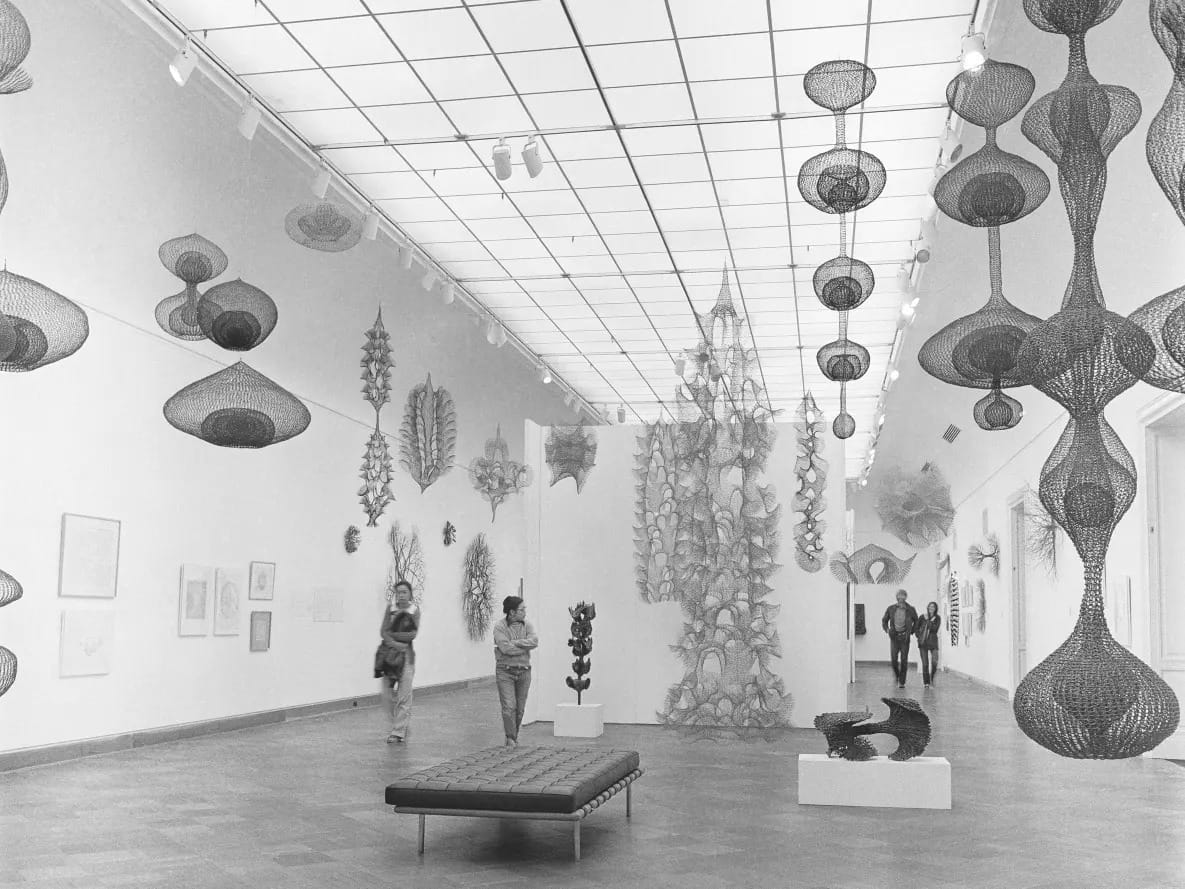
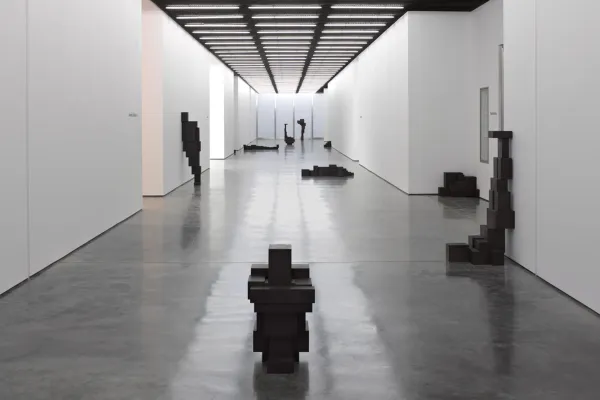
The most striking revelation was the return of the vulnerable body. After years of digital abstraction and algorithmic aesthetics, human flesh—broken, intimate, political—reclaimed its place at the center of contemporary discourse. Ruth Asawa's hanging sculptures, suspended like metallic prayers, seemed to pulse with organic breath. These weren't merely objects but vessels for collective memory, each twisted form echoing the artist's own experiences of displacement and resilience.
This corporeal turn spoke to something deeper than artistic trend—it reflected a civilization's desperate attempt to reconnect with its own mortality. In a world increasingly mediated by screens and artificial intelligence, these works offered the radical proposition that bodies still matter, that touch remains revolutionary, that presence is the ultimate luxury.
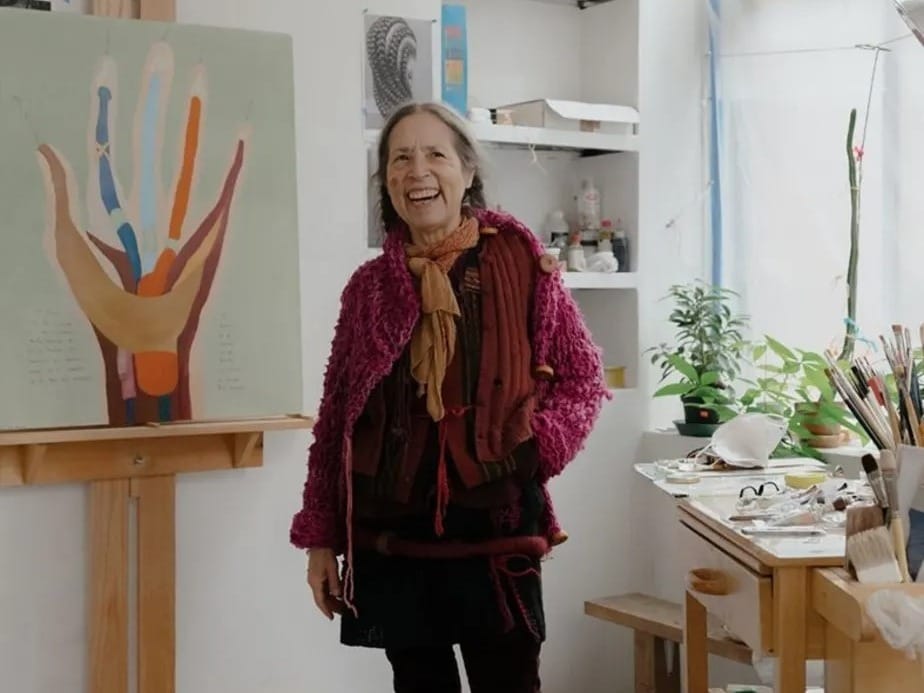
The materials themselves told stories of transformation and impermanence. Textiles dominated where steel once reigned. Earth tones replaced the aggressive primaries of the previous decade. Artists like Cecilia Vicuña wove indigenous knowledge into gallery spaces, creating installations that seemed to breathe with ancestral memory. These works didn't aspire to permanence—they honored fragility as form, echoing the climate of collapse.
Sovereign softness—this deliberate embrace of traditionally feminine-coded materials as sources of power rather than delicacy—emerged as the exhibition's quiet manifesto. The traditionally feminine-coded materials—wool, silk, clay—were recontextualized not as delicate but as durably rebellious. These substances carried the weight of labor, of care, of the historically undervalued work that sustains civilization. In their presence, the gallery's marble floors seemed suddenly cold and distant.
The collector demographics revealed their own narrative. Representatives from 96 countries suggested a democratization of taste, yet the prices whispered of continuing exclusion. The tension was palpable: institutions like MoMA and the Centre Pompidou prowled the aisles alongside private collectors from Azerbaijan and Uganda, creating an ecosystem where cultural capital flowed in unexpected directions.
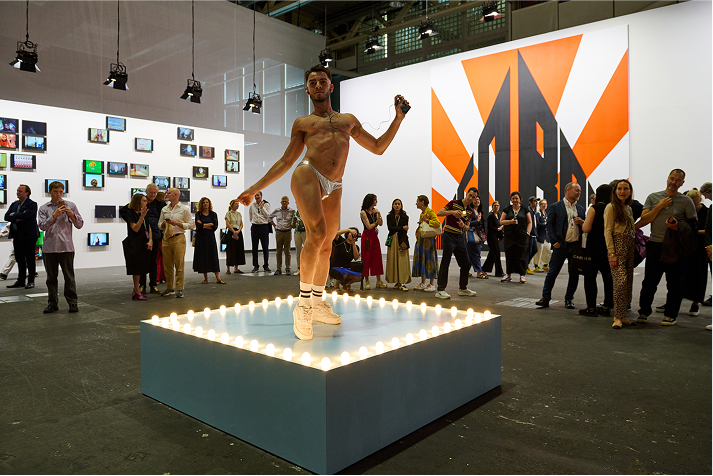
Giovanni Carmine's curation of the Unlimited sector offered perhaps the most pointed commentary on contemporary anxieties. Andrea Büttner's "Shame Punishments" series confronted viewers with the mechanisms of social control, while Felix Gonzalez-Torres' "Untitled (Go-Go Dancing Platform)" transformed the gallery into a space of vulnerable performance. These weren't entertainments but exercises in collective catharsis.
The inaugural Art Basel Awards ceremony at the medieval Rathaus Basel created a striking juxtaposition—contemporary recognition in a space that had witnessed centuries of power negotiations. The Koyo Kouoh Fellowship, announced in memory of the late curator and cultural visionary, felt like a promise that the future of art would be less about Western gatekeeping and more about genuine global dialogue.
Yet beneath the carefully orchestrated diversity and inclusion initiatives, deeper questions pulsed. Can an institution built on luxury consumption truly address the urgent inequalities of our moment? The fair's partnerships with UBS and Qatar Airways reminded visitors that art, however transcendent, remains entangled with the very systems it often critiques.
The city of Basel itself seemed to respond to the fair's energy differently this year. The "Second Nature" theme of the Parcours sector spilled beyond designated spaces, creating a dialogue between the controlled environment of the fair and the organic chaos of urban life. Selma Selman's scent-and-sound installation in St. Clara Church transformed the sacred space into a meditation on displacement and belonging.
What emerged from this 55th edition was not a definitive statement but a series of questions disguised as aesthetic experiences. In an era of increasing fragmentation, can art still function as a unifying force? As environmental collapse accelerates, what responsibility do luxury cultural institutions bear? In the face of rising authoritarianism globally, how do we maintain spaces for radical imagination?
The answer seemed to lie not in the grand gestures but in the accumulated weight of small intimacies. A collector pausing before a work by an unknown artist. A curator choosing vulnerability over safety. A viewer allowing themselves to be changed by an encounter with the unexpected.
As the fair concluded, the magenta on the Messeplatz began its slow fade under the Swiss sun. But something more permanent had been inscribed in the memory of those who witnessed it: a reminder that even in the most commercialized contexts, art retains its capacity to surprise, to challenge, to quietly revolutionize our understanding of what it means to be human in this particular moment of planetary history.
The silence that followed each encounter—between viewer and artwork, between possibility and reality—contained multitudes. It was in these pauses that Basel's true legacy resided: not in the transactions recorded but in the transformations that could never be quantified.