Sirru Fen Fushi: When a Lagoon Becomes a Point of View

– 4 min read

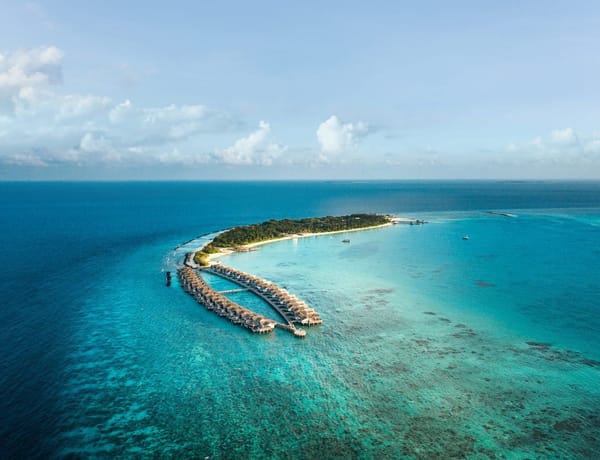
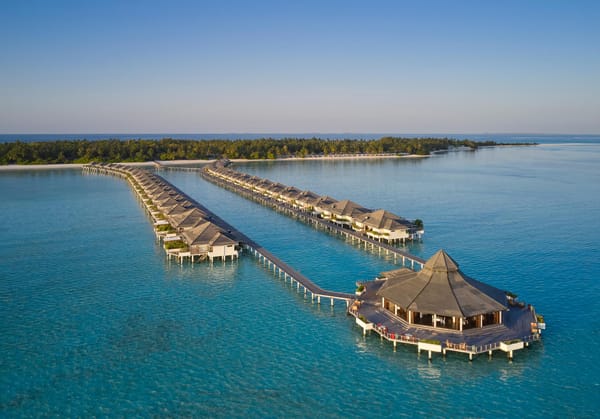
For many Maldivian resorts, remoteness is the primary currency. Sirru Fen Fushi works with distance as a design decision: an island set in Shaviyani Atoll, reached by seaplane, where the horizon feels less like scenery and more like structure. Here, the ocean does not frame the experience — it shapes it, stretching the sense of time and quieting the internal noise long before you reach the shore.
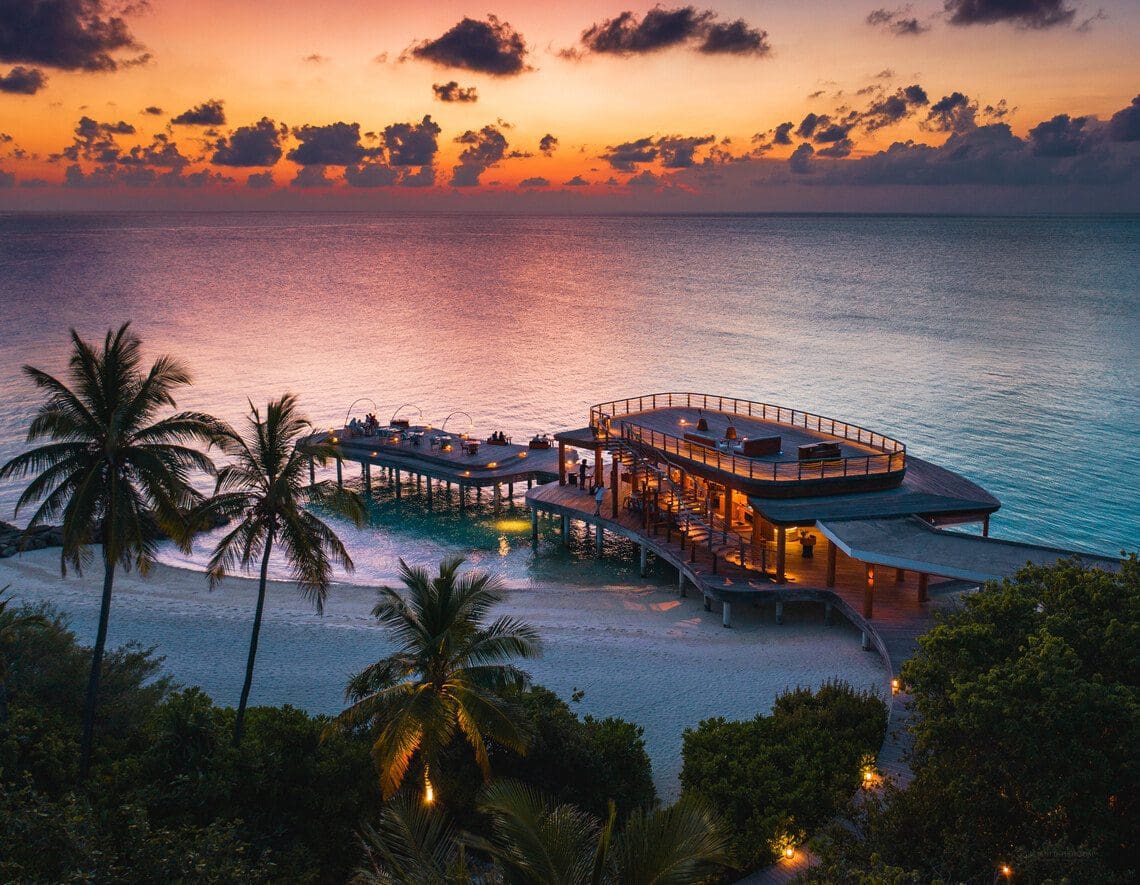
What makes Sirru Fen Fushi worth writing about now is not only the familiar vocabulary of villas and views, but the way the resort has engineered its identity around three elements that rarely align so cleanly in the Maldives: scale, family logic, and a sustainability narrative with a visible, tangible form.
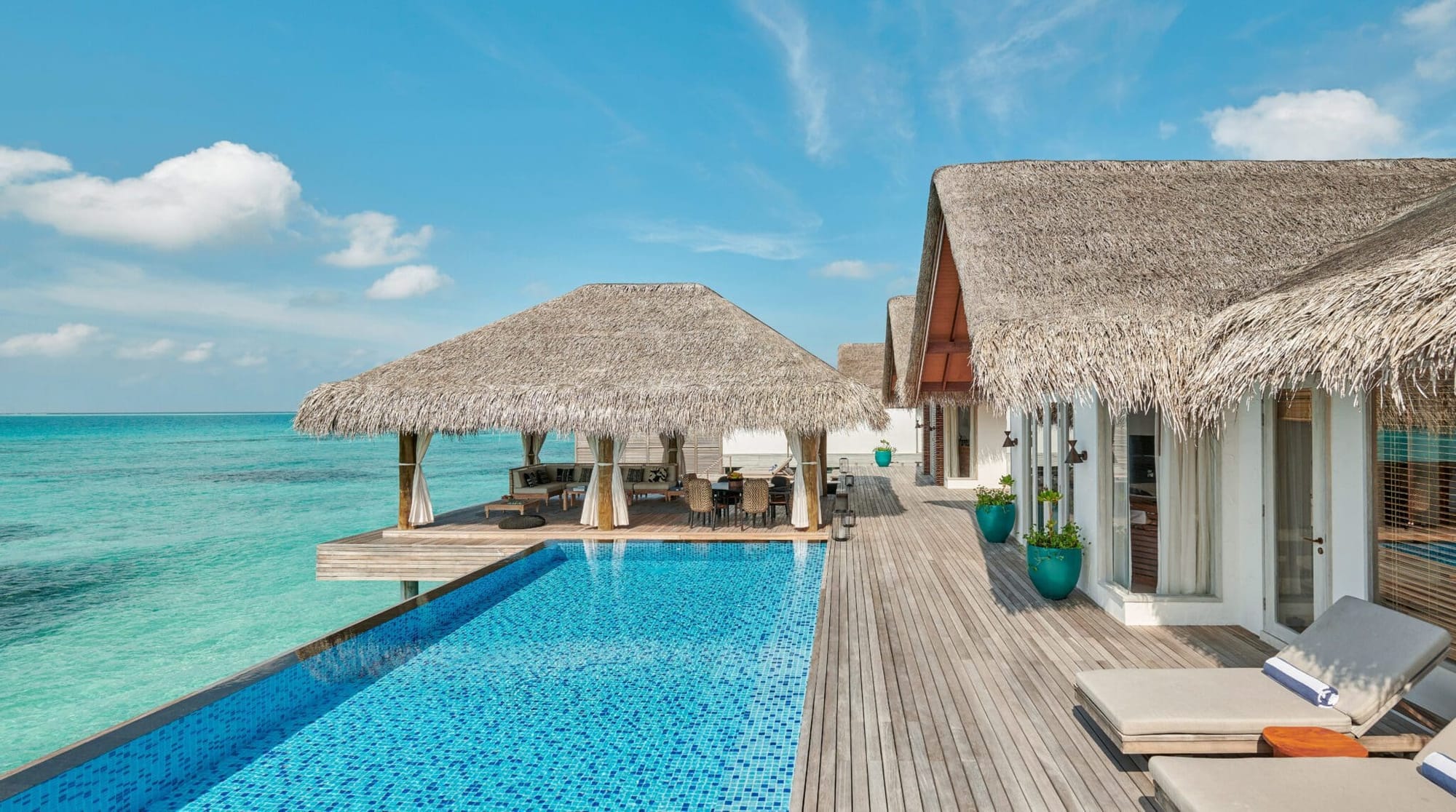
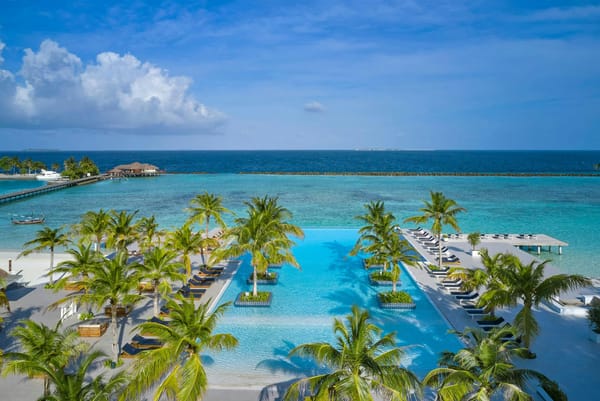
There are many infinity pools in the Maldives; far fewer that define the spatial experience of the entire island. Sirru Fen Fushi’s 200-metre infinity pool runs across the island, east to west — an architectural gesture that Travel Trade Maldives describes as connecting sunrise to sunset. It functions almost like a quiet compass, orienting the day between first light and evening stillness.
It reads less as an amenity than as a line you keep returning to — after breakfast, between snorkelling sessions, before dinner — because it subtly reorganises how you move through the island. Water becomes both pause and passage. That scale is also precisely what the Travel + Leisure Luxury Awards Asia Pacific 2025 recognised, ranking the resort #2 for Best Resort Pools in the Maldives, alongside #4 Best Resort for Families.
In 2025, Condé Nast Traveller (UK) placed Fairmont Maldives, Sirru Fen Fushi on its list of the best family hotels in the Maldives, noting it as “Best for: Teens.” The distinction matters less than the reasoning behind it: the Coralarium snorkel route, a strong activity ecosystem including art and photography studios, and — crucially — the sense that older children can inhabit the island independently, rather than orbiting their parents’ schedules.
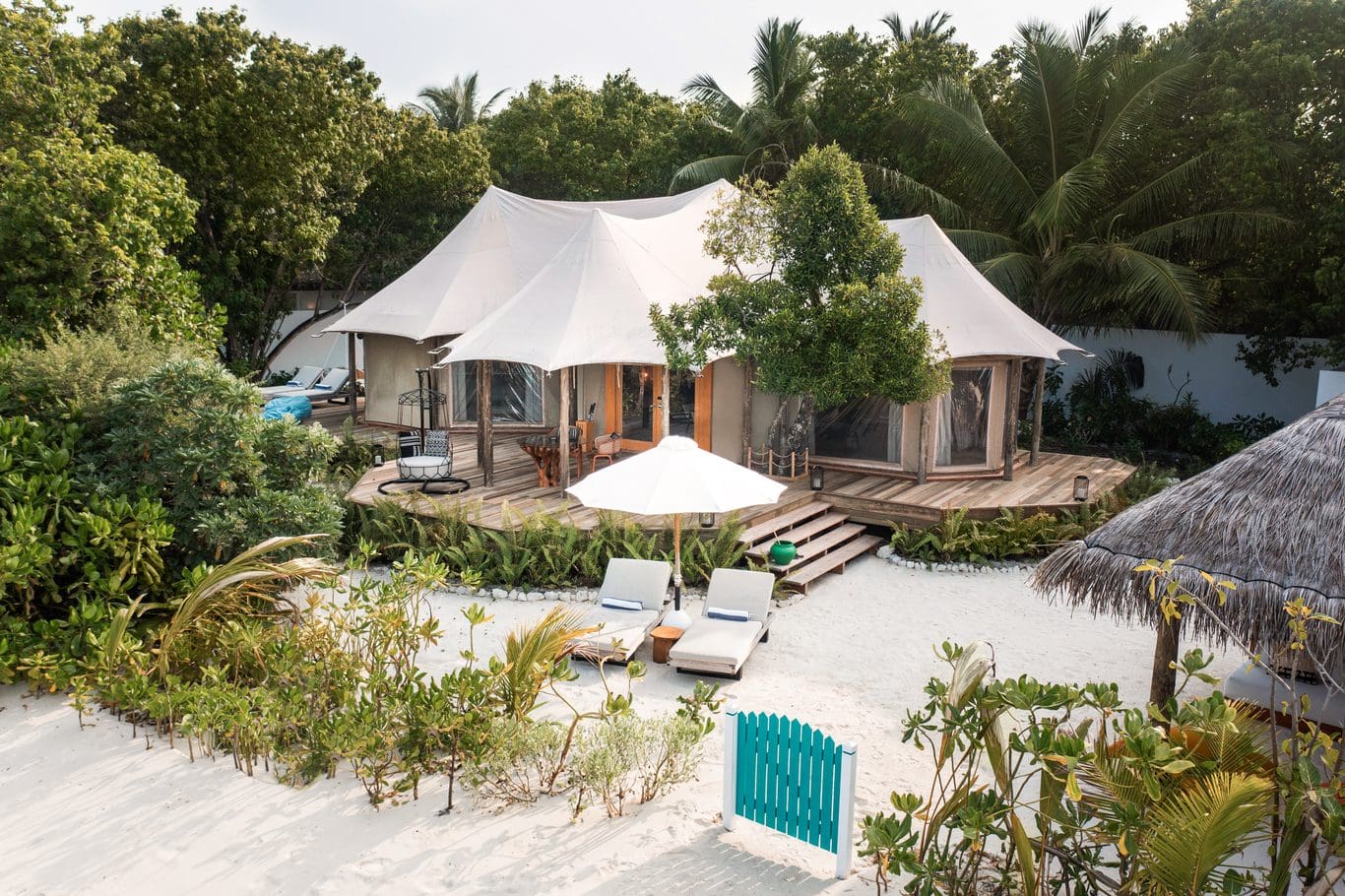
That teen-friendly pull is intentional. It aligns with the resort’s broader positioning: villas spread across beach, jungle and overwater settings, and larger configurations designed to hold families together without fragmentation. Space here is not just physical; it is psychological — allowing autonomy without separation.
If Sirru Fen Fushi has a cultural marker that sets it apart from the Maldives’ polished uniformity, it is the Coralarium — Jason deCaires Taylor’s semi-submerged structure conceived as a tidal art installation and, crucially, a coral habitat and learning site. Suspended between surface and seabed, it feels less like an object than a question placed gently into the water.
The resort presents the Coralarium as a living artwork where guests can learn coral propagation. Green Globe’s case study goes further, framing it as a coral regeneration project embedded within the island’s broader marine ecosystem, supported by an extensive house reef.
Taylor’s own project notes add a necessary layer of complexity. In the Maldives, art in the ocean is never culturally neutral. The original Coralarium sculptures were removed and destroyed by the government in 2018, with discussions around replacement continuing. This history matters. It turns sustainability from a decorative narrative into a dialogue — one that acknowledges fragility, governance, and responsibility.
For an editor, this is significant. Sustainability here is not hidden behind glass or confined to reports. It is something a guest can approach physically — by boat, by snorkel, by free dive — and contemplate not as a slogan, but as a presence shaped by both nature and human intent.
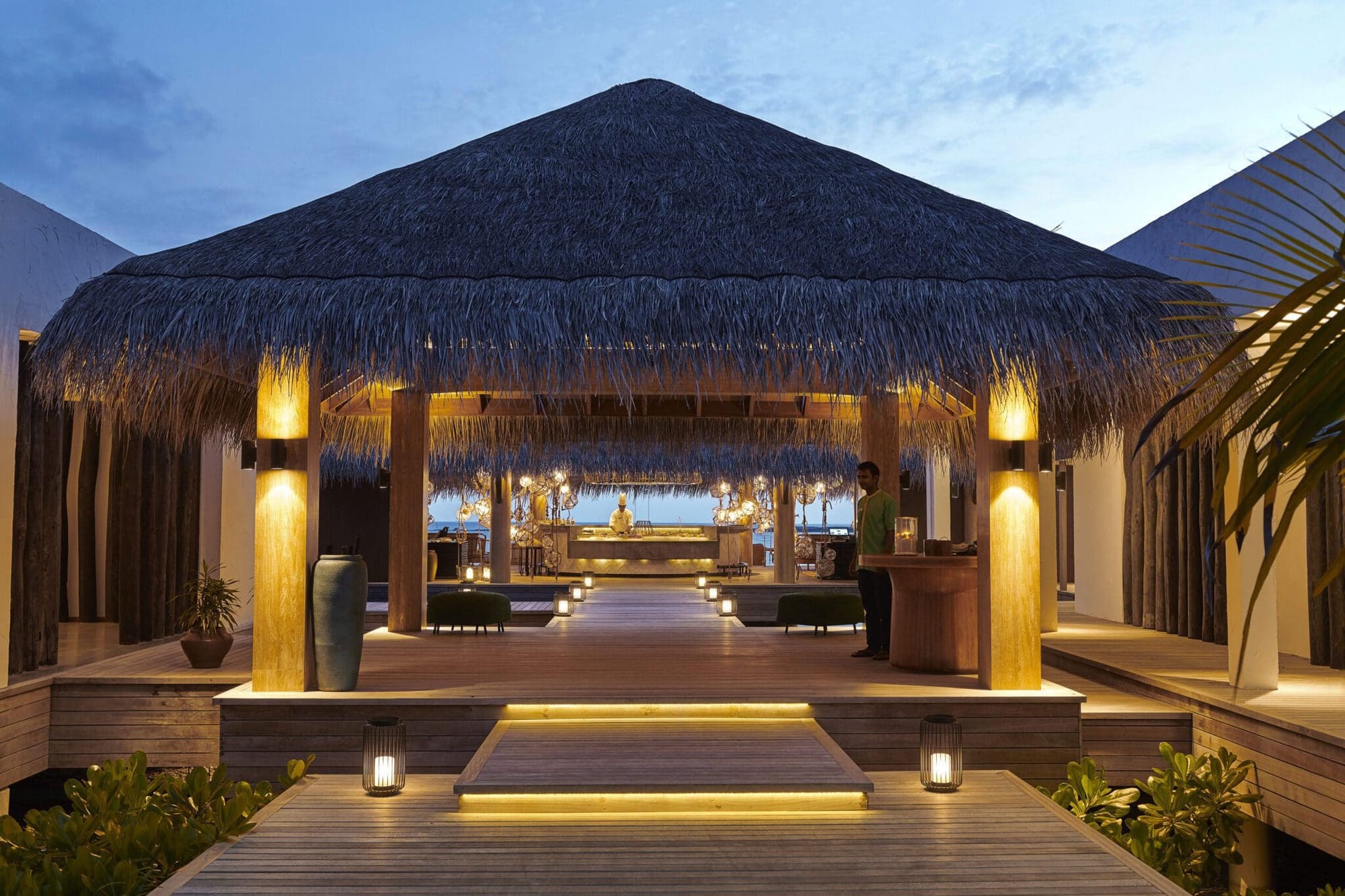
Reading across the resort’s 2025 accolades and editorial coverage, the answer becomes clear: Sirru Fen Fushi does not rely on novelty. It relies on structure that holds. An island layout with a strong visual identity. A marine narrative that is credible rather than cosmetic. And a family ecosystem that includes teenagers as participants, not problems to be managed.
For couples, the appeal lies in the same architecture of distance: privacy created by space, not by rules. For families, it works in reverse — enough autonomy and thoughtful programming to allow parents to step back without orchestrating every hour. And for travellers who feel they have already “done” the Maldives, Sirru Fen Fushi offers a rarer proposition: an island where the most talked-about object is not a chandelier or a lobby, but something that belongs half to the ocean, half to human imagination.
If Soneva taught the industry the power of subtraction, Sirru Fen Fushi makes a different argument. That a resort can be generous in scale, vivid in design, and still hold an ethical centre — provided that centre has a form you can enter, swim around, and carry with you long after checkout.