ONOR: Engaged gastronomy in the heart of Paris
– 6 min read

Some restaurants feed you. Others nourish something deeper. ONOR, the one Michelin starred restaurant tucked into 258 rue du Faubourg Saint Honoré, belongs to the latter category. This is where Thierry Marx and Ricardo Silva have built something that refuses the traditional separation between excellence and ethics, between ambition and conscience. Walking into ONOR feels less like entering a temple of gastronomy and more like witnessing what happens when two chefs decide that their craft must answer to something greater than critical acclaim. The food is extraordinary. The philosophy behind it matters even more.
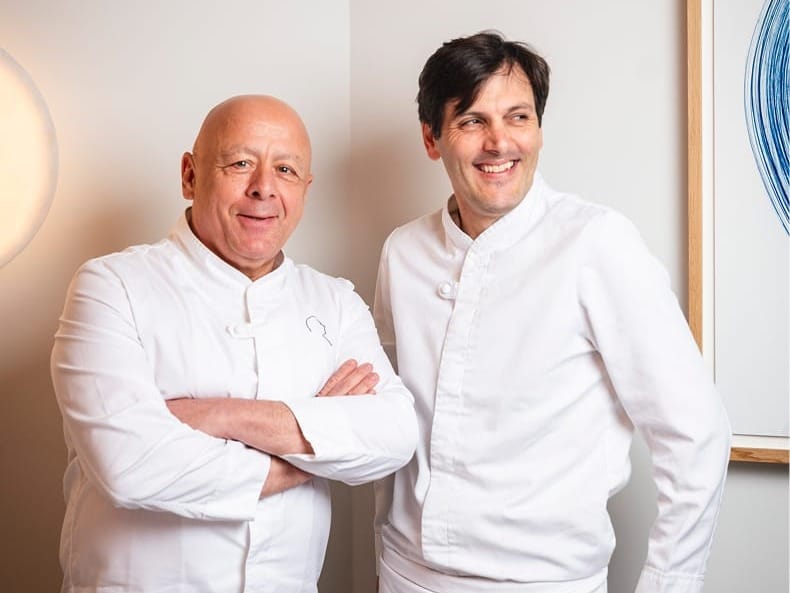
Thierry Marx talks about social responsibility the way most chefs talk about Michelin stars. But unlike the industry's many performative gestures, Marx has spent over a decade building infrastructure that backs up every word. In 2012, he co-founded Cuisine Mode d'Emploi, a network of culinary schools offering free, intensive 12-week training programs to people society has left behind. Long term unemployed. People under judicial supervision. Migrants. Young people without qualifications. Anyone society has labeled "too difficult" or "too damaged" for traditional employment pathways.
The numbers reveal what words cannot. Nearly 92% of graduates return to employment within three months. Another 7% create their own businesses. Since 2012, the schools have trained close to 4,000 people across ten locations throughout France. But Marx understood something crucial: training alone creates a ceiling. People leave his schools with skills but limited prospects. Few starred restaurants will gamble on someone without pedigree. So Marx created those addresses himself, culminating in ONOR.
When someone mentioned that La Marée, the legendary seafood institution, had come on the market after COVID, Marx initially dismissed it. Then came the crucial detail: the walls were for sale too. The location carried particular resonance. Decades earlier, as a young chef, Marx had presented himself at this very address seeking work. They sent him instead to Taillevent. Returning to purchase the space felt like vindication.
Marx assembled partners. Ricardo Silva became an associate, his name appearing on the storefront. Their partnership spans nearly two decades, built during their time together at the Mandarin Oriental's two Michelin starred Sur Mesure. Silva comes from Sortelha, a small historic village in Portugal. He left at fifteen, knowing he wanted luxury hospitality. He worked his way through Vila Vita Parc, then spent six brutal years in London kitchens where he spoke no English and "cried every day for two months." He endured discrimination and abuse but learned what he refused to become. At ONOR, he runs what he calls "a very joyful brigade," often having to calm their laughter. The contrast with his training could not be starker.
ONOR opened in February 2023. Within a year, it earned its Michelin star. The restaurant currently maintains nearly 8% inclusion in its brigade, proving excellence and social purpose can coexist.
Silva's approach to leadership breaks with decades of culinary tradition. "Just because you're a chef doesn't mean you can say anything or treat people badly," he told me firmly. "If people aren't happy, they work poorly anyway." This isn't abstract philosophy. It shapes every decision at ONOR.
The restaurant closes weekends, Saturday and Sunday, a radical choice in an industry notorious for demanding total sacrifice. This decision preserves the private and family lives of the team. It acknowledges that sustainable excellence requires sustainable working conditions. The best cooking emerges from people who have space to breathe, to rest, to maintain relationships outside these walls.
This philosophy extends to how the kitchen operates during service. Everything happens at the last moment, yes, but without the screaming chaos that defines many starred kitchens. Silva has built a culture where precision coexists with joy, where standards remain uncompromising but humanity prevails. The energy in the dining room reflects this. The team moves with confidence, explains dishes when it enhances enjoyment, steps back when the food speaks for itself. People working here seem genuinely happy. That becomes palpable, transforming excellent service into true hospitality.
Marx's loyalty to people runs deeper still. He works with teams he has known for over twenty years. This isn't convenience. It's a statement that relationships matter more than constant reinvention, that trust built over decades produces better results than endless turnover chasing novelty.
When I asked Silva about ONOR's approach to ingredients, his answer cut through the industry's typical self aggrandizing rhetoric. "We don't have gardens in Paris," he stated plainly. "The products come from gardens, but not mine. We need to give credit to the producer. That's who deserves recognition, not me."
This philosophy shapes every aspect of ONOR's sourcing. Products carry certifications like Bleu Blanc Cœur, guaranteeing quality across the entire production chain. Suppliers are chosen for their commitment, not marketing appeal.
Silva runs ONOR with zero inventory philosophy. Products arrive in the morning and sell by lunch or dinner service. Fish arrives Tuesday or Thursday. By end of service, it has been served. No storage. No accumulation. No waste. "We're at the mercy of nature," Silva explained. "Sometimes suppliers have nothing and we have to adapt."
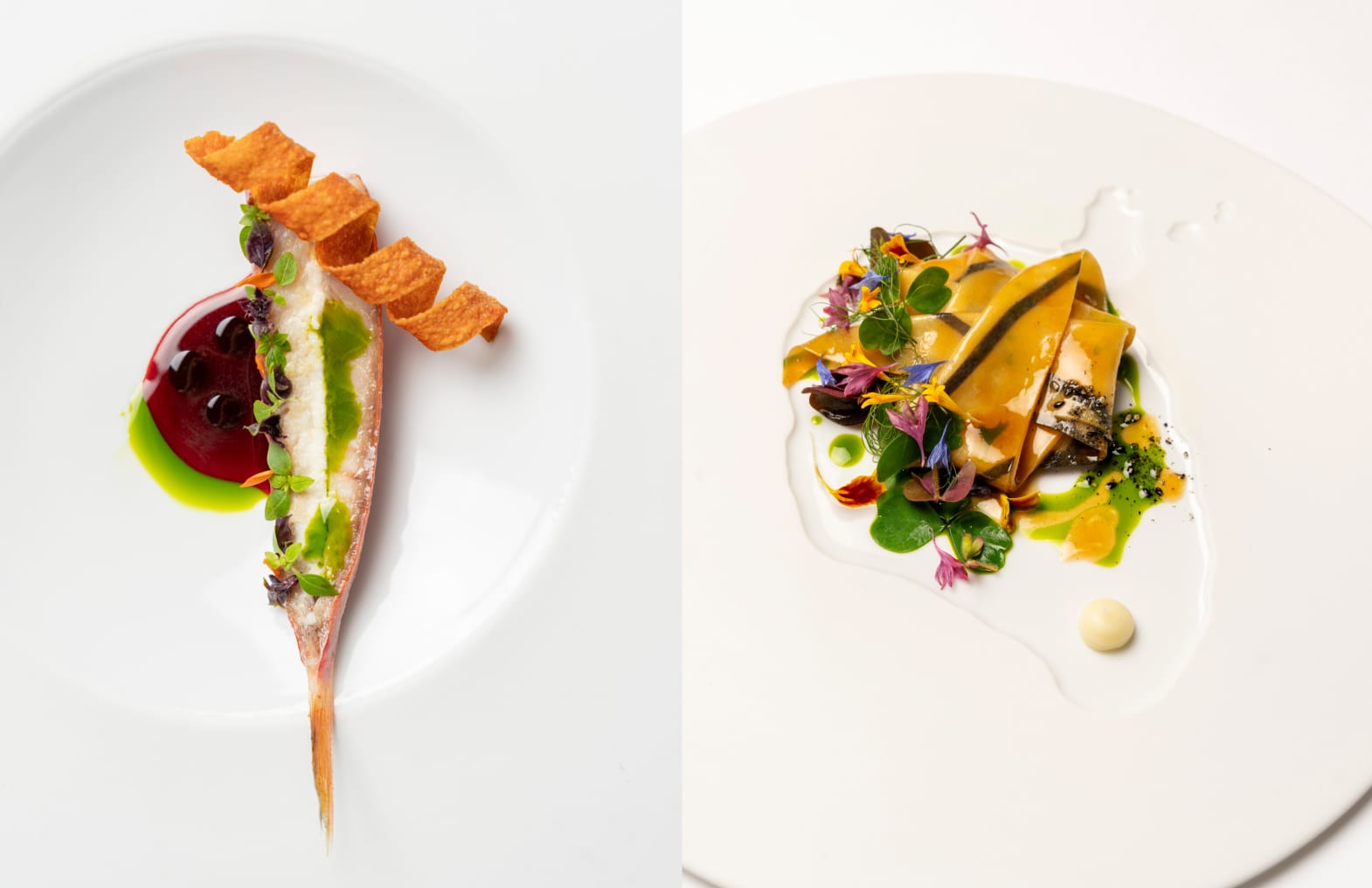
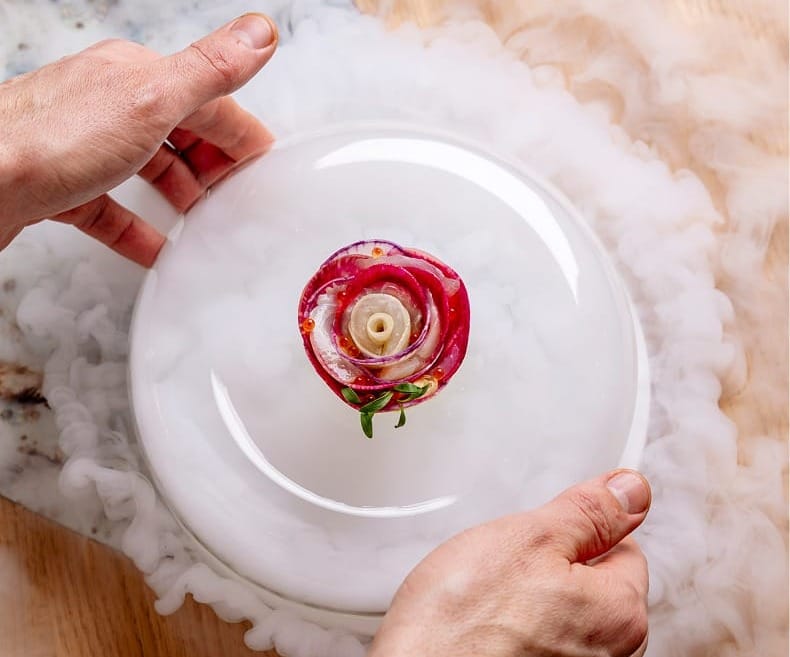
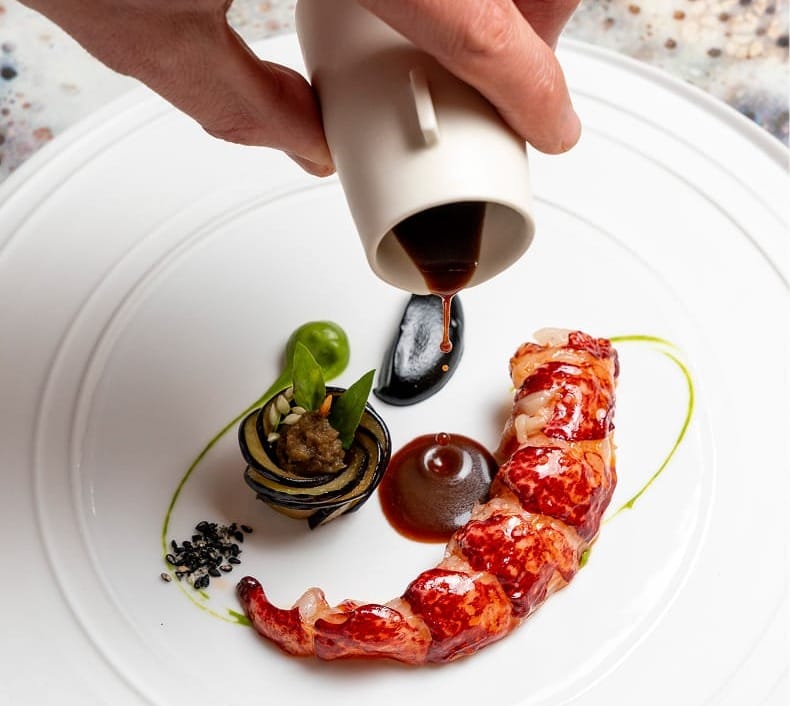
The menu balances Marx's signature techniques with Silva's refined execution. The soy risotto with oysters and mushroom foam manages to be simultaneously earthy, marine, and impossibly refined. The raviole en bras croisés, a crossed arm ravioli, changes with the seasons. During our visit, it featured crab. The trompe l'oeil onion soup plays with expectations, presenting familiar flavors through unfamiliar textures. The Breton lobster lacquered with miso emulsion bridges French technique and Asian influence without feeling forced.
Desserts maintain the same precision. The soufflé tart with Tahitian vanilla demonstrates complete control of air and heat. But perhaps the most praised element comes from the bread course. The olive brioche, baked on site daily, achieves what most croissants aspire to: laminated dough so buttery it dissolves on contact while maintaining structure.
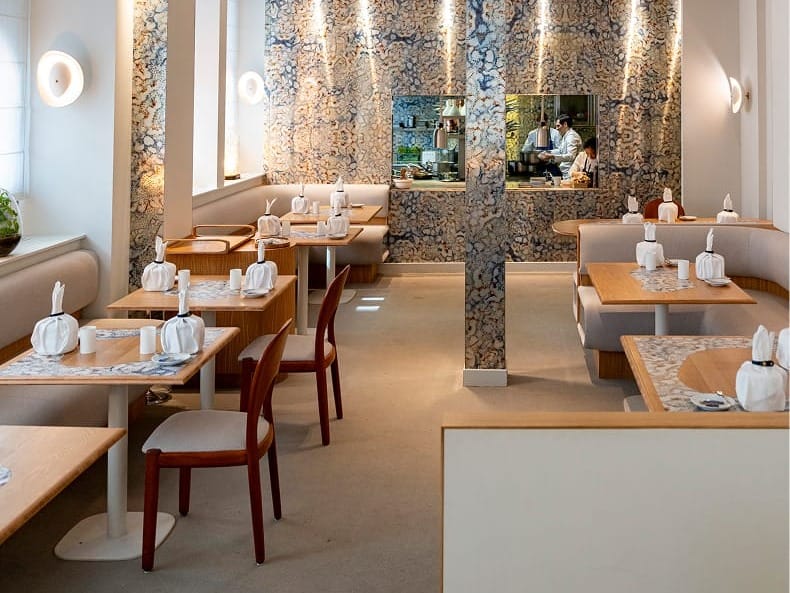
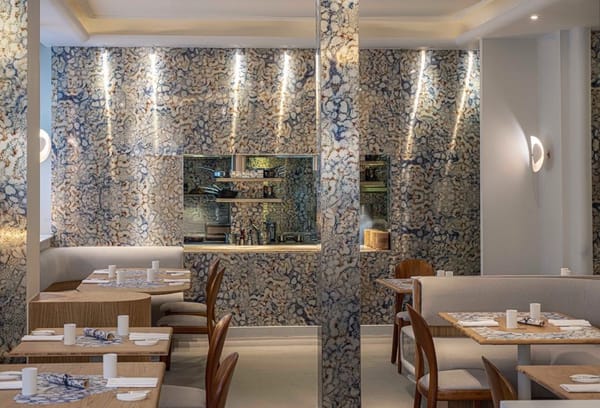
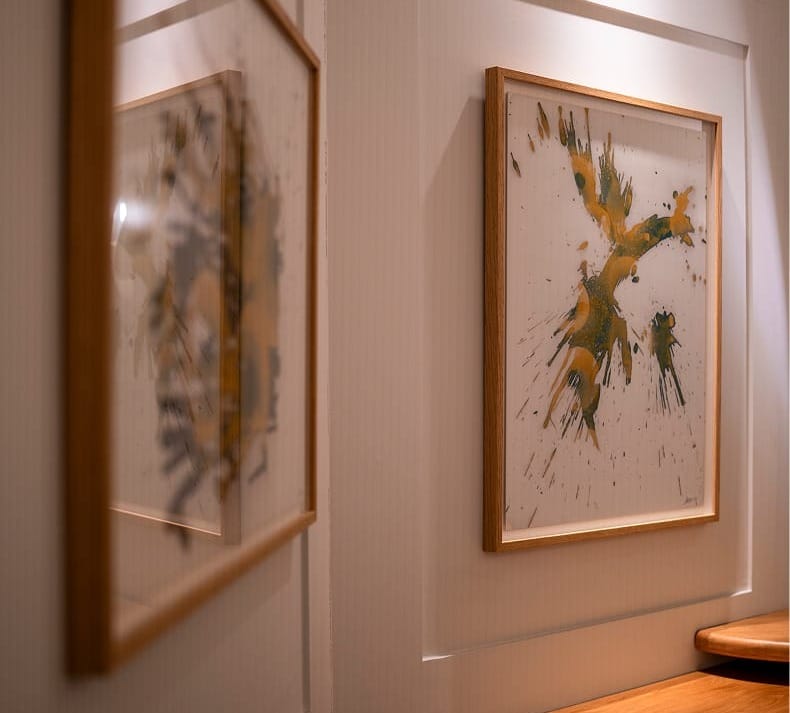
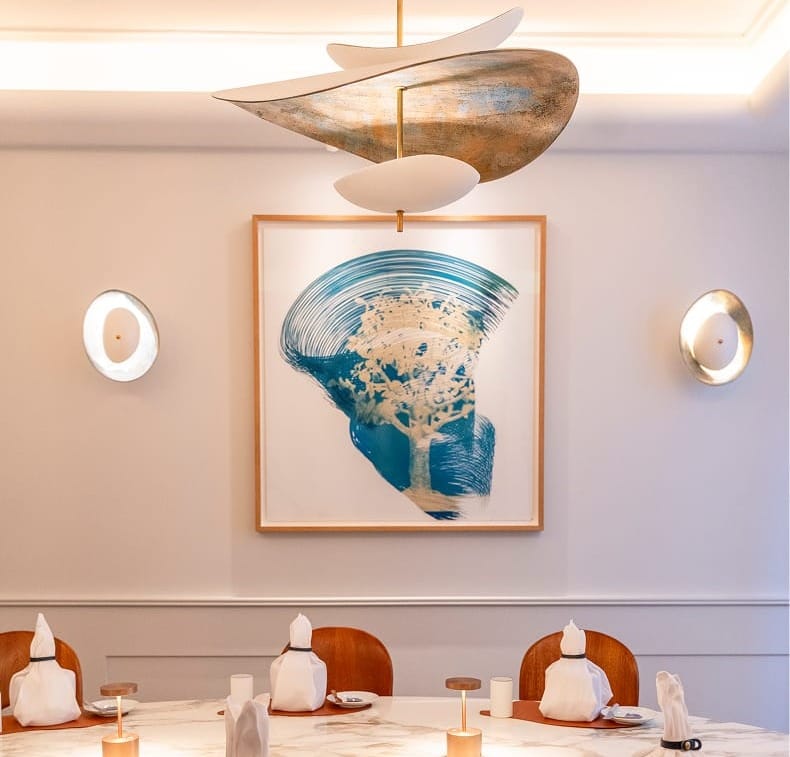
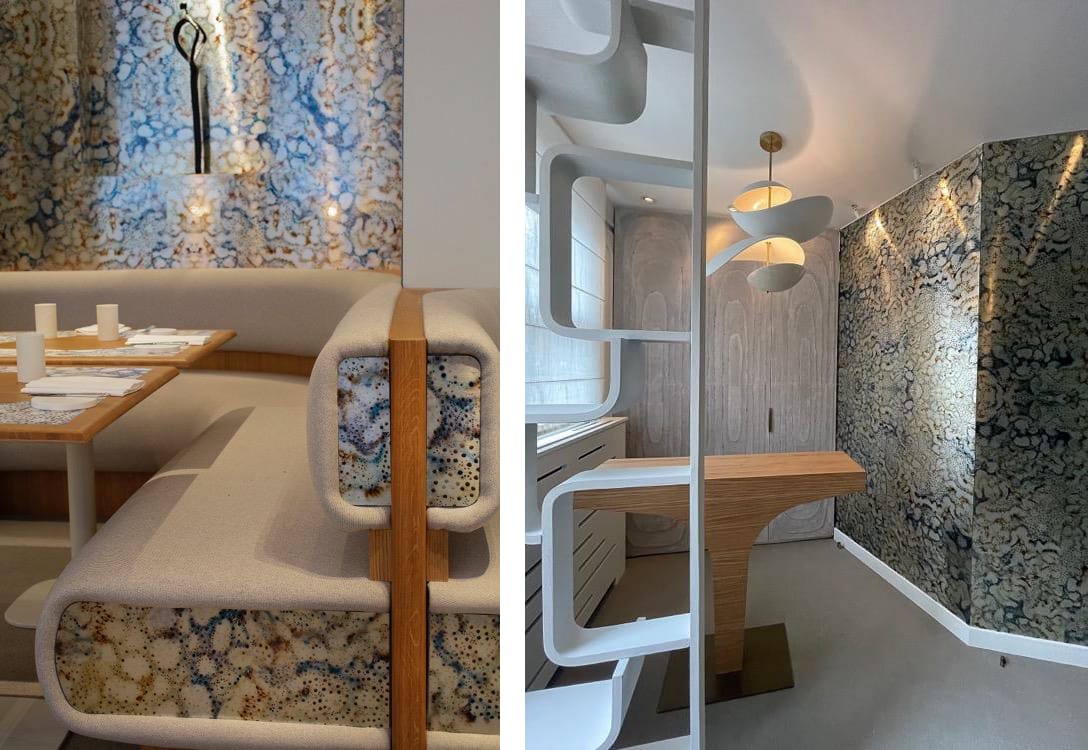
Mathilde de l'Ecotais, Marx's partner and a designer, created the interior as a response to the space's history as La Marée. She photographed a Thai blue crab carapace in macro detail, capturing its silvery blue patterns, then projected those images across the restaurant's walls. The effect immerses diners inside the shell itself. Every design choice reinforces values: furniture from recycled materials, chair fabrics from ocean recovered plastic, surfaces from leather waste. An origami butterfly chandelier by artist Tsuyu adds delicate craftsmanship.
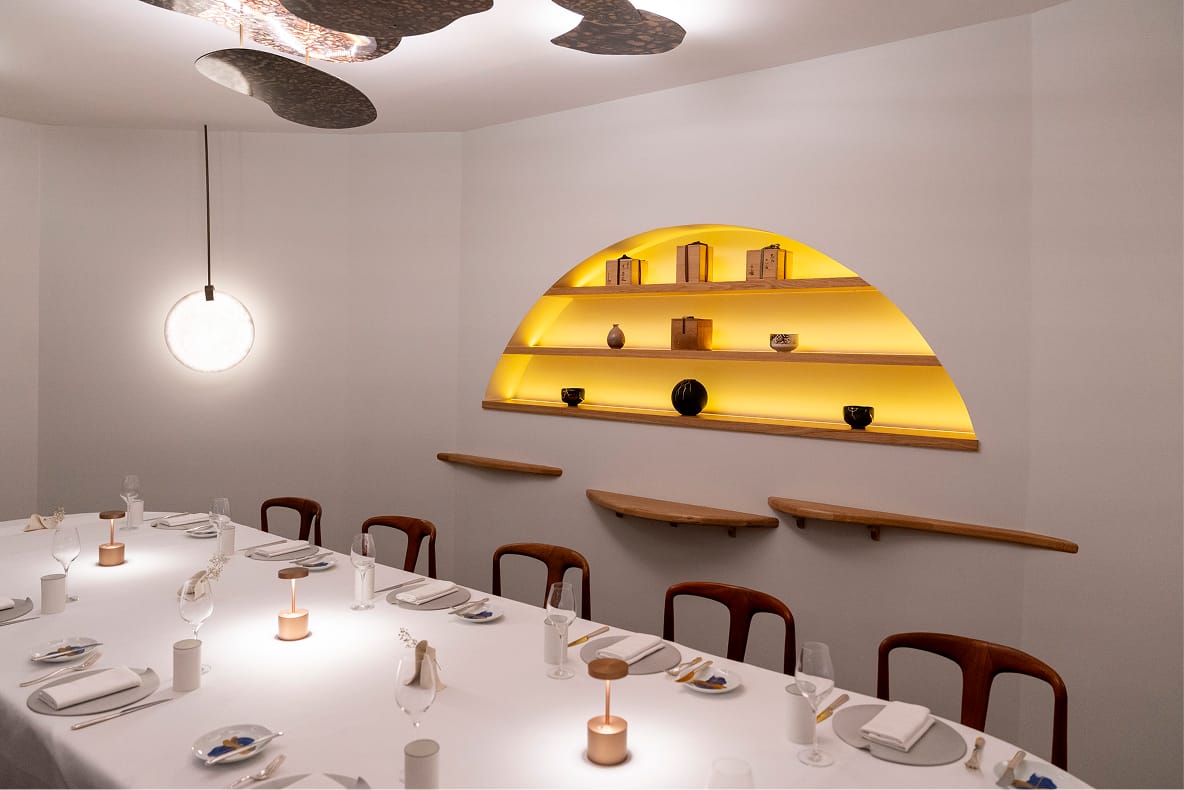
Beyond the main dining room, two private salons can each welcome up to 16 guests. These spaces can be privatized for intimate gatherings, extending the same commitment to excellence into more personal settings.
What stayed with me wasn't any single dish, though each was memorable. What lingered was the coherence. Marx and Silva train people society discards. They employ them in a Michelin starred kitchen. They close weekends so their team maintains actual lives. They source with integrity. They price accessibly. They earned their star within a year, proving none of these commitments require sacrificing excellence.
During our conversation, Silva spoke about the happiness he wants diners to feel. "That's the most beautiful message we can send," he said simply. Everything else serves that goal. The training programs exist because Marx believes people deserve second chances. The zero-waste sourcing exists because Silva believes producers deserve recognition. The joyful brigade exists because both chefs endured or witnessed brutal kitchen cultures and chose to build something different.
ONOR represents what becomes possible when chefs ask themselves the hardest questions about what restaurants owe to their communities, their employees, the planet, and then actually attempt to answer them. This isn't utopian thinking. This is utopia in practice, imperfect and ongoing, but undeniably real.
After decades of watching restaurants prioritize spectacle or pure technical achievement, ONOR feels like proof that another path exists. One where excellence and ethics strengthen rather than contradict each other. One where the humanity behind the plates matters as much as what arrives on them.