Ayugiri, Sigiriya: An Ayurveda Retreat in Sri Lanka
– 10 min read

Near Sigiriya in Kimbissa, Ayugiri brings together Ayurvedic care, considered food and a landscape where quiet is part of the treatment.
“Health is the greatest gain, contentment the greatest wealth.” — The Dhammapada
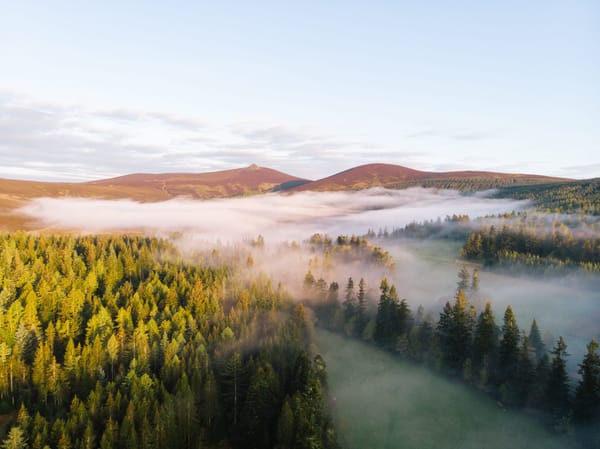
In Sri Lanka’s Cultural Triangle, the land carries several histories at once. Reservoirs built by ancient kingdoms still shape the agricultural rhythm of the region. Monastic ruins appear in forest clearings. Sigiriya, the fifth-century rock citadel associated with King Kashyapa, rises abruptly from the plains, less as a backdrop than as a fixed point around which the district seems to organise itself. This is a part of the island where archaeology, cultivation and ritual remain visibly connected.
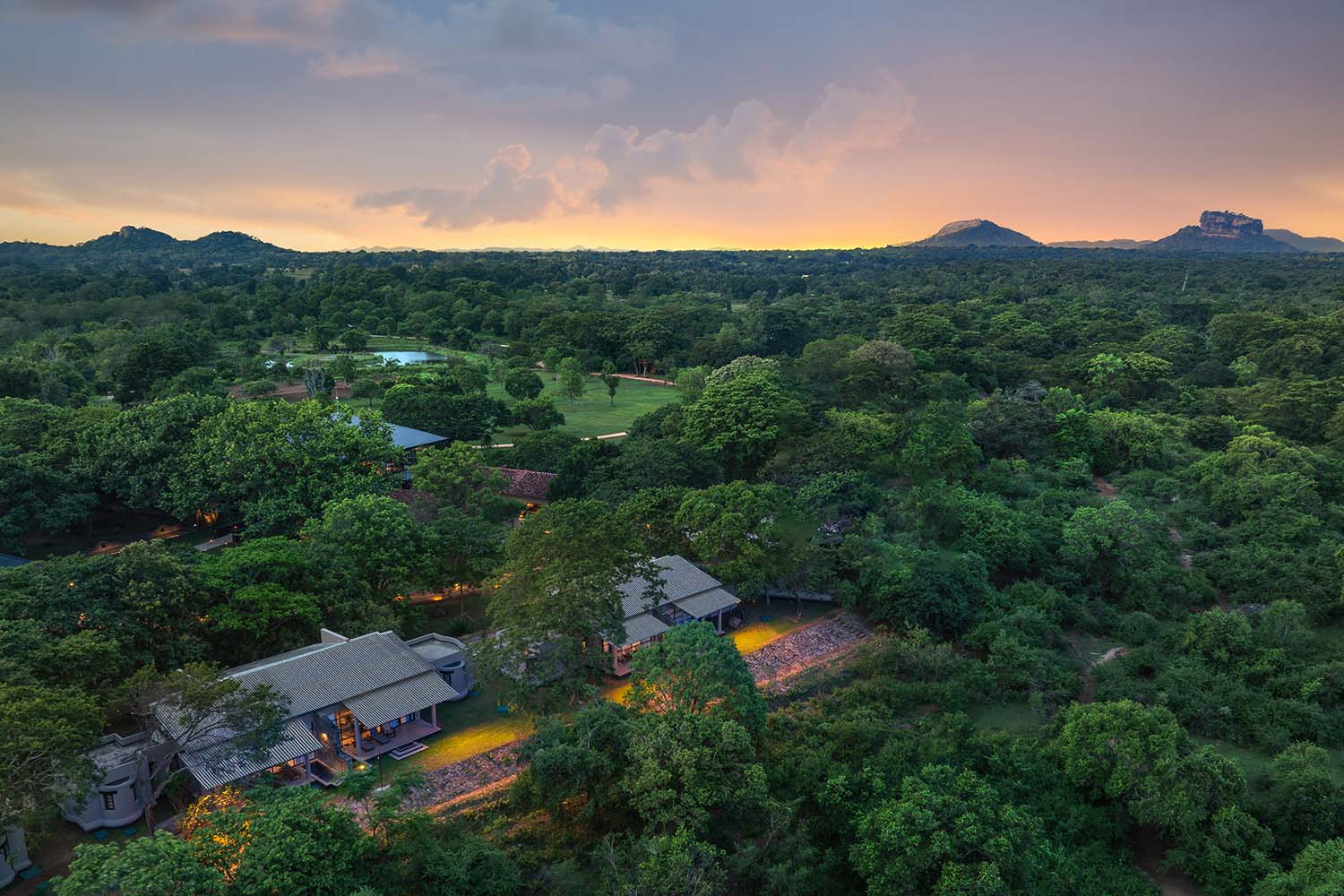
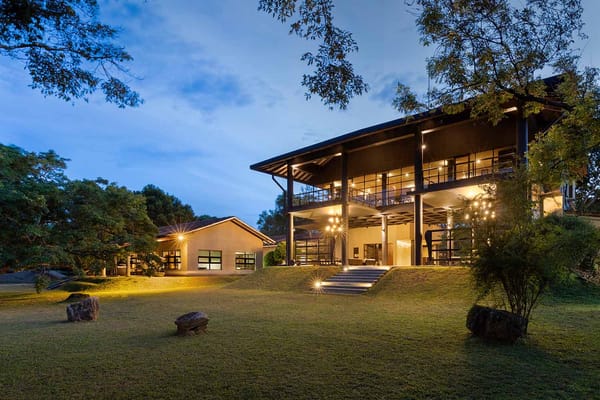
Near Sigiriya, Ayugiri occupies 54 acres of this terrain. Browns Hotels & Resorts positions Ayugiri as an Ayurveda wellness resort rather than a conventional leisure hotel, and that distinction is evident from the outset. The emphasis is not on spectacle, nor on the decorative vocabulary that often accompanies contemporary wellness travel. Instead, the property is built around routine, therapeutic consultation, quiet and the older Ayurvedic proposition that food, rest, movement and herbal treatment work best when considered together. In a hospitality landscape where “wellness” can mean almost anything, Ayugiri is more specific. It operates as a retreat where the setting, the timetable and the medical framework are meant to support the same end.
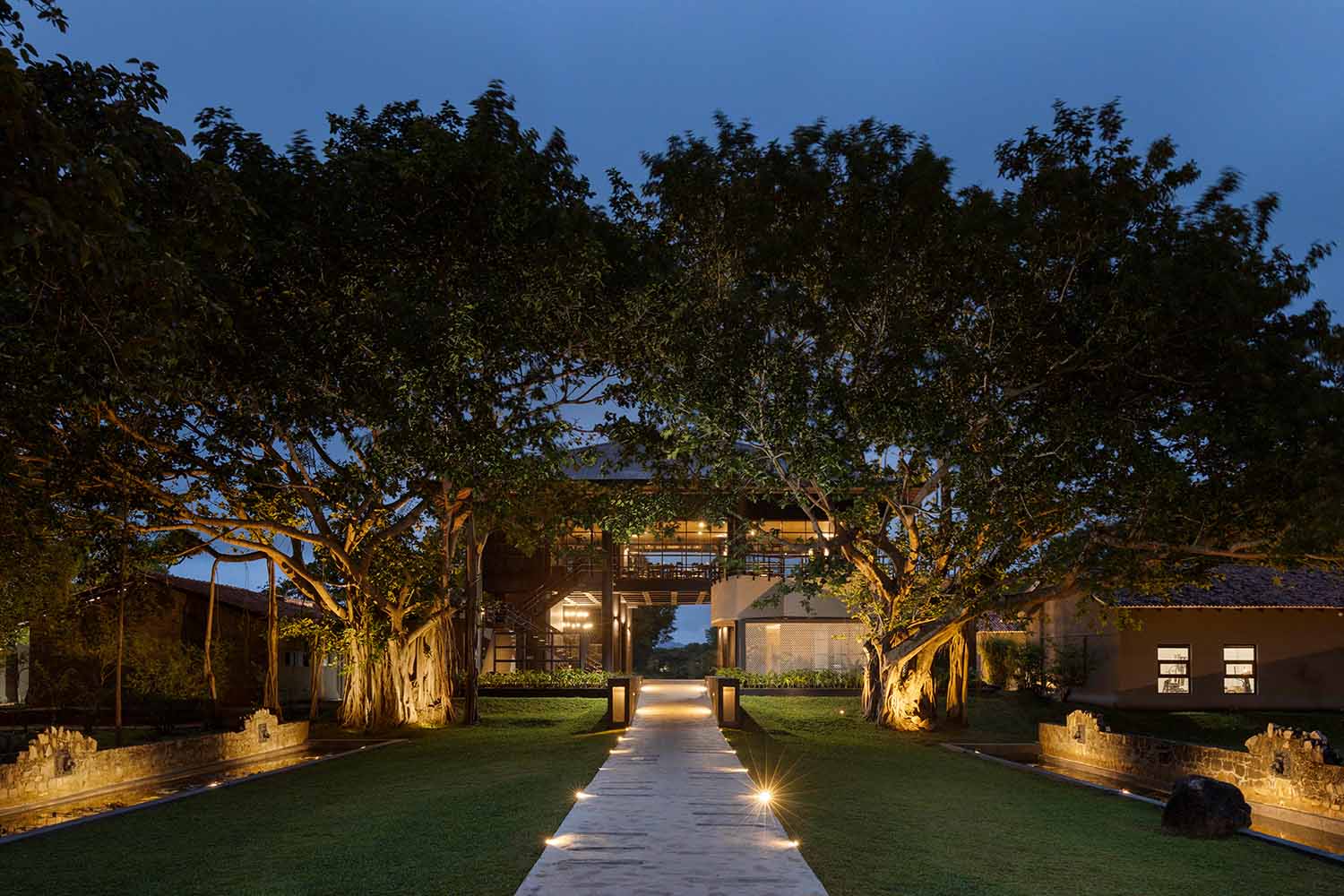
Ayugiri is modest in room count and expansive in land area. The property comprises 22 suites distributed across a large estate of water, woodland and open ground, with enough distance between buildings for the site to retain a sense of stillness even at fuller occupancy. It has existed in other forms before its present positioning, but its current identity is clearly organised around Ayurveda as the central logic of the stay.
Browns Hotels & Resorts, one of Sri Lanka’s established hospitality groups, presents the resort as a dedicated wellness property grounded in traditional Ayurvedic practice. The core of that proposition is Ayuwāsa, the treatment centre where programmes begin with personalised consultation and assessment. From there, therapies and dietary guidance are shaped around individual wellness needs and broader Ayurvedic principles of balance and prevention. The language used by many wellness hotels tends toward abstraction. Ayugiri’s approach is more concrete. The property operates as an alcohol-free environment. The pace is deliberately quiet. Days are structured around treatment timings, meals, rest and movement.
That sense of order is reinforced by the landscape itself. This is not a sealed resort compound but a large working terrain where cultivated plots, water bodies and wildlife corridors remain part of the daily experience. The result is a place that feels closer to a healing estate than to a conventional spa resort. In Sri Lanka, where Ayurveda has long existed not as a trend but as a domestic and medical tradition, that distinction matters.
There is also a cultural idea that seems apt here. The Sinhala word pinwath suggests an act of mindful merit, attention offered without display. It is not a term the hotel uses, nor should it be reduced to branding, but it helps explain the tone of the place. Care here is quiet rather than theatrical.
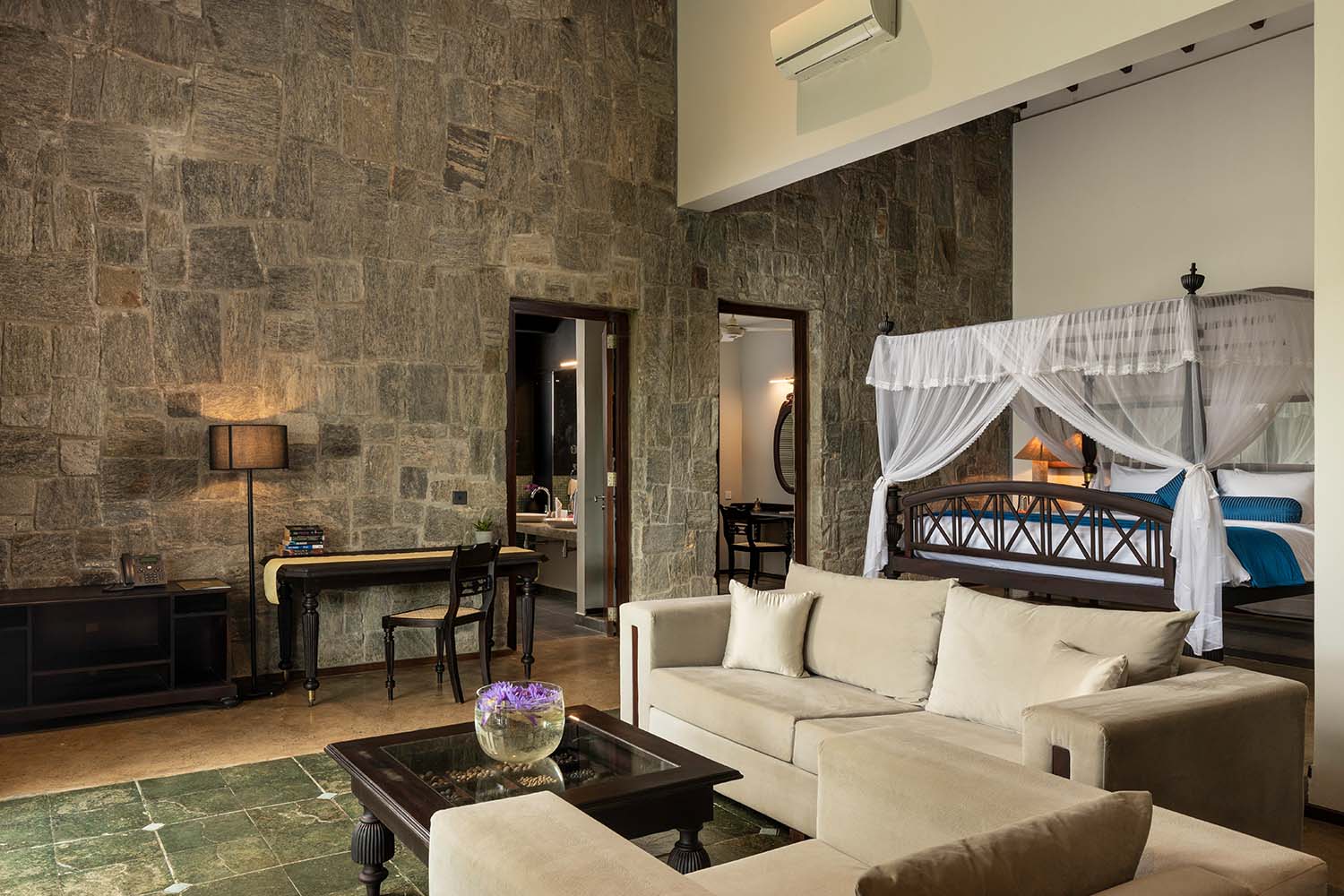
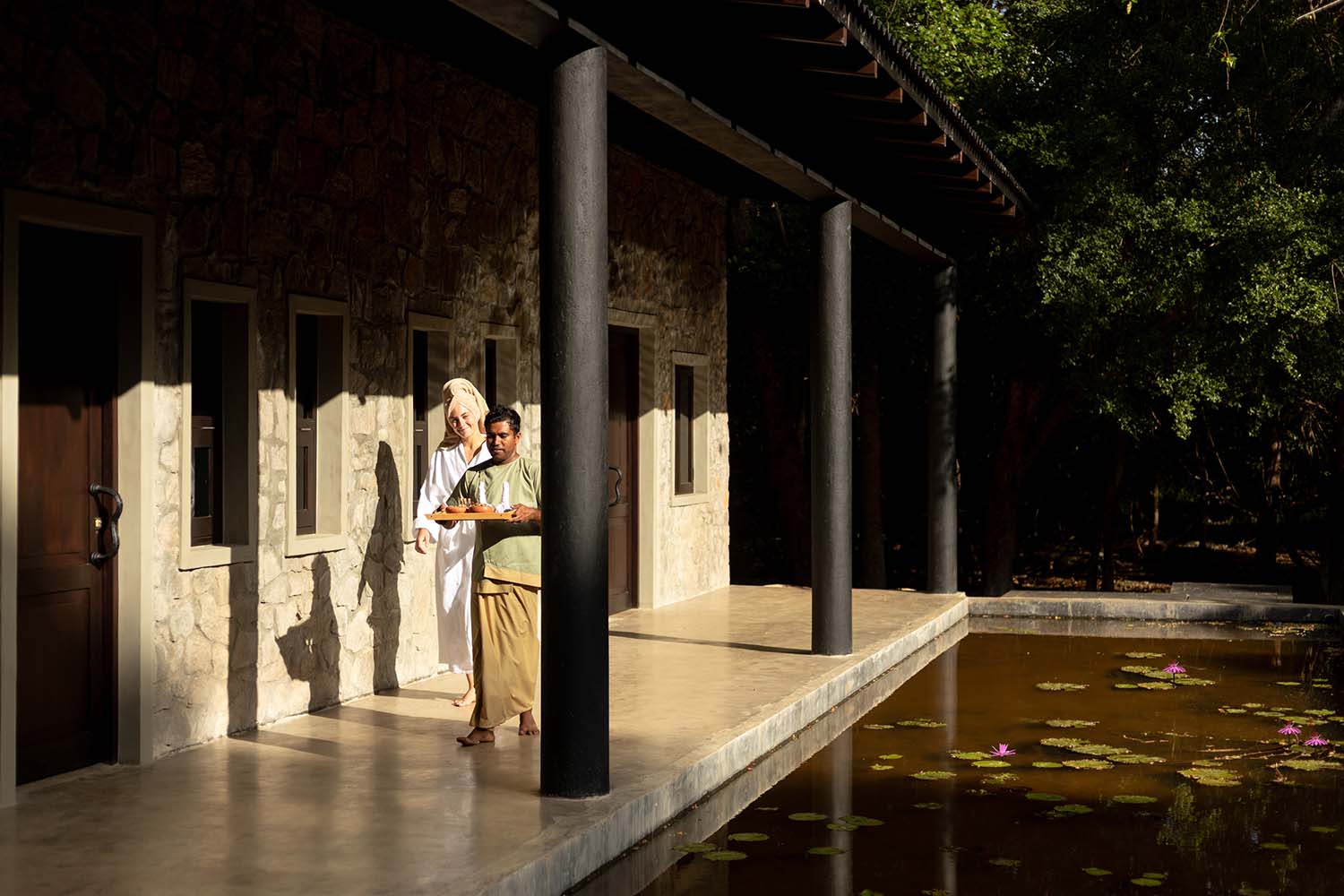
The accommodation consists of 22 suites, each with a private plunge pool, spread across the estate rather than concentrated in a single block. Privacy comes primarily from distance and topography. Other guests are seldom heard, and the scale of the grounds means movement across the property often takes place through stretches of open landscape rather than corridors or tightly planned paths.
The suites are large and cool in feel, an effect created partly by their construction materials. Stone surfaces and darker timber elements help temper the heat, while the design remains relatively understated. The rooms do not rely on decorative excess or a heavy-handed wellness aesthetic. Instead, the emphasis is on space, shade and a degree of visual calm. Furnishings are simple, with enough detail to avoid austerity, and the overall impression is residential rather than staged.
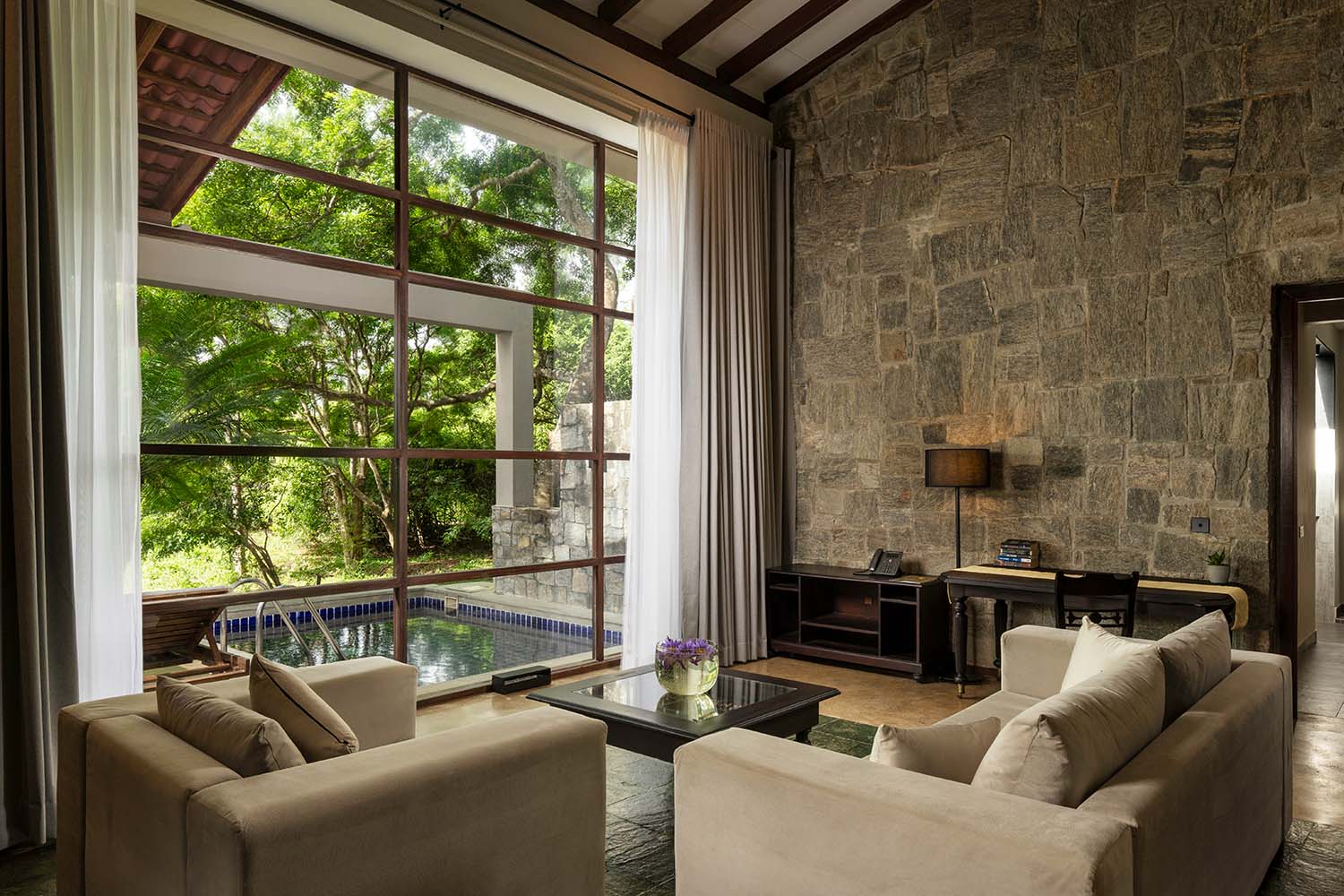
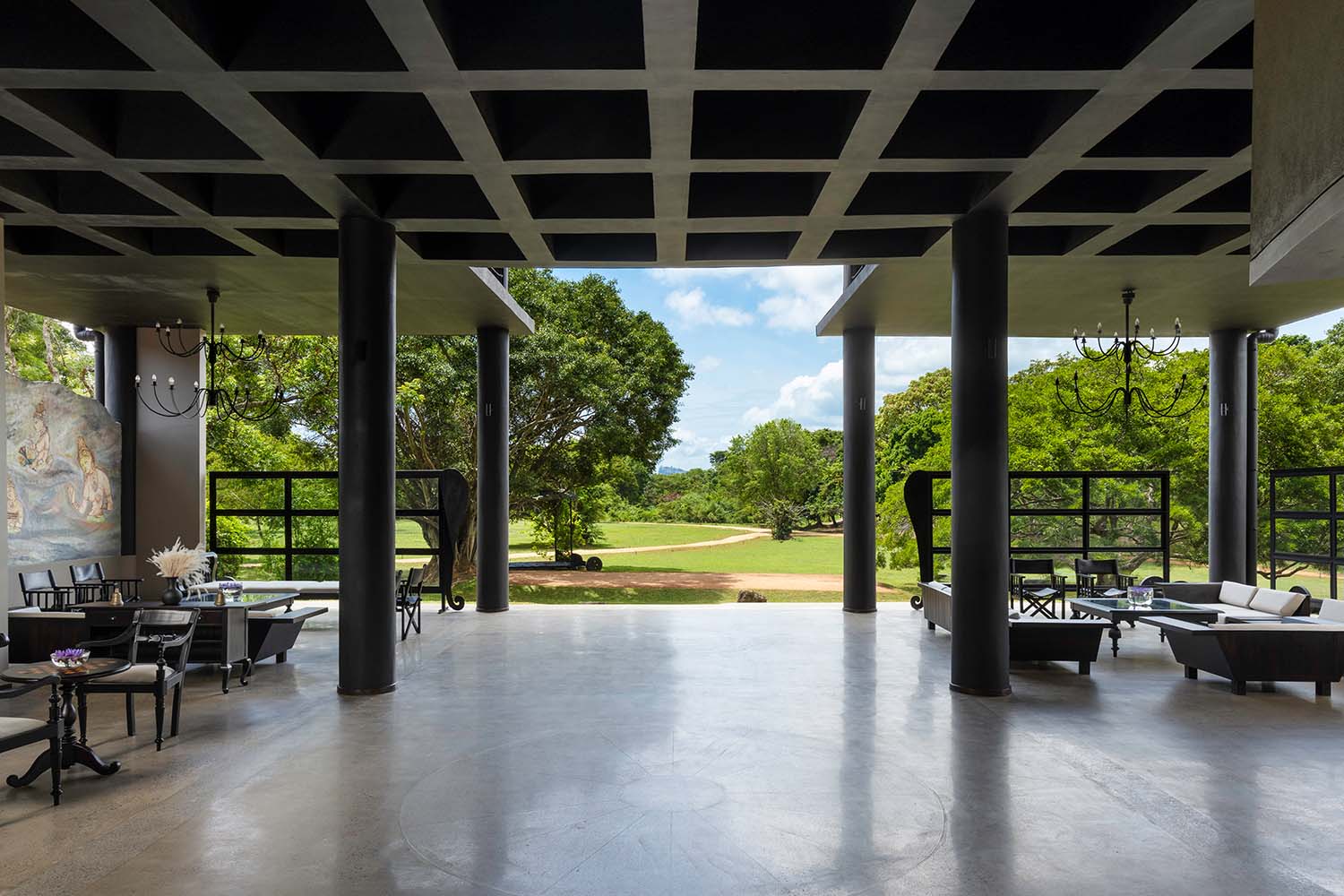
Private plunge pools are the clearest distinguishing feature. In a treatment-led property, they add a degree of independence to the stay, particularly during longer programmes when guests may spend considerable time on site between consultations, meals and yoga sessions. Views are generally directed toward greenery, water or open ground rather than inward to neighbouring accommodation. The atmosphere is one of removal, though not isolation. Morning sound comes mostly from birds and wind in the trees, with the occasional movement of monkeys across the grounds.
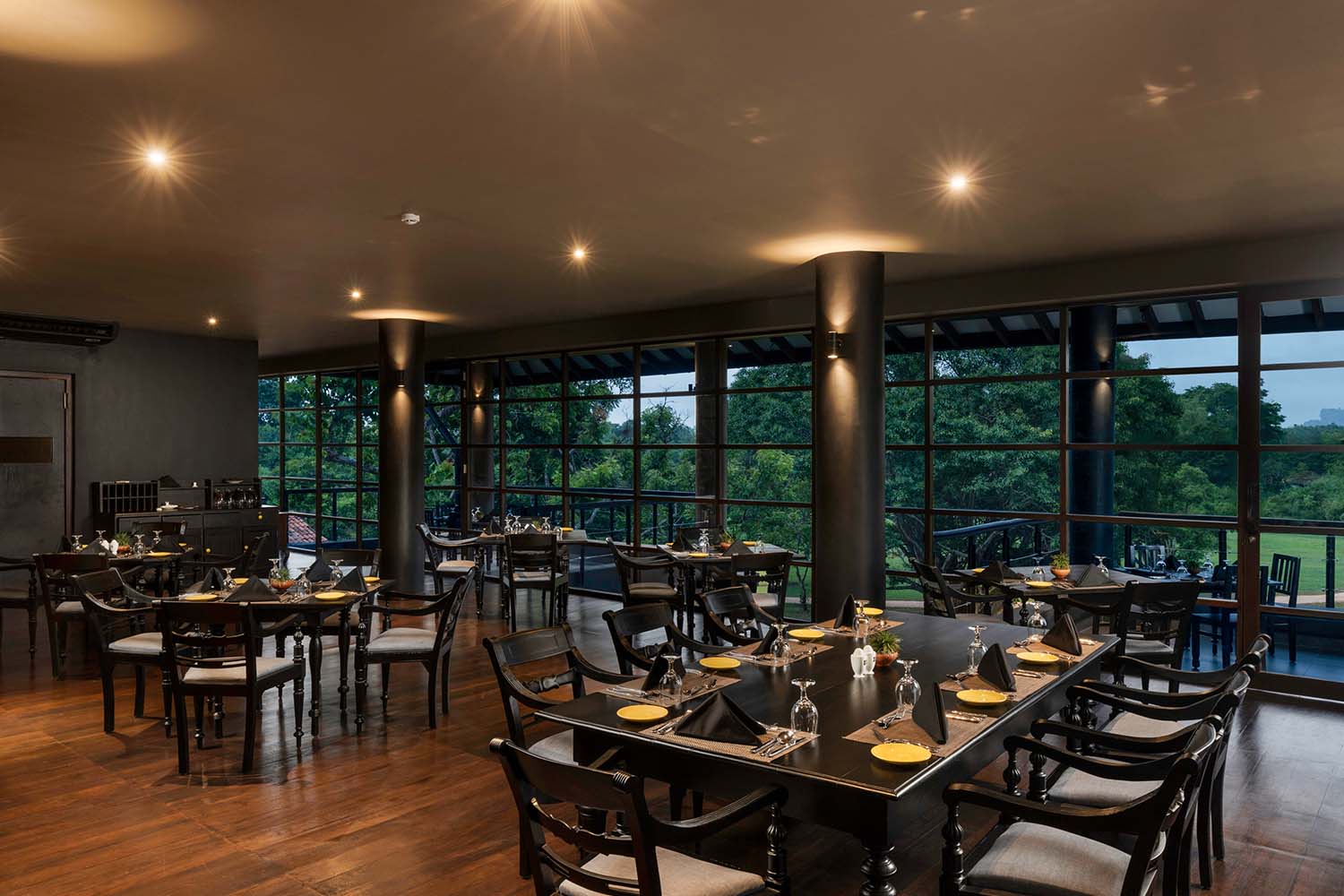
At Ayugiri, food is part of the therapeutic structure rather than a parallel pleasure track. The main dining venue, Amurtha Restaurant, follows an Ayurvedic framework and prepares meals according to individual wellness needs and medical guidance established during consultation. That does not make the food austere. It does, however, mean that menus are shaped less by indulgence or variety for its own sake than by the logic of the programme.

The kitchen emphasises wholesome Ayurvedic dining, with produce drawn in part from the property’s own garden and honey sourced from the on-site bee farm. Sri Lankan, vegetarian, vegan and more internationally legible dishes appear within that framework, but the tone of the cooking remains disciplined. Meals are plated individually rather than presented as a buffet, and there is a notable absence of the performative health-food language now common in wellness hospitality. This is not cuisine trying to imitate restaurant luxury while quietly apologising for its restrictions. It is food designed to support treatment.
That practical approach gives the dining room a more grounded identity than many comparable retreats. The cooking has something of the logic of a well-run household kitchen, where nourishment and digestibility matter as much as presentation. For guests accustomed to richer resort dining, the adjustment may take a day or two. For those on longer stays, the coherence between the kitchen and the medical programme becomes one of the property’s stronger arguments.
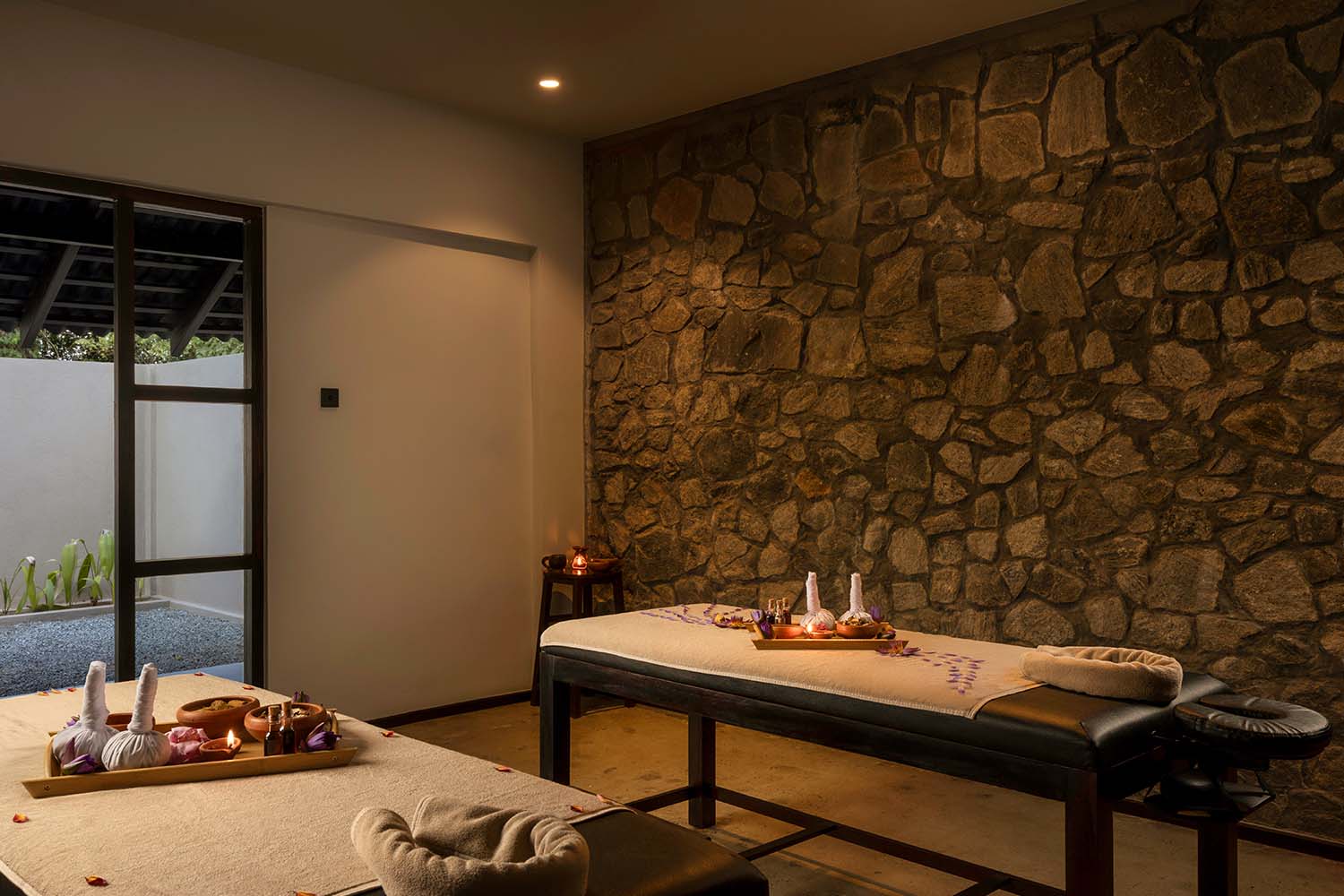
The centre of the resort is Ayuwāsa, a purpose-built Ayurveda facility with consultation rooms, seven treatment chambers, herbal baths, steam and sauna facilities, and the traditional Beheth Oruwa, a wooden vessel associated with authentic Ayurvedic preparation. The design is functional rather than ceremonial. What matters here is not atmosphere in the conventional spa sense, but the extent to which the centre can support structured, multi-day treatment programmes.
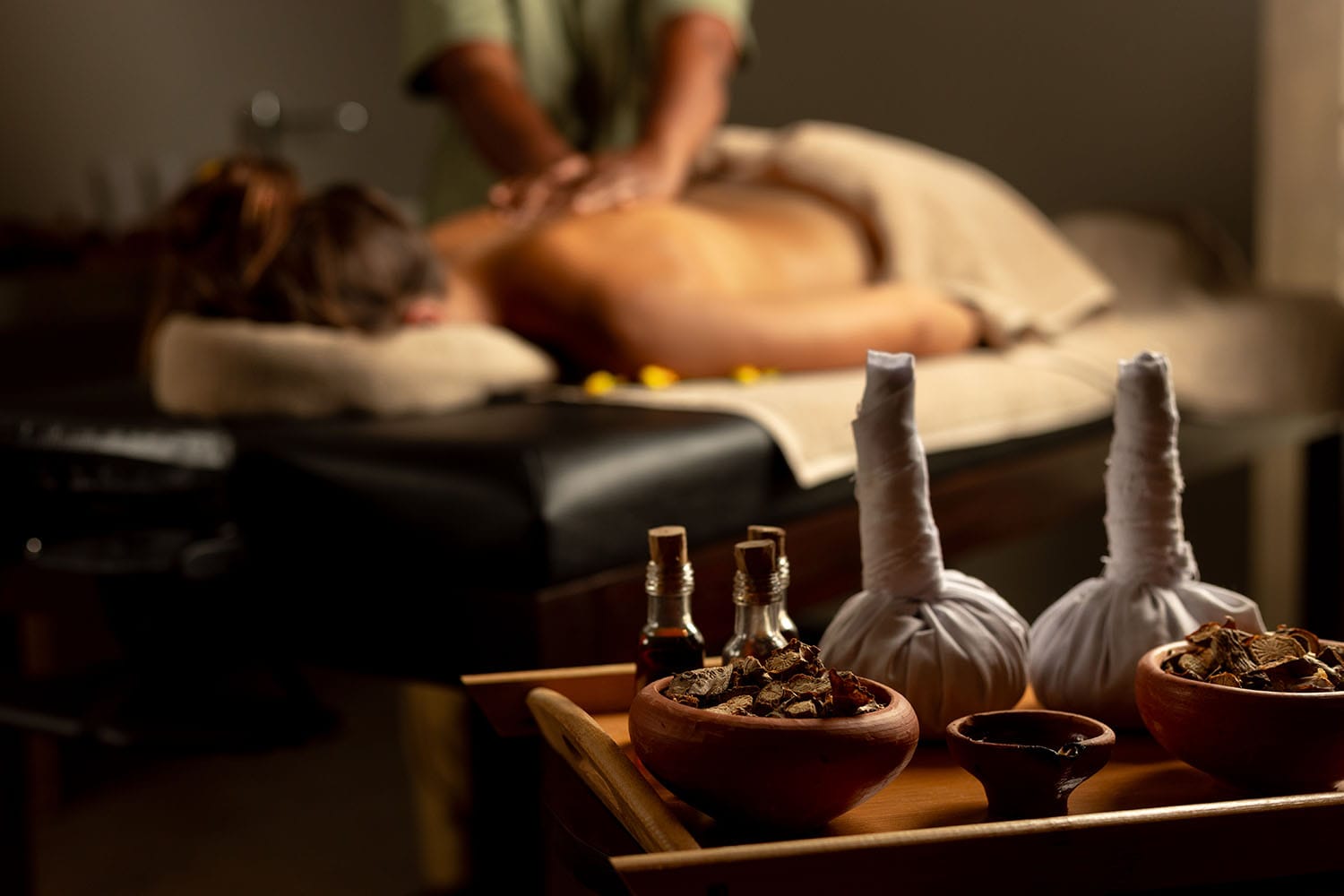
Programmes begin with personalised consultation and assessment, after which therapies are aligned with the guest’s condition, constitution and broader wellness objectives. The emphasis, according to the resort’s published material, is on personalised Ayurvedic care, rebalancing and preventive wellness. In practical terms, that places Ayugiri closer to a traditional healing retreat than to a destination spa built around occasional treatments. Ayurvedic remedies are incorporated into programmes, and yoga and meditation are treated as part of the therapeutic framework rather than as standalone leisure activities.
Yoga and meditation sessions take place in open-air locations across the estate, including platforms set near water and beneath trees. This matters because the practice here is not separated from climate, sound or terrain. The ground is not perfectly even. The air is warm. Bird calls and animal movement remain audible. That lack of insulation from the environment gives the wellness programme more local character than a sealed studio ever could. It also reflects a broader Sri Lankan understanding of healing as something that happens in relation to season, food, landscape and routine, not only through treatment tables and oils.
Service follows the same logic. Staff interaction is measured and generally unobtrusive, which suits the property’s therapeutic intent. Guests looking for highly choreographed resort service may find the tone more restrained than in a conventional five-star hotel. Those on wellness programmes are likely to read it differently, as part of the place’s refusal to turn treatment into theatre.
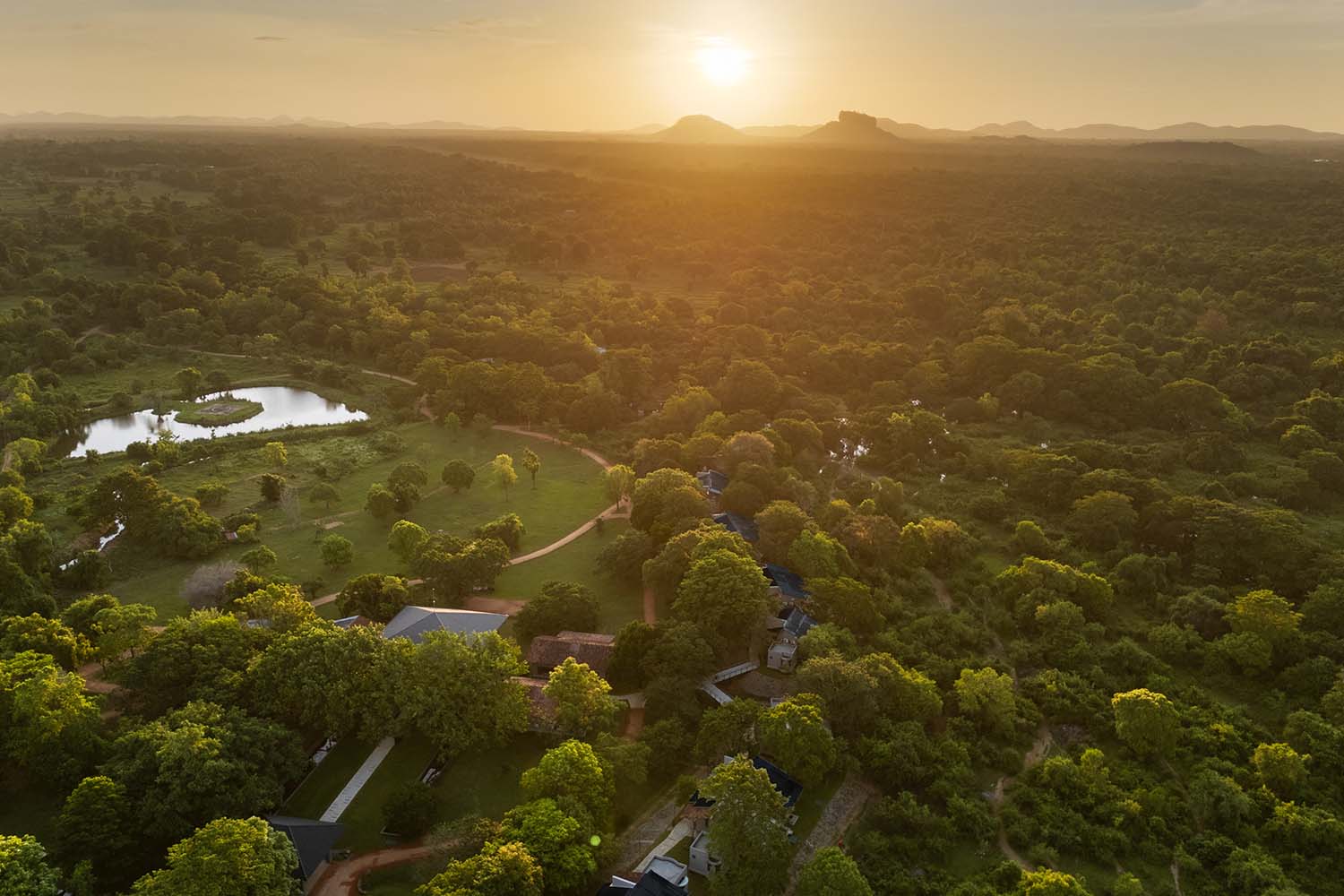
The 54-acre estate is one of Ayugiri’s strongest assets. Lakes, tree cover and open ground create a sense of scale unusual for a retreat with only 22 suites. The property also sits close to wildlife corridors, and the surrounding ecology is not entirely separate from the guest experience. Elephants are known to move through the broader landscape, a reminder that this part of central Sri Lanka remains shared terrain rather than manicured enclosure.
Beyond the resort, the location places guests within reach of some of the island’s most significant historical sites. Sigiriya Rock Fortress is a short drive away. Kaludiya Pokuna, an ancient forest monastery site, offers a more contemplative counterpoint, with ruins and cave spaces set within dense greenery. Pothana Rajamaha Viharaya, near Sigiriya, is an ancient cave temple site that extends this sense of continuity between landscape and monastic history.
For wildlife-focused excursions, Minneriya and Kaudulla National Parks are both accessible for jeep safaris, particularly during the seasonal elephant gatherings associated with the dry months. The resort also lists village tours, catamaran outings, pottery activities and alternative dining settings such as lakeside or treehouse meals for longer stays. These experiences broaden the stay without overwhelming its central purpose.
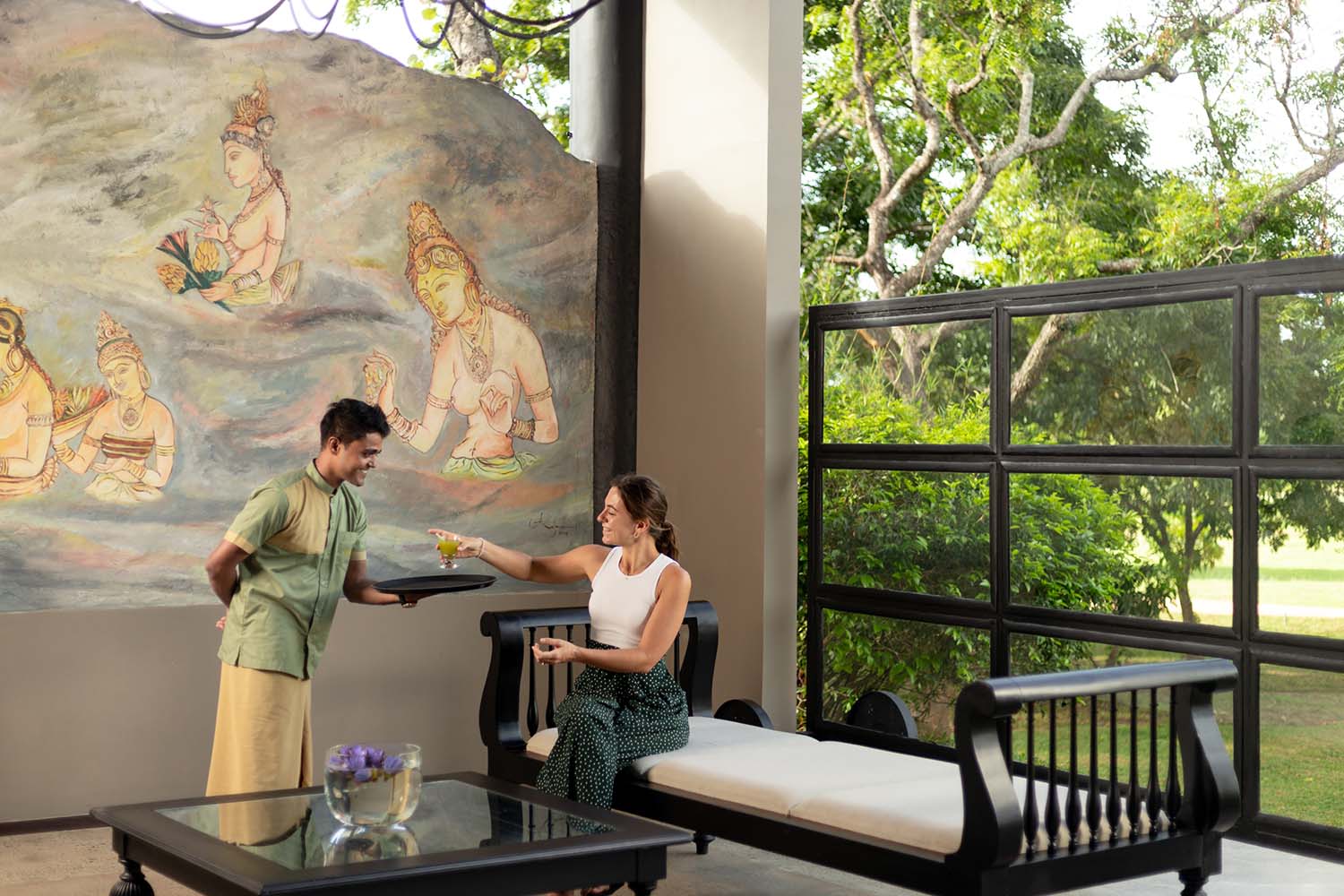
Ayugiri is best suited to travellers seeking a structured Ayurveda retreat in Sri Lanka rather than a general resort holiday. It will appeal to guests interested in quiet, routine, personalised wellness programmes and a setting where treatment, food and landscape are intended to work together. It also suits those who value proximity to Sigiriya and the wider Cultural Triangle but do not want a sightseeing hotel as their base.
It is less appropriate for travellers looking for nightlife, a beach setting, a social resort atmosphere or a food-led holiday unconstrained by wellness guidelines. Families with children may also find that the property’s rhythm is geared more toward restorative stays than multi-generational leisure travel. In editorial terms, Ayugiri works best for people willing to accept that the retreat sets the pace, not the other way round.
Ayugiri matters because it resists the dilution of wellness into mood and branding. Near Sigiriya, in a region where monastic silence, medicinal tradition and cultivated land have long existed in relation to one another, the resort takes a more disciplined view. It treats Ayurveda not as an accessory to hospitality but as the organising principle of the stay.
That does not mean the property is severe. It means it is coherent. The suites, the food, the treatment centre and the surrounding landscape all point in the same direction. In a market crowded with hybrid concepts, that clarity is notable. If Sigiriya represents one face of Sri Lanka’s ancient ambition, Ayugiri gestures toward another, quieter inheritance: the idea that healing is not spectacle but practice, repeated daily until it becomes a way of living.
Website: brownshotels.com/ayugiriwellness
Address: Pothana, Kimbissa, Sigiriya, Sri Lanka
Price range: Rates vary by season, suite type and wellness programme; direct enquiry is advisable.
Best time to visit: January to March is generally the most comfortable period for visiting the Sigiriya region, with lower rainfall and slightly milder conditions. July to September is also popular, particularly for combining the stay with nearby wildlife excursions.
Nearest airport: Bandaranaike International Airport, with road transfers typically taking around 4 to 5 hours depending on traffic and route.
Ayugiri is an Ayurveda wellness resort near Sigiriya in Sri Lanka’s Cultural Triangle. It combines accommodation, Ayurvedic consultation, treatment programmes, yoga, meditation and wellness-focused dining within a 54-acre estate.
Ayugiri is located in Pothana, Kimbissa, near Sigiriya in central Sri Lanka. It sits within reach of major Cultural Triangle sites, including Sigiriya Rock Fortress and several historic monastic locations.
The resort is approximately eight kilometres from Sigiriya Rock Fortress. Travel time by car is short, making the site accessible for a morning or late-afternoon visit.
Ayugiri is centred on Ayurveda, the traditional system of medicine practiced in Sri Lanka and South Asia. Programmes begin with personalised consultation and assessment, then combine treatments, dietary guidance, yoga and rest according to individual wellness needs.
Ayuwāsa includes consultation rooms, seven treatment chambers, herbal baths, steam and sauna facilities, and a traditional Beheth Oruwa. The centre is designed to support structured multi-day Ayurveda programmes rather than occasional spa treatments alone.
Ayugiri has 22 suites. Each suite includes a private plunge pool, and the accommodation is spread across the estate to preserve privacy and quiet.
The main restaurant, Amurtha, follows a wellness-oriented Ayurvedic approach. Meals are tailored to individual wellness needs and medical guidance, with an emphasis on wholesome cooking and ingredients sourced in part from the property’s garden and bee farm.
Ayugiri is better suited to travellers seeking a structured wellness stay than a conventional resort break. Guests looking for nightlife, beach access or a highly social hotel atmosphere may find the property too quiet and programme-led.
Nearby attractions include Sigiriya Rock Fortress, Kaludiya Pokuna and the ancient cave temple site of Pothana Rajamaha Viharaya. The resort also provides access to wildlife excursions in Minneriya and Kaudulla National Parks, as well as village and lake-based activities.
Most international travellers arrive via Bandaranaike International Airport near Colombo. From there, the journey by road to Ayugiri generally takes around 4 to 5 hours, depending on traffic and the route used.